Key Takeaways
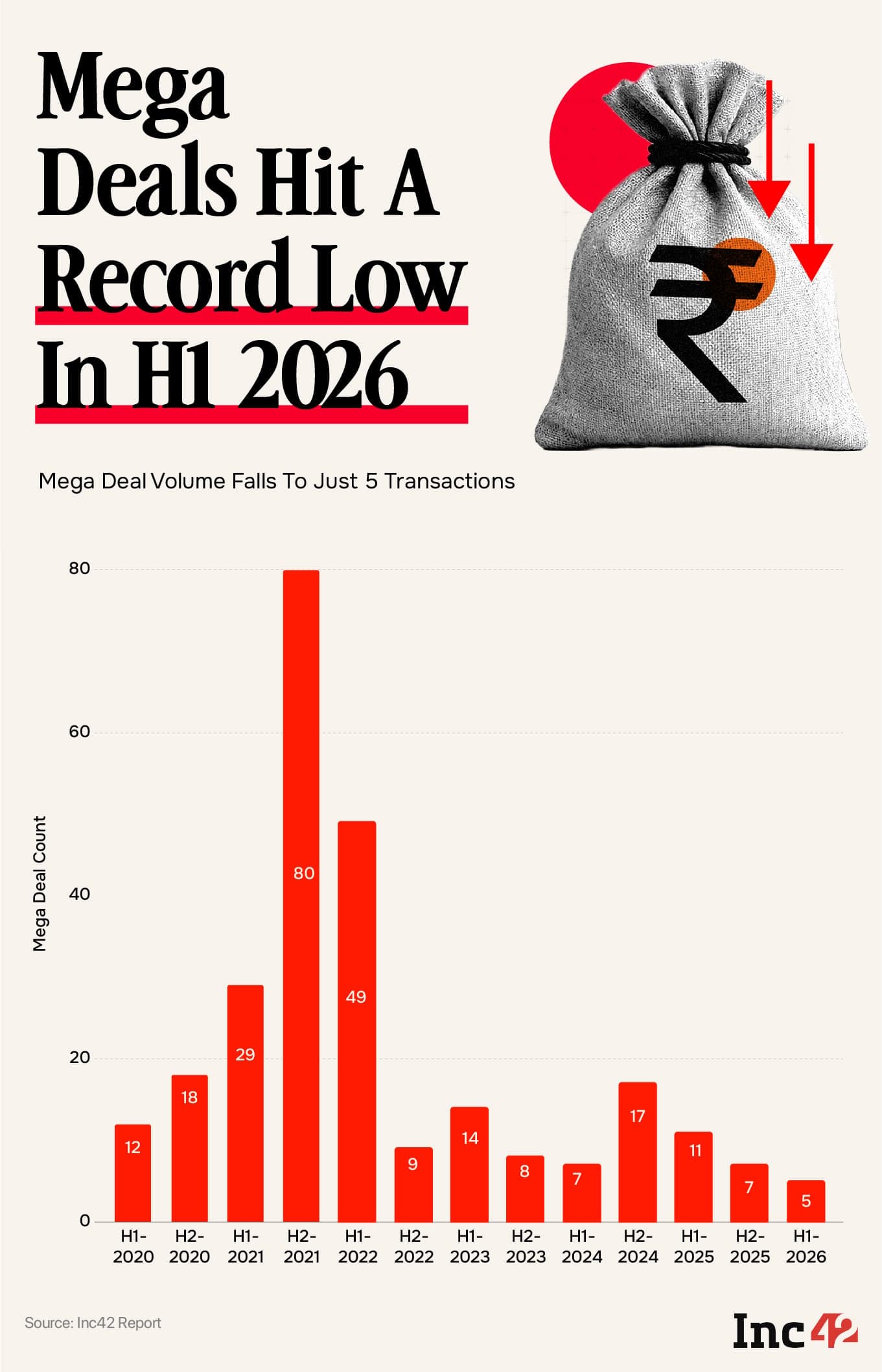
- Indian startups raised $5.2B in H1 2026, down 9% from $5.7B in H1 2025, while deal count rose 7% to 501
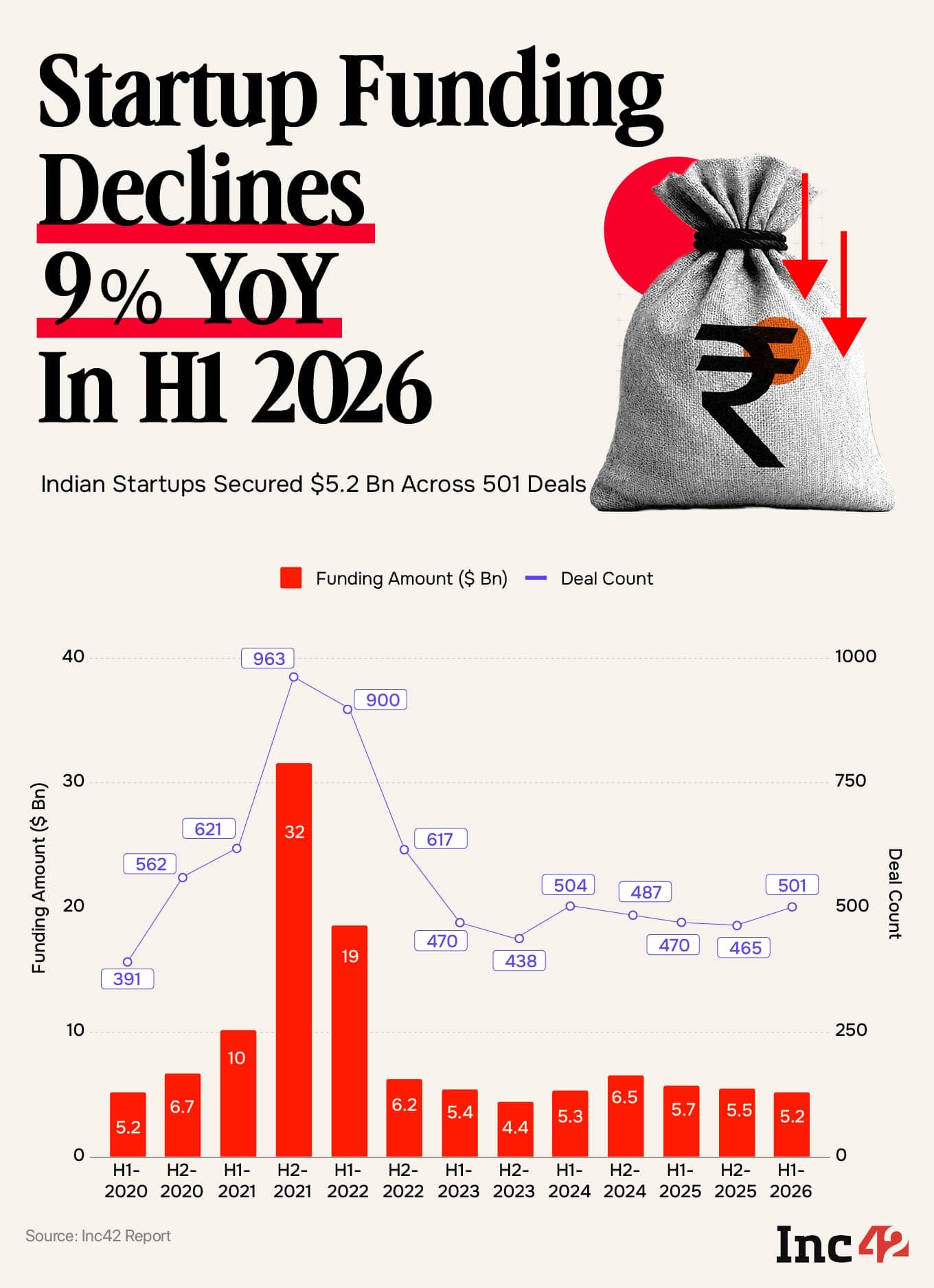
- Only 4 mega rounds ($100M+) closed, compared to 11 in H1 2025, dragging down totals
- Growth-stage funding increased 15% to $2.3B as investors spread capital across more startups
Indian startups raised $5.2 billion across 501 deals in the first half of 2026, a 9% decline from $5.7 billion in H1 2025, according to Inc42's latest funding report. The drop came despite a 7% increase in deal volume, signaling that investors are writing more checks but smaller ones.
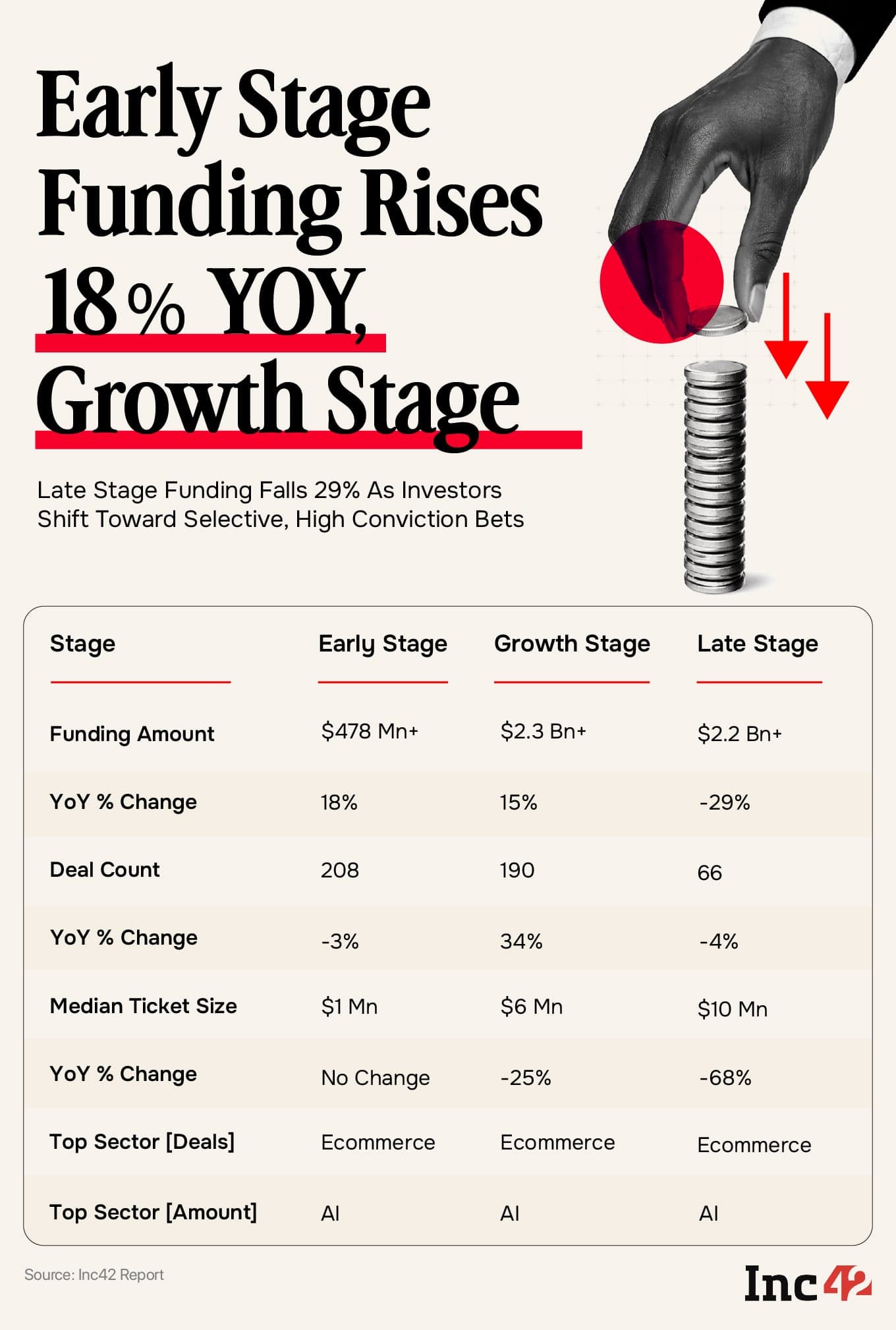
The headline number masks a structural shift. Late-stage funding collapsed 27% to $2.2 billion as investors retreated from large bets on mature startups. Growth-stage funding, meanwhile, climbed 15% to $2.3 billion. Seed-stage rounds rose 18% to $478 million. The money is still flowing. It's just flowing differently.
Why did mega deals vanish?
Only four funding rounds crossed the $100 million threshold in H1 2026. That's a steep drop from 11 mega deals in the same period last year. Spinny ($170M), KreditBee ($280M), Rapido ($240M), and Sarvam ($234M) were the sole entrants to the club.
The absence of large rounds explains most of the funding decline. Median ticket size held steady at $3 million year-over-year, which means the typical deal didn't shrink. The outliers did.
Late-stage funding hit hardest
Late-stage startups bore the brunt of investor caution. Funding to mature companies fell 27% to $2.2 billion. More striking: the median check size at this stage plunged 68% to $10 million. Investors aren't just writing fewer large checks. They're fundamentally repricing what mature Indian tech companies are worth.
Deal count at late stage dropped only 4% to 66 transactions. So activity remained, but commitment per deal shrank. The era of writing $100 million checks to chase unicorn status appears to be over, at least for now.
Growth stage emerges as the bright spot
Growth-stage startups captured $2.3 billion, up 15% from H1 2025. Deal volume at this stage surged 33% to 190 transactions. The median check dropped 25% to $6 million, but the pattern is clear: investors are spreading capital across more Series A and Series B companies rather than concentrating bets.
This diversification strategy reflects lessons from the 2021-22 boom. Funds that went all-in on a few unicorn candidates often got burned when valuations corrected. Backing 20 companies instead of 5 reduces single-point-of-failure risk.
Seed funding climbs 18%
Early-stage activity continued its upward trend. Seed-stage funding rose 18% to $478 million. This suggests that new company formation remains healthy and that investors see enough promising founders to keep writing initial checks.
The combination of rising seed and growth-stage funding with falling late-stage funding creates a pipeline problem. More startups are entering the ecosystem, but fewer are graduating to large rounds. Something will have to give in the next 12-18 months.
What VCs are saying
IvyCap Ventures managing partner Vikram Gupta called the numbers a "structural improvement" rather than a warning sign. "The decline in overall funding quantum in H1 2026 reflects a genuine macro-driven recalibration, a higher cost of capital globally, LP caution on emerging markets, and a natural correction after the exuberance of 2021-22," he said.
Gupta pointed to the rising deal count as evidence of underlying health. "More companies are getting funded, at more rational valuations, with stronger fundamentals."
The sentiment tracks with investor survey data from Inc42. Around 64% of institutional investors expect to increase their venture allocation over the next 18 months. But they also flagged geopolitical uncertainty and constrained global liquidity as the biggest risks to startup valuations.

Tourist capital has exited
More than 1,100 investors backed startups during H1 2026. Inc42 describes this as evidence of stability and the departure of "tourist capital," the short-term players who flooded into India during the boom years and retreated when returns didn't materialize quickly.
For founders, this cuts both ways. The investors who remain are more committed, but they're also more demanding. Due diligence cycles are longer. Unit economics matter more than growth-at-all-costs. The era of raising rounds on narrative alone is over.

How this compares to 2025
Full-year 2025 saw Indian startups raise $11 billion, 8% lower than 2024. The H1 2026 figure of $5.2 billion puts the ecosystem on pace for roughly $10-11 billion for the full year if the current trend holds. That would mark a third consecutive year of decline from the 2021 peak of approximately $35 billion.
But calling this a "funding winter" misses the nuance. Deal volume is up. Early-stage activity is up. The correction is concentrated in late-stage valuations, where prices arguably got disconnected from fundamentals during the boom.

Logicity's Take
For fintech teams, the H1 2026 data carries a specific signal: investor appetite for financial services startups remains strong. KreditBee's $280 million round was the largest of the half. Rapido, though primarily a mobility play, has significant fintech integration. The sector still commands capital, but only for companies with proven unit economics. Fintech startups relying on tools like [Salesforce](https://logicity.in/r/salesforce) or [Zoho CRM](https://logicity.in/r/zoho-crm) for customer management should focus on demonstrating retention and LTV metrics, not just user acquisition. Investors are reading balance sheets more carefully now.
Disclosure
Some links in this post are affiliate links — Logicity earns a commission if you sign up, at no extra cost to you. We only link products we have used or actively recommend.
Frequently Asked Questions
How much did Indian startups raise in H1 2026?
Indian startups raised $5.2 billion across 501 deals in the first half of 2026, down 9% from $5.7 billion in H1 2025.
Why did Indian startup funding decline in H1 2026?
The decline was driven by a sharp drop in mega deals ($100M+ rounds), which fell from 11 in H1 2025 to just 4 in H1 2026. Late-stage funding also dropped 27%.
Which Indian startups raised the largest rounds in H1 2026?
KreditBee ($280M), Rapido ($240M), Sarvam ($234M), and Spinny ($170M) were the only four startups to close $100M+ rounds.
Is Indian startup funding in a winter?
Not exactly. Deal volume increased 7%, seed funding rose 18%, and growth-stage funding climbed 15%. The correction is concentrated in late-stage valuations, not across the board.
What's the outlook for Indian startup funding in 2026?
At the current pace, full-year 2026 funding would reach approximately $10-11 billion. About 64% of investors surveyed plan to increase their venture allocation over the next 18 months.
Need Help Implementing This?
If you're a founder navigating this funding environment or a finance team tracking investment trends, reach out to Logicity for analysis and coverage of the latest startup and fintech developments.
Source: Inc42 Media / Gargi Sarkar
Manaal Khan
Tech & Innovation Writer
Produced with AI assistance and reviewed by the Logicity editorial team. Learn more in our Editorial Policy.