Key Takeaways
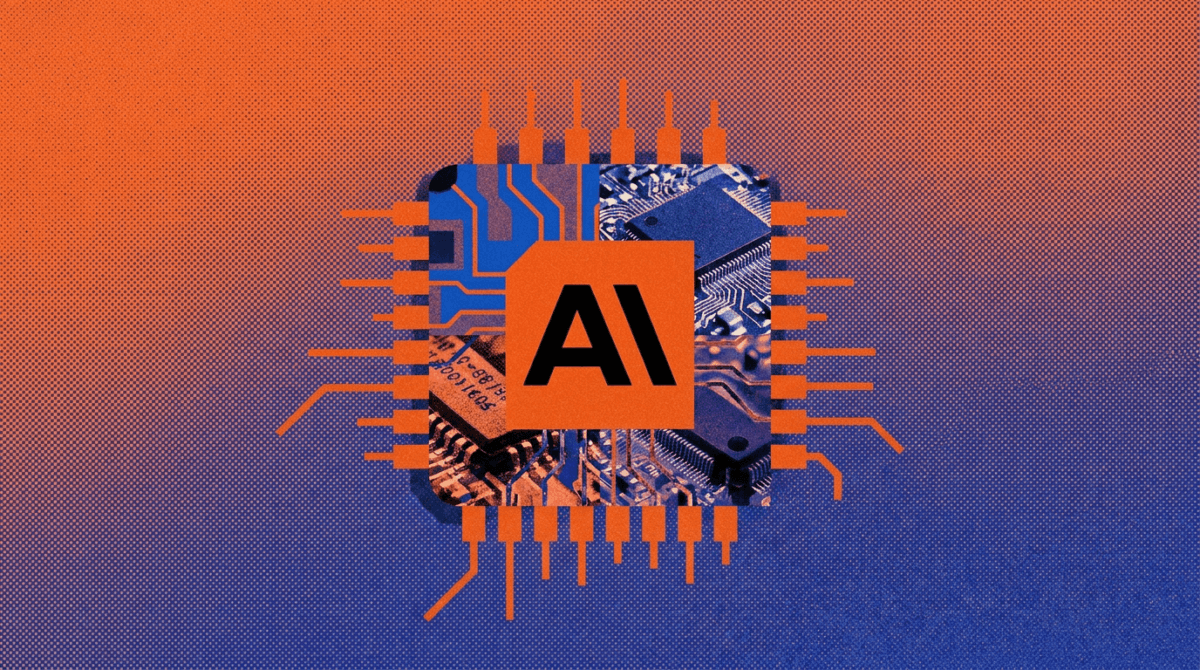
- Anthropic is in early talks with Samsung Electronics to manufacture a custom AI chip, though no detailed design exists yet
- The company has hired Clive Chan, a chip engineer from Tesla and OpenAI, to build out a dedicated chip team
- Anthropic insists that chips from AWS, Google, and Nvidia remain central to its strategy
Anthropic is in early discussions with Samsung Electronics about manufacturing a custom AI chip, according to a report from The Information. The project has no detailed design yet. Anthropic is still deciding what the chip would do and how powerful it needs to be.
The company downplayed the effort. Chips from AWS, Google, and Nvidia remain central to its strategy, a spokesperson told The Information. Anthropic declined to comment on any chip roadmap.
Why is Anthropic building its own chip team?
Signs point toward real work happening. Anthropic has hired Clive Chan, an early member of both Tesla's and OpenAI's custom chip teams. He's expected to build out a dedicated chip group at the company. That's not a casual hire.
The logic is straightforward. Whoever can build and run AI infrastructure more cheaply keeps more of the revenue. Custom chips, designed for specific AI workloads, cost less per inference than general-purpose GPUs once you hit scale. They also consume less power.
OpenAI recently unveiled Jalapeño, its first in-house inference chip, built with Broadcom. AWS has Trainium and Inferentia. Google has TPUs. Meta runs custom silicon tuned for its AI workloads. Anthropic is the last major frontier lab without a public chip strategy.
Why Samsung, and what does it bring?
Samsung is one of three companies in the world capable of manufacturing advanced chips at scale. The others are TSMC and Intel. TSMC builds chips for Apple, Nvidia, AMD, and most AI startups. It's at capacity and charges premium prices.
Samsung offers an alternative. Its foundry business has struggled to match TSMC's yields on the most advanced nodes, but it's improving. For a company in early chip development, Samsung can provide capacity and attention that TSMC might not.
There's also strategic value in not depending entirely on one fab. Supply chain concentration hurt the entire industry during the 2020-2022 chip shortage.
Does this threaten Anthropic's cloud partnerships?
Anthropic has deep relationships with both Amazon and Google. Amazon has invested over $2 billion in the company. Google put in $300 million. Both provide cloud infrastructure for training and running Claude.
Building a custom chip doesn't necessarily conflict with those partnerships. AWS and Google both want Anthropic's models on their platforms. If Anthropic can run Claude more efficiently on custom silicon, that could actually make the models more attractive, not less.
The real question is who manufactures inference chips at scale. Running a custom chip in your own data centers is different from running it on AWS. Anthropic's API business might eventually look more like OpenAI's, with direct infrastructure, rather than a pure cloud play.
What does this mean for Nvidia?
Nvidia's dominance in AI training chips isn't going anywhere soon. Its CUDA software ecosystem has a decade of momentum. Custom chips typically target inference, where the workload is more predictable and easier to optimize.
But inference is where the money is. As AI models move from research into production, inference costs dwarf training costs. A model gets trained once (or periodically retrained). It gets run billions of times.
Anthropic's statement that Nvidia chips remain central is accurate today. It may be less accurate in three years.
Logicity's Take
For AI builders watching infrastructure costs, this story confirms a pattern: every major model provider is moving toward custom silicon for inference. That's good news for your margins in the long run, as competition drives down per-token pricing. In the near term, it means betting on a single provider carries execution risk. If you're building on Claude via AWS Bedrock or Google Vertex, consider designing your integrations to swap providers without a full rewrite. Tools like LiteLLM or a simple abstraction layer over your API calls can save weeks of work later.
How long until a chip ships?
Years. Custom chip development takes 18 to 36 months from tape-out to production. Anthropic doesn't even have a detailed design yet. If work started today, you wouldn't see silicon until late 2028 or 2029.
That timeline matters. The AI industry moves fast. Whatever chip Anthropic designs now needs to run models that don't exist yet. That's a hard problem.
Frequently Asked Questions
Is Anthropic leaving Nvidia?
No. Anthropic says chips from Nvidia, AWS, and Google remain central to its strategy. Custom chip work is exploratory and in early stages.
Why would an AI company build its own chips?
Custom chips designed for specific AI workloads can dramatically reduce inference costs and power consumption compared to general-purpose GPUs.
Who is Clive Chan?
Clive Chan is a chip engineer who worked on custom silicon at both Tesla and OpenAI. He's expected to lead Anthropic's dedicated chip team.
When would an Anthropic chip be available?
Likely not until 2028 or 2029 at the earliest. Custom chip development typically takes 18 to 36 months from detailed design to production.
Does this affect Claude API pricing?
Not immediately. Any cost savings from custom chips would take years to materialize. Current Claude pricing depends on existing cloud infrastructure.
Recent changes to how Anthropic optimizes Claude's efficiency
Need Help Implementing This?
Building AI products that stay flexible across providers? Our team can help you design infrastructure that swaps between Claude, GPT, and open-source models without rewriting your stack. Contact us at consulting@logicity.in.
Source: The Decoder / Matthias Bastian
Manaal Khan
Tech & Innovation Writer
Produced with AI assistance and reviewed by the Logicity editorial team. Learn more in our Editorial Policy.