Key Takeaways
- Anthropic reduced Claude Code's system prompt by 80% because Fable 5 models perform better with less instruction
- Examples now constrain model performance because newer models are more imaginative than the examples given
- Anthropic shifted from hard rules to contextual steering for its Mythos-class models
Anthropic has reduced the system prompt for Claude Code by 80 percent. The reason: its newest Fable 5 models, also called the Mythos class, actually perform worse when given detailed instructions and examples. This inverts a core assumption that has guided prompt engineering since GPT-3.
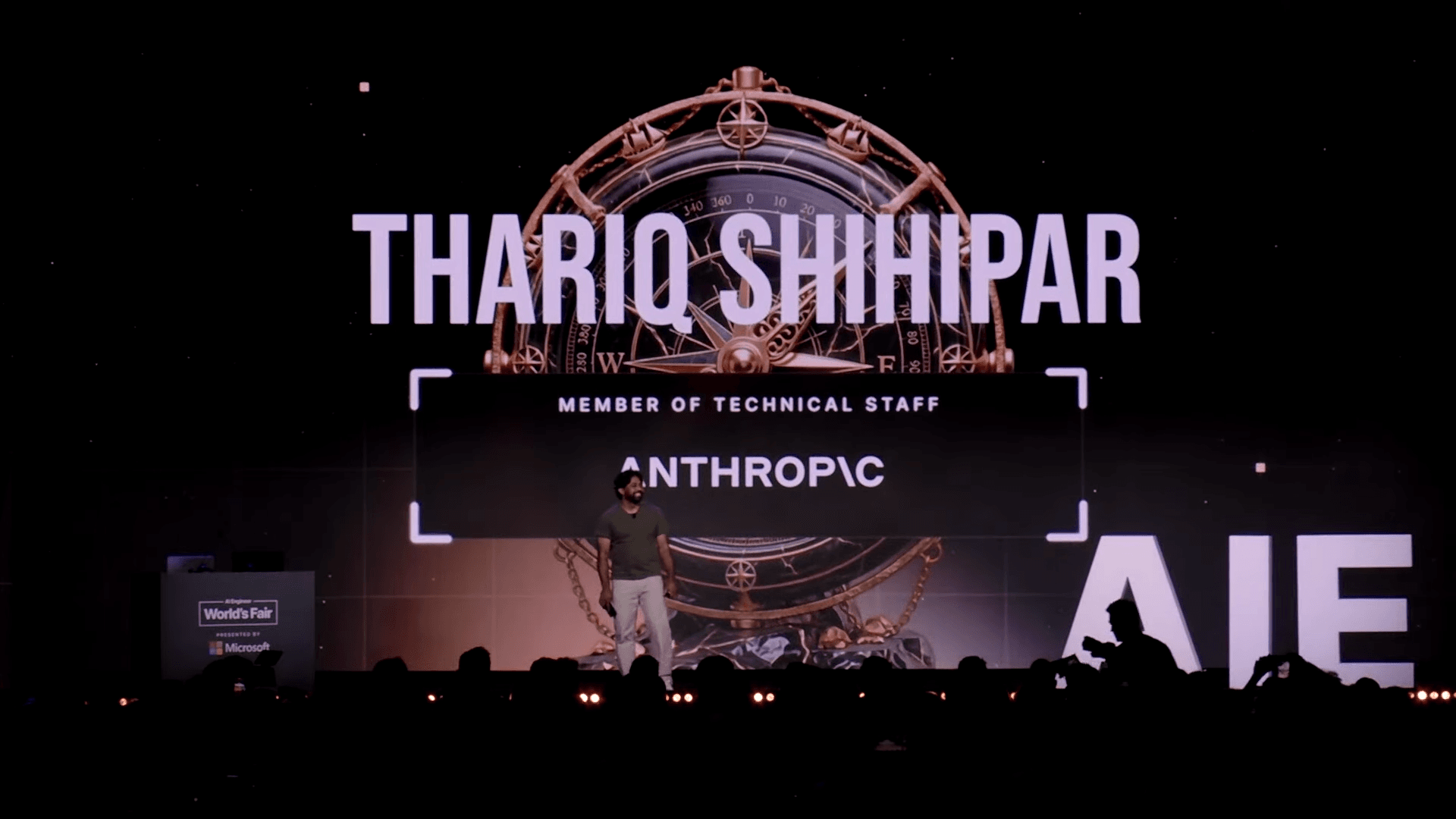
Tariq Shihipar, a member of technical staff at Anthropic, described the shift in a recent discussion. The company found that more instructions and more examples no longer lead to better results with this generation of models.
“Most recently we found this new class of models want a smaller system prompt. [Examples] tend to constrain it because it's actually more imaginative than the examples we give it.”
— Tariq Shihipar, Member of Technical Staff at Anthropic
Why did longer prompts stop working?
According to Shihipar, the evolution happened in stages. Early language models needed short prompts packed with examples and restrictive rules. They lacked the reasoning capacity to generalize, so you had to show them exactly what you wanted.
As models improved at understanding context, prompts grew longer. Engineers added edge cases, guardrails, formatting instructions. Claude Code's original system prompt reportedly ran to around 12,000 tokens. That worked for the previous generation.
Fable 5 broke the pattern. When given exhaustive examples, the model treated them as constraints rather than guidance. It would match the examples rather than exceed them. The model's own reasoning was being capped by the ceiling the prompt set.
From hard rules to contextual steering
Anthropic also changed how it handles restrictions. Instead of explicit prohibitions like "do not do X," the team now steers Fable models through context. Shihipar didn't elaborate on what that looks like in practice, but the implication is clear: the model infers boundaries from the situation rather than from a list of forbidden actions.
This matches a trend in Anthropic's public guidance. The company has previously suggested treating Claude more like a colleague than a tool to be controlled with extensive rules. The Fable 5 findings appear to validate that philosophy with empirical results.
What this means for developers using AI coding tools
If you're building on Claude's API or using Claude Code, the takeaway is practical: test whether shorter prompts improve output quality. The instinct to add more detail may now be counterproductive, at least for Anthropic's latest models.
This doesn't mean all context is bad. The distinction is between context that frames the task and examples that constrain the solution space. A prompt that explains the codebase architecture may help. A prompt that shows five examples of how to write a function may hurt.
The finding also raises questions about prompt engineering as a discipline. If frontier models need less instruction, the skill shifts from crafting elaborate prompts to identifying which minimal context unlocks the best performance. That's a different optimization problem.
Does this apply to other models?
Anthropic's claim is specific to Fable 5. Whether OpenAI's models or open-source alternatives show the same pattern is unknown. Shihipar's comments suggest this is a property of a particular capability threshold, so it may emerge in other model families as they scale.
For now, the safest approach is empirical. Benchmark your prompts at different lengths. If you're seeing diminishing returns from additional instructions, you may have hit the same inflection point Anthropic discovered.
Logicity's Take
This is the most concrete evidence yet that prompt engineering is becoming less about volume and more about precision. For AI product teams, the implication is that your prompt tuning workflow needs to include subtraction tests, not just addition. If you're building agentic coding tools that compete with Claude Code, like Cursor, Codeium, or GitHub Copilot, you should be testing whether your system prompts are over-specified. The 80% reduction Anthropic reports is dramatic enough that it probably affects latency and cost as well as output quality.
Frequently Asked Questions
What is Claude Code?
Claude Code is Anthropic's agentic coding tool that operates autonomously within a developer's terminal to write, edit, and execute code. It uses Claude's language models with a system prompt that guides its behavior.
What are Fable 5 models?
Fable 5, also called the Mythos class, is Anthropic's newest generation of Claude models. According to Anthropic, these models perform better with shorter system prompts and fewer examples than previous versions.
Why do examples hurt model performance in Fable 5?
Anthropic found that examples constrain Fable 5's outputs because the model is more imaginative than the examples given. Instead of using examples as a floor, the model treats them as a ceiling.
Should I shorten my prompts for other AI models?
This finding is specific to Anthropic's Fable 5 models. Whether it applies to OpenAI or open-source models is untested. The best approach is to benchmark different prompt lengths for your specific use case.
Need Help Implementing This?
If you're building AI-powered developer tools or optimizing prompts for production systems, we'd like to hear about your approach. Reach out via our contact form to share what's working in your stack.
Source: The Decoder / Matthias Bastian
Manaal Khan
Tech & Innovation Writer
Produced with AI assistance and reviewed by the Logicity editorial team. Learn more in our Editorial Policy.