Anthropic is embedding statistical watermarks in all Claude output, making AI-generated text detectable without visible marks. The company says quality is unaffected. John Gruber, co-creator of Markdown and author of the influential Daring Fireball blog, disagrees sharply: when Claude picks between synonyms based on a secret key rather than meaning, text quality inevitably degrades.
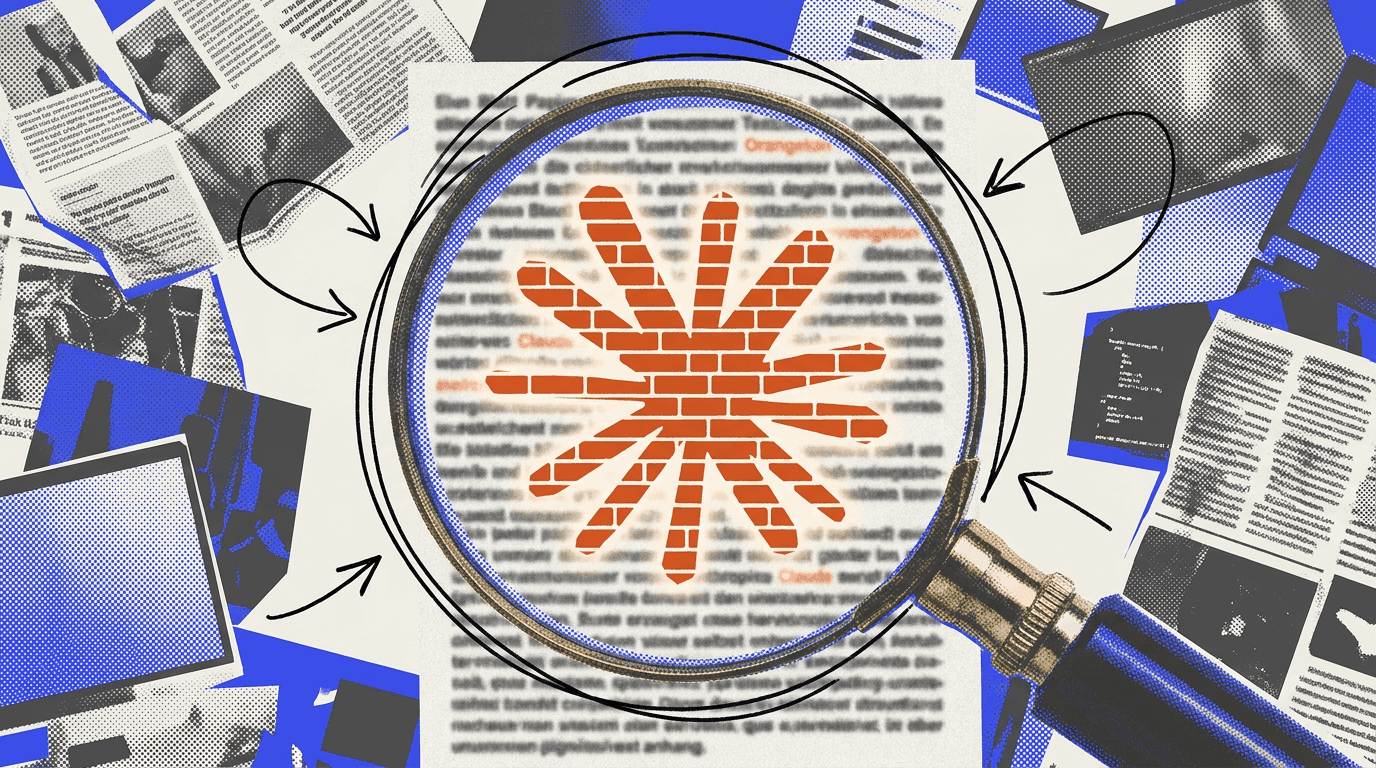
The watermarking applies globally to all Claude models released after August 2, 2026. Anthropic built it on Google's SynthID-Text approach, which tweaks the randomness source during word selection to create patterns detectable by Anthropic's verification tools. No hidden characters. No visible marks. Just statistical fingerprints in word choice.
Why Gruber says "imperceptible" is wrong
Claude's Invisible Watermark: What It Actually Proves
Anthropic claims the watermarking difference is imperceptible to readers. Gruber's counterargument is straightforward: no two synonyms carry identical meaning. When Claude chooses "overcast" over "grey" because the watermark key favors it, not because it fits better, precision suffers.
“The system sometimes boosts the probability of a worse word and lowers it for the best one.”
— John Gruber, Daring Fireball
Even Google DeepMind's SynthID study in Nature, which Anthropic cites as validation, fails to convince Gruber. The research measured thumbs-up and thumbs-down rates, which he argues miss subtle quality degradation. Nobody downvotes a chatbot response because it wrote "bananas" instead of "pineapples," even though the word choice was dictated by watermarking rather than context.
Gruber floats a provocative hypothesis: Gemini's reputation as weaker than Claude and ChatGPT could partly stem from SynthID already being active in Google's model.
Legal sector sees mixed implications
Legal publication Artificial Lawyer examined what watermarking means for law firms. The verdict: mostly harmless, but with specific edge cases that matter.
Most clients and courts won't object to AI use. Some clients now actively request it. But two scenarios create friction. First, if a client explicitly bans AI or a judge is skeptical, the watermark proves AI contribution even when the submitted document is factually flawless. That proof could affect how proceedings unfold.
Second, watermarks travel with text. A complex contract might contain AI-marked clauses alongside human-written sections. Future contracts built on those templates carry the marks forward. When multiple LLMs touch a single document, different watermarks can overlap.
Fee negotiations could shift too. If clients demand discounts because AI reduced effort, the AI share becomes verifiable in principle.
Stripping the watermark takes one tool
Anyone determined to remove the marking can do so. A paraphrasing tool called Declaude, built by developer James Padolsey, strips the watermark by rewording the text. Padolsey criticizes the underlying EU regulation as arbitrary, arguing the system mostly catches ordinary users while doing little against deliberate circumvention.
Anthropic is rolling out watermarking to comply with the EU AI Act but applies it globally. The company says it cannot limit the feature by region. Older Claude models will be retrofitted in the coming months.
Logicity's Take
For AI builders shipping products on Claude's API, the watermark is a double-edged compliance feature. It satisfies EU regulators and gives enterprises provenance assurance. But if Gruber is right about subtle quality degradation, teams building customer-facing writing tools may need to benchmark Claude against GPT-4o and Gemini on prose quality, not just accuracy. The fact that Declaude exists also means the watermark is a speed bump, not a wall. For teams building sensitive document workflows, consider how watermark inheritance affects downstream templates.
The open question
Anthropic's position is clear: watermarking is invisible to humans. Gruber's position is equally clear: invisible doesn't mean harmless. What's missing is independent empirical work on whether Claude's prose quality shifted after August 2. Until that data exists, the debate remains about priors, not evidence.
Related AI privacy and control considerations for enterprise users
Need Help Implementing This?
If you're building on Claude's API and need help evaluating watermark implications for your product or compliance requirements, reach out to Logicity's consulting team for a technical assessment.
Source: The Decoder / Maximilian Schreiner
Manaal Khan
Tech & Innovation Writer
Produced with AI assistance and reviewed by the Logicity editorial team. Learn more in our Editorial Policy.