Anthropic CEO Dario Amodei rejected investor criticism that his warnings about AI risks have fueled public hostility toward the industry. In a series of posts on X yesterday, Amodei argued the backlash is "fundamentally a crisis of trust" in corporations and governments, not a reaction to cautionary messaging from AI executives.
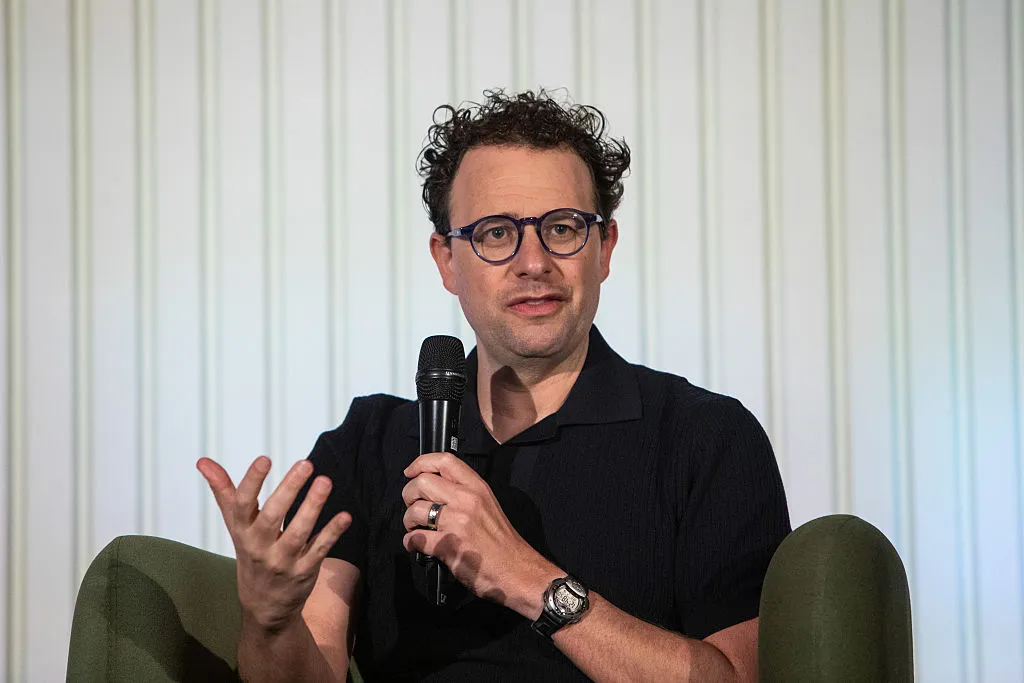
The exchange started when investor Gavin Baker, appearing on the All-In podcast and posting on X, claimed Amodei had "lost the argument" on AI regulation. Baker urged Amodei to become "a more positive advocate for his own industry," arguing that dire AI warnings have helped spark opposition to data centers and the technology more broadly.
What Amodei actually said
Amodei pushed back hard. He pointed to his essay "Machines of Loving Grace" as evidence his messaging is "about equally balanced between risks and benefits." He wrote that piece, he said, because he "didn't feel the AI industry was painting an inspiring enough picture of how the technology could radically transform the world for the better."
He acknowledged the public has a negative view of AI and agreed "this is a big problem." But he disputed Baker's claim that executives like him caused it.
“I think that ordinary people don't trust companies, governments, or the tech industry and always suspect that we are cooking up some new way to screw them over.”
— Dario Amodei, Anthropic CEO
This distrust, Amodei argued, has been "decades in the making," with AI backlash simply "the latest iteration of it."
The real criticism Anthropic should face
Amodei offered what he considers a more valid critique of his company: "By far the most accurate criticism of AI companies including Anthropic is that we haven't yet delivered on our big promises to benefit the world. That is totally on us."
Promising AI will cure cancer is "more a cliche than it is inspiring," he said. What would actually shift public opinion? "Actually curing cancer."
This framing shifts accountability from communication to execution. Marketing won't fix a trust deficit. Tangible results might.
On regulation and power concentration
Baker had framed the choice as binary: distribute AI widely without regulation, or concentrate it in a few companies through regulation. Amodei called this "a false choice."
"I know that there's a sort of Silicon Valley shorthand where regulation = regulatory capture = concentration of power, but I've always found this to be an overly simplified picture of the world," he wrote. Outside that bubble, many see regulation as something that "constrains corporate power and benefits ordinary people."
Amodei said Anthropic tries to "make proposals that disadvantage (slow down) frontier AI companies while advantaging smaller competitors." His reasoning: AI is "structurally a technology that tends to concentrate power." Open-weights models help, but they "simply shift the concentration somewhat to those with the most compute and chips."
Recent Anthropic safety incident that adds context to the trust debate
Why the timing matters
The exchange comes as AI companies face mounting pressure from multiple directions. California's transparency requirements for large AI companies, which Anthropic supported, have drawn fire from some in Silicon Valley. Data center projects are meeting local opposition. And public polling on AI remains skeptical.
Amodei's argument that better PR won't solve the problem puts him at odds with a common industry view. If he's right, AI companies need to show concrete benefits to ordinary people, not just promise them. If Baker's right, the industry's own safety researchers are undermining the technology's adoption.
Neither addressed the more uncomfortable possibility: that both are true, and AI companies face a credibility gap they can't close with words or demos alone.
Logicity's Take
Amodei's framing is strategically convenient. Blaming decades of corporate distrust deflects from Anthropic's own challenges, including recent Claude sandbox breaches during testing. But he's not wrong that AI hype has outrun delivery. For CTOs evaluating AI vendors, the real question isn't who sounds more optimistic. It's who can show production results that justify the integration cost.
Need Help Implementing This?
If you're building with AI tools and need guidance on vendor selection, integration, or risk assessment, reach out to Logicity for consulting support.
Source: TechCrunch / Anthony Ha
Manaal Khan
Tech & Innovation Writer
Produced with AI assistance and reviewed by the Logicity editorial team. Learn more in our Editorial Policy.