Key Takeaways
Amazon Just Killed Mechanical Turk After 21 Years

- Amazon Mechanical Turk closes to new customers July 30, 2026, entering maintenance mode with no new features
- SageMaker Ground Truth and Amazon Augmented AI shut down the same day, signaling Amazon's exit from human labeling
- Specialized vendors like Scale AI and Surge AI now dominate the data annotation market MTurk once created
Amazon Web Services is shutting down Mechanical Turk to new customers starting July 30, 2026. The platform, launched in 2005 under the tagline "Artificial Artificial Intelligence," pioneered crowdsourced human labor for tasks machines couldn't handle. Existing customers can continue using the service, but it enters maintenance mode with no new feature development.
Two related services, SageMaker Ground Truth and Amazon Augmented AI, close to new customers on the same date. Together, these shutdowns mark Amazon's retreat from the human-in-the-loop data labeling business it essentially invented.
What was Mechanical Turk, and why did it matter?
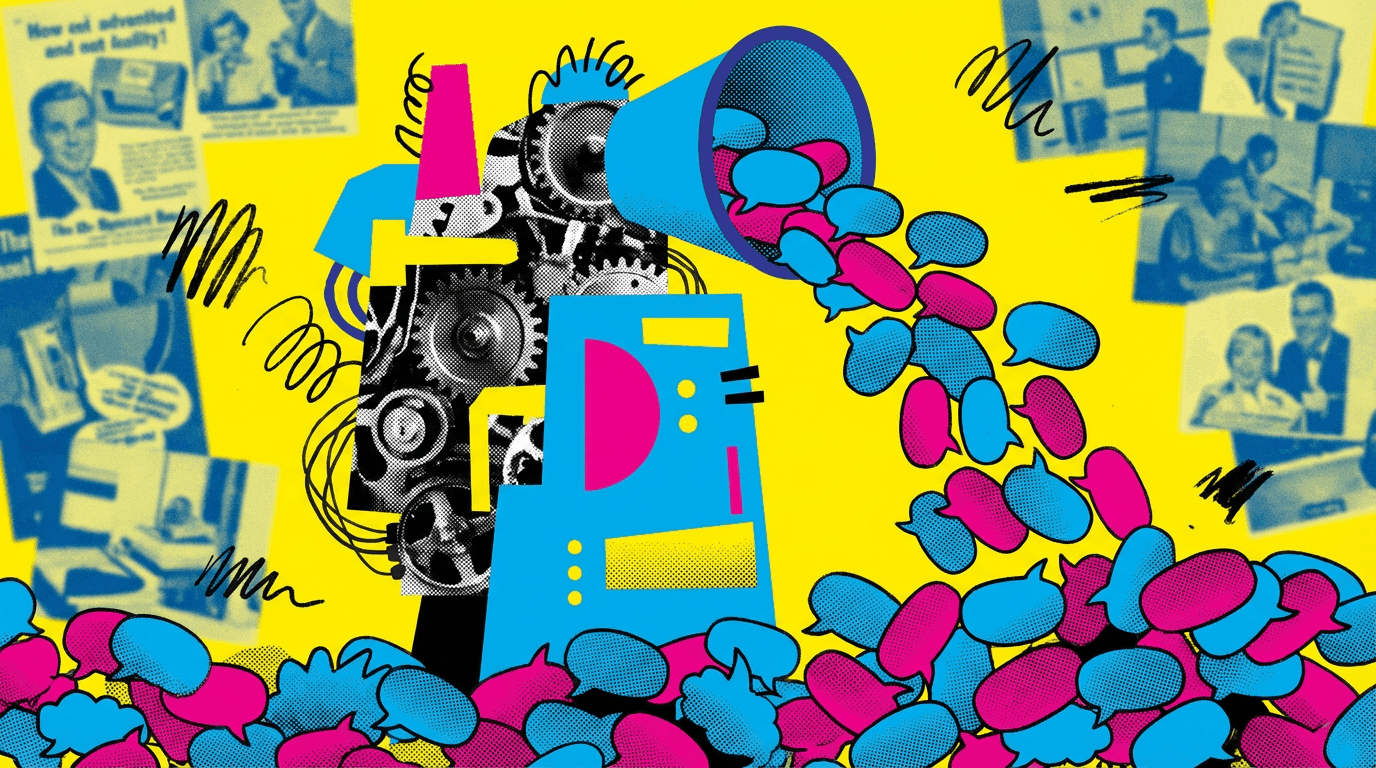
The name referenced an 18th-century chess-playing automaton that fooled audiences into thinking a machine could play chess. In reality, a human operator hid inside the cabinet. MTurk operated on the same principle: tasks that looked automated were actually performed by a distributed global workforce.
At its peak, MTurk employed over 500,000 workers across more than 190 countries. Researchers used the platform to label training data for machine learning models, validate AI outputs, and run behavioral studies. More than 100,000 academic papers relied on MTurk for data collection.
The economics were brutal for workers. Studies found the median wage hovered around $1 per hour, well below minimum wage in most jurisdictions. Mary Gray, a Microsoft Research scientist and co-author of "Ghost Work," described MTurk workers as "the invisible workforce behind AI... the humans teaching machines to be human."
Why is Amazon shutting it down now?
Two forces killed MTurk's usefulness for AI development.
First, the workers themselves started using AI. A 2023 study found that many crowdworkers were completing tasks with language models rather than their own judgment. This undermined the entire premise: if you're paying humans to generate training data and they're just prompting GPT, you're laundering synthetic data through human accounts.
Second, quality requirements increased. Early AI training could tolerate noisy labels from anonymous workers. Modern foundation models demand expert-level annotation, especially for edge cases and subjective judgments. MTurk's anonymous, low-paid workforce couldn't deliver the precision that AI labs now require.
Who handles AI training data now?
Specialized vendors replaced MTurk's generalist model. Scale AI, valued at $14 billion as of 2024, built its business on providing vetted experts for data annotation. Surge AI focuses specifically on NLP tasks with trained linguists. Both companies employ workers at higher rates and maintain quality controls that MTurk never implemented.
The shift reflects a broader trend. Cheap, unvetted human labor was good enough for training image classifiers in 2015. Training multimodal models that handle legal contracts, medical diagnoses, or financial analysis requires domain experts, not anonymous gig workers earning below minimum wage.
Academic researchers who relied on MTurk for behavioral studies have migrated to platforms like Prolific, which offers better worker compensation and demographic controls.
What does this mean for teams building AI products?
If you're still using MTurk, you have until the shutdown date to migrate. But the real lesson is strategic: the human-labeled data that powered AI's first decade is becoming less valuable.
Synthetic data generation and automated labeling tools now handle tasks that once required human annotation. Amazon's exit suggests even one of the largest cloud providers sees diminishing returns in the human labeling business.
For teams building AI products today, the data annotation workflow increasingly splits into two paths: commodity tasks handled by synthetic data pipelines, and high-stakes annotation handled by expensive domain experts. The middle ground that MTurk occupied is disappearing.
Logicity's Take
MTurk's shutdown is less about Amazon abandoning a product and more about AI eating its own tail. The platform that trained the first generation of AI models became obsolete because those models got good enough to replace the workers. For AI builders, the implication is clear: your annotation pipeline is a competitive moat only if the humans doing it have expertise AI can't replicate. Scale AI charges enterprise rates for exactly this reason. Teams on tighter budgets should evaluate Prolific for research tasks or consider whether synthetic data covers their use case. The days of solving annotation problems by throwing cheap MTurk workers at them are over.
The end of an era
When Jeff Bezos launched MTurk in 2005, he called it "artificial artificial intelligence." The joke was that behind every smart-looking API was a human doing the actual work. Twenty-one years later, the joke reversed itself. Actual artificial intelligence made the human version obsolete.
MTurk deserves recognition for what it enabled. ImageNet, the dataset that sparked the deep learning revolution, was labeled by MTurk workers. Countless AI products shipped because someone paid $0.02 per task to have humans draw bounding boxes around objects.
But the workers who made AI possible never shared in the wealth it created. The median hourly wage stayed near $1 while the companies using their labor became trillion-dollar giants. MTurk's shutdown closes that chapter without resolving its contradictions.
Frequently Asked Questions
When does Amazon Mechanical Turk shut down?
MTurk closes to new customers on July 30, 2026. Existing customers can continue using the platform in maintenance mode, but no new features will be developed.
What should I use instead of MTurk for data labeling?
Scale AI and Surge AI are the main enterprise options for high-quality annotation. Prolific serves academic researchers and offers better worker compensation. For commodity tasks, consider synthetic data generation tools.
Why did Amazon shut down Mechanical Turk?
A 2023 study found MTurk workers were using language models to complete tasks, undermining data quality. AI labs shifted to specialized vendors with vetted experts who can handle complex edge cases.
Are SageMaker Ground Truth and Amazon Augmented AI also shutting down?
Yes. Both services close to new customers on July 30, 2026, the same date as MTurk. This signals Amazon's broader exit from human-powered data labeling services.
How many workers did Mechanical Turk employ?
MTurk had over 500,000 workers across more than 190 countries at its peak. Studies found the median wage was approximately $1 per hour.
Another example of AI systems reaching capabilities that previously required human operators
Need Help Implementing This?
If you're migrating from MTurk or rebuilding your data annotation pipeline, Logicity offers consulting on AI infrastructure decisions. Contact us to discuss your labeling strategy and vendor selection.
Source: The Decoder / Maximilian Schreiner
Manaal Khan
Tech & Innovation Writer
Produced with AI assistance and reviewed by the Logicity editorial team. Learn more in our Editorial Policy.