Key Takeaways
You Click Pay… and Chaos Begins: Full End-to-End Bill Payment Architecture Explained
- More payment reminders add noise, not conversions. The real problem is friction between intent and action.
- Text-to-complete payments outperform text-to-remind strategies by keeping customers in a single flow.
- Digital wallets like Apple Pay accelerate checkout but cannot fix a broken nine-click payment journey.
A utility company requires customers to click nine times between receiving a payment reminder and reaching the Apple Pay button. The wallet makes that final step easy. It does nothing about the eight steps before it. This disconnect, according to Shawn Curtis, general manager of payments at SBT, explains why businesses lose revenue despite having modern payment options.
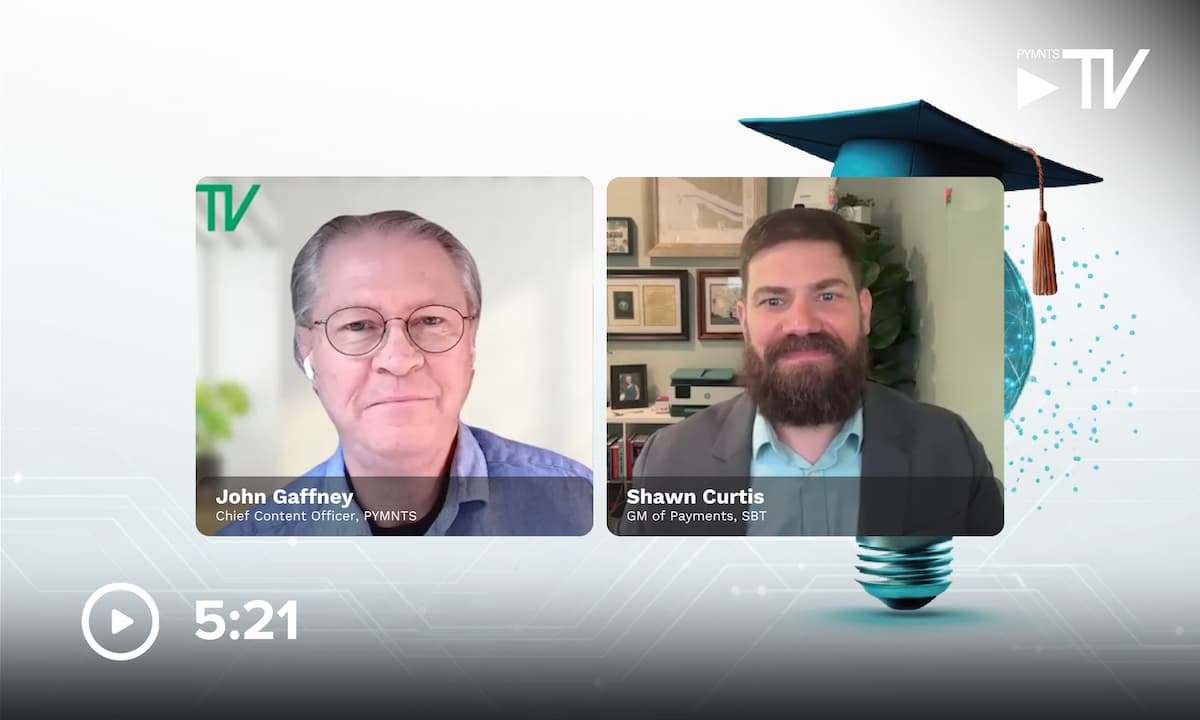
"Payments is not the point. Conversion is," Curtis told PYMNTS during a conversation for the 2026 "Summer School" series. The comment reframes how lenders, utilities, and subscription businesses should think about recurring payments. Reaching customers is not the bottleneck. The path from deciding to pay to completing the transaction is.
Why more reminders make things worse
When payment rates disappoint, the instinct is to increase volume. More emails. More calls. More texts. The strategy treats collections as an awareness problem: remind customers often enough, and they will pay.
"More volume is just more noise," Curtis said. "It doesn't actually remove friction."
The practical fix is simpler. Keep customers in the same flow and let them pay the moment they decide to act. The breakdown happens between intent and action. When customers must switch channels, log in, or take extra steps, each action creates natural drop-off in the payment funnel.
A notification may reach the right customer at the right moment with the correct balance. If the next step requires five minutes, a password reset, or a separate application, the business has created a new opportunity for abandonment. Industry research from Baymard Institute puts average checkout abandonment at 70%, with complicated processes cited as a leading cause.

Text-to-complete beats text-to-remind
Text-based payments are gaining traction because SMS collapses the distance between notification and transaction. Instead of telling customers a payment is due, businesses can turn the message itself into the beginning of the transaction.
"Texting is so effective because it meets the consumer in the moment of intent," Curtis said. "It's quick, it's easy, it's confidential, it's more discreet."
Phone calls introduce more than friction. Curtis described them as "a type of social blocker" when customers do not want colleagues or others around them to hear the conversation. A text that leads to an app download, account registration, or lengthy portal experience may capture attention while still losing the transaction.
The opportunity is text-to-complete, not text-to-remind. Businesses using workflow automation tools like Zapier or Make can connect SMS platforms directly to payment processors, eliminating the redirect to separate portals.
Disclosure
Some links in this post are affiliate links — Logicity earns a commission if you sign up, at no extra cost to you. We only link products we have used or actively recommend.
Digital wallets are not a strategy
Apple Pay and Google Pay eliminate the need to find a card and manually enter credentials. Curtis cautioned against treating wallet acceptance as a substitute for redesigning the underlying journey.
"Digital wallets themselves are a great accelerator, but they are not a strategy," he said.
The nine-click utility example illustrates a broader mistake in digital transformation. Businesses add a modern payment option to an old operating process and call the result innovation. The customer still experiences the entire journey, not just the payment button at the end. Industry benchmarks suggest three clicks or fewer for optimal checkout flow. Nine clicks represents three times the friction threshold.
Building trust before sending the link
Reducing clicks creates another challenge. Direct payment links are convenient, but consumers have been trained to treat unexpected links with suspicion. Phishing attacks routinely impersonate banks and utilities.
"Trust starts upstream from where the request is actually made," Curtis said. Companies can use richer messages with branding, logos, and contextual information. But credibility should be established earlier. When customers sign up, businesses should explain which number will send payment requests. Setting expectations upfront reduces skepticism when the link arrives.
For recurring billers, this means the onboarding experience matters as much as the payment experience. A CRM like Salesforce, HubSpot, or Zoho CRM can automate a welcome sequence that tells customers exactly how future payment requests will arrive.
Logicity's Take
Curtis is describing a problem that cuts across fintech, utilities, and any business with recurring payments: the gap between back-end modernization and front-end experience. Companies have invested heavily in instant payment rails while leaving customer-facing UX unchanged. The fix is not another payment processor. It is mapping every click between reminder and completion, then eliminating the unnecessary ones. For finance teams evaluating checkout optimization, compare full-stack solutions (Stripe Billing, Chargebee) against point solutions that only address the final step.
Payments as user experience
"Payments are not just a back-end function anymore," Curtis said. "They're part of the user experience."
A smooth payment will not necessarily create a memorable customer interaction. A bad one almost certainly will. Customers remember the friction when they need another loan, when they consider switching providers, when they talk to friends about their experience.
"If it's a pain in the neck to pay you back for this loan, I'm going to remember that the next time I need another loan," Curtis said. "App fatigue is a real thing."
The implication for recurring billers: payment experience affects lifetime value, not just individual transactions. Reducing friction from nine clicks to three does not just recover one payment. It shapes whether the customer stays.
Frequently Asked Questions
What is payment friction and why does it matter?
Payment friction refers to any step that slows or complicates the transaction process between a customer deciding to pay and completing the payment. Each additional click, login, or redirect creates an opportunity for abandonment, reducing conversion rates and revenue.
How many clicks should a checkout process have?
Industry benchmarks suggest three clicks or fewer for optimal checkout conversion. The nine-click example cited by SBT represents three times the recommended friction threshold.
Do digital wallets like Apple Pay reduce payment friction?
Digital wallets accelerate the final payment step by eliminating manual card entry. However, they do not address friction earlier in the journey, such as portal logins, authentication steps, or channel switches.
Why don't more payment reminders improve collection rates?
Additional reminders treat collections as an awareness problem. If customers already know they need to pay but face a cumbersome checkout process, more reminders add noise without removing the friction that causes abandonment.
What is text-to-complete payment?
Text-to-complete allows customers to finish a payment directly from an SMS without switching to a separate app or portal. This approach keeps customers in the same flow where they received the reminder, reducing drop-off.
Need Help Implementing This?
If your payment journey has more than three clicks, contact Logicity for a friction audit. We help fintech and finance teams map customer flows, identify drop-off points, and implement text-to-complete solutions that convert.
Source: PYMNTS | / PYMNTS
Huma Shazia
Senior AI & Tech Writer
Produced with AI assistance and reviewed by the Logicity editorial team. Learn more in our Editorial Policy.