Key Takeaways
- Semrush offers the closest feature parity to Ahrefs with stronger competitor analysis tools
- Content-focused teams should consider Clearscope or Surfer instead of general SEO suites
- Google Keyword Planner remains the best free option for basic keyword research
Ask ten SEO professionals which tool they use, and at least seven will say Ahrefs. The platform has become so embedded in SEO workflows that suggesting an alternative feels almost heretical. But Ahrefs' recent price increases have pushed many teams to explore other options. Some need tools more focused on specific tasks like content optimization or market intelligence. Others want enterprise scale or, frankly, just a lower monthly bill.
The good news: solid alternatives exist across the spectrum. Some match Ahrefs feature-for-feature. Others go places Ahrefs doesn't even try to go. Here's what actually works, and for whom.
What Makes an Ahrefs Alternative Worth Considering
Ahrefs built its reputation on three pillars: a massive backlink database, deep keyword analytics, and competitor research tools. Any serious alternative needs to hold up against at least one of these while offering something Ahrefs doesn't. That usually means broader functionality, better content optimization features, a lower price, or a more approachable interface.
Data quality matters most. An SEO tool is only as good as its index. The best alternatives maintain keyword databases and backlink profiles that are updated frequently and large enough to surface real opportunities, not just the obvious keywords everyone already targets.
Semrush: The Closest Feature Match
If you want an all-in-one platform that rivals Ahrefs in scope, Semrush is the obvious choice. It covers keyword research, backlink analysis, site audits, and competitor tracking. The platform also extends into areas Ahrefs treats as secondary: social media tracking, content marketing workflows, and PPC research.
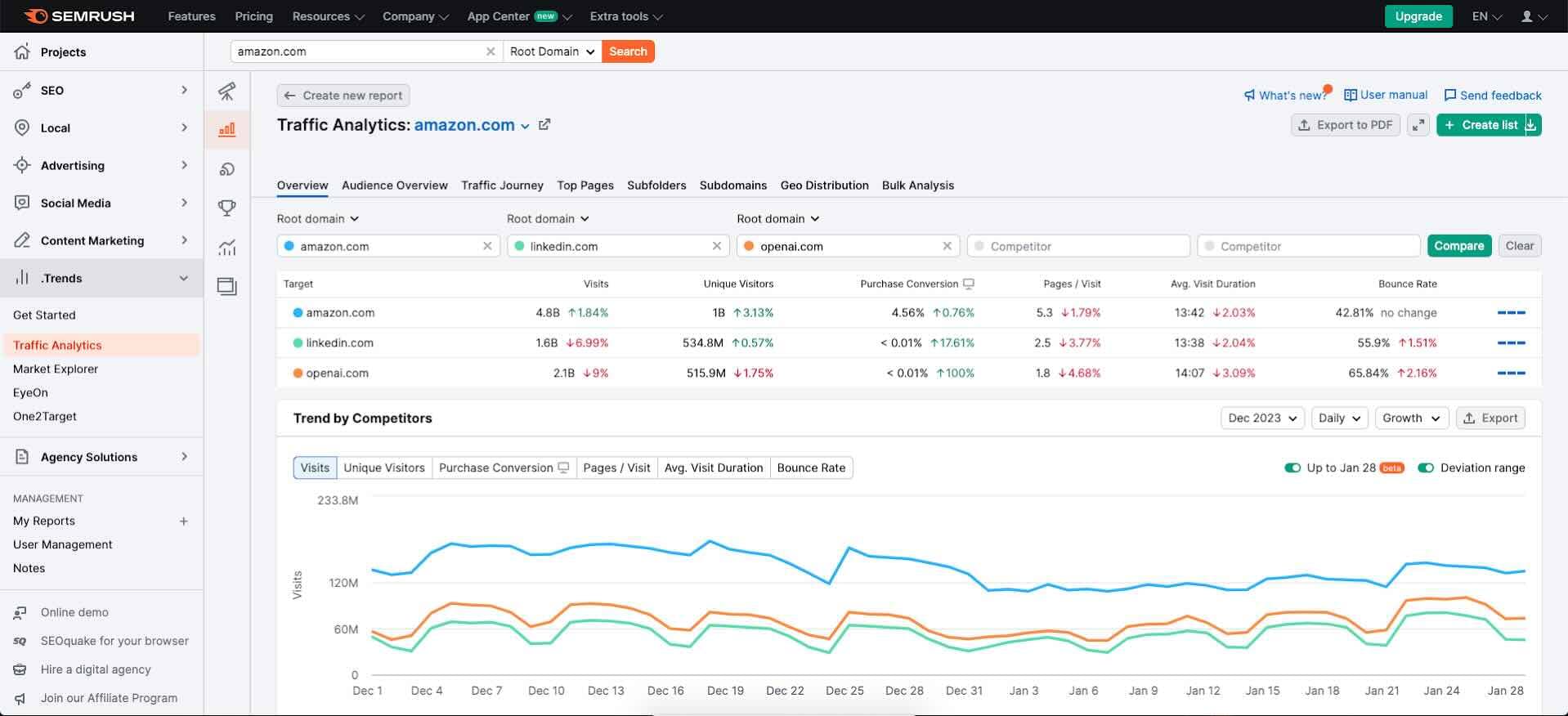
Semrush's competitor analysis is particularly strong. You can track multiple competitors simultaneously and see where their organic traffic comes from. The interface takes some getting used to, but the depth justifies the learning curve.
Similarweb: Market Intelligence First
Similarweb approaches SEO from a different angle. Rather than starting with keywords, it focuses on traffic patterns and market intelligence. You can see estimated traffic volumes for any website, traffic sources, audience overlap between competitors, and industry benchmarks.
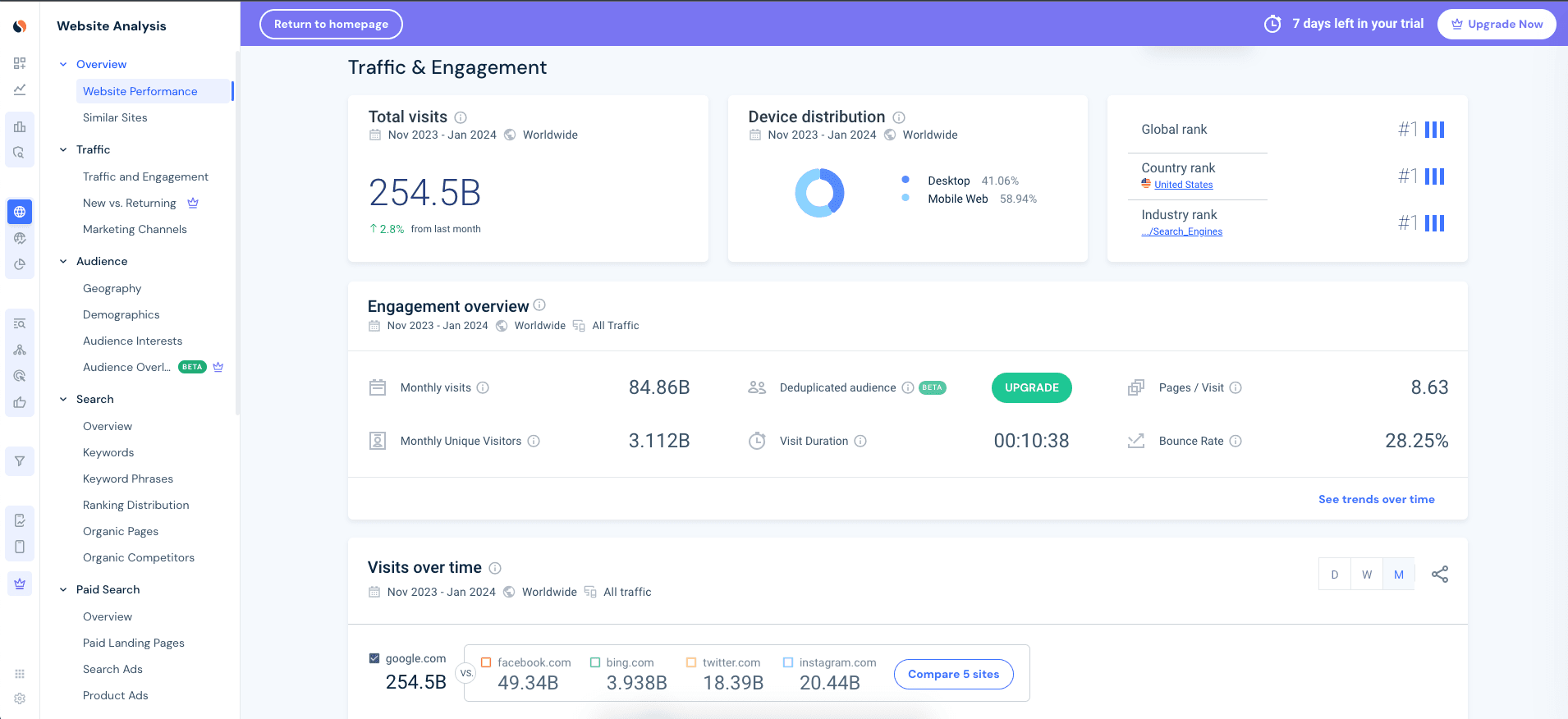
This makes Similarweb valuable for strategic planning. If you're trying to understand a market before diving into keyword research, or if you need to benchmark your traffic against competitors, Similarweb provides context that pure SEO tools miss.
Clearscope: Content Optimization Specialist
Clearscope doesn't try to replace Ahrefs. It focuses entirely on helping you write content that ranks. You input a target keyword, and Clearscope analyzes top-ranking pages to show you which terms and topics to include. Writers get real-time feedback as they draft.
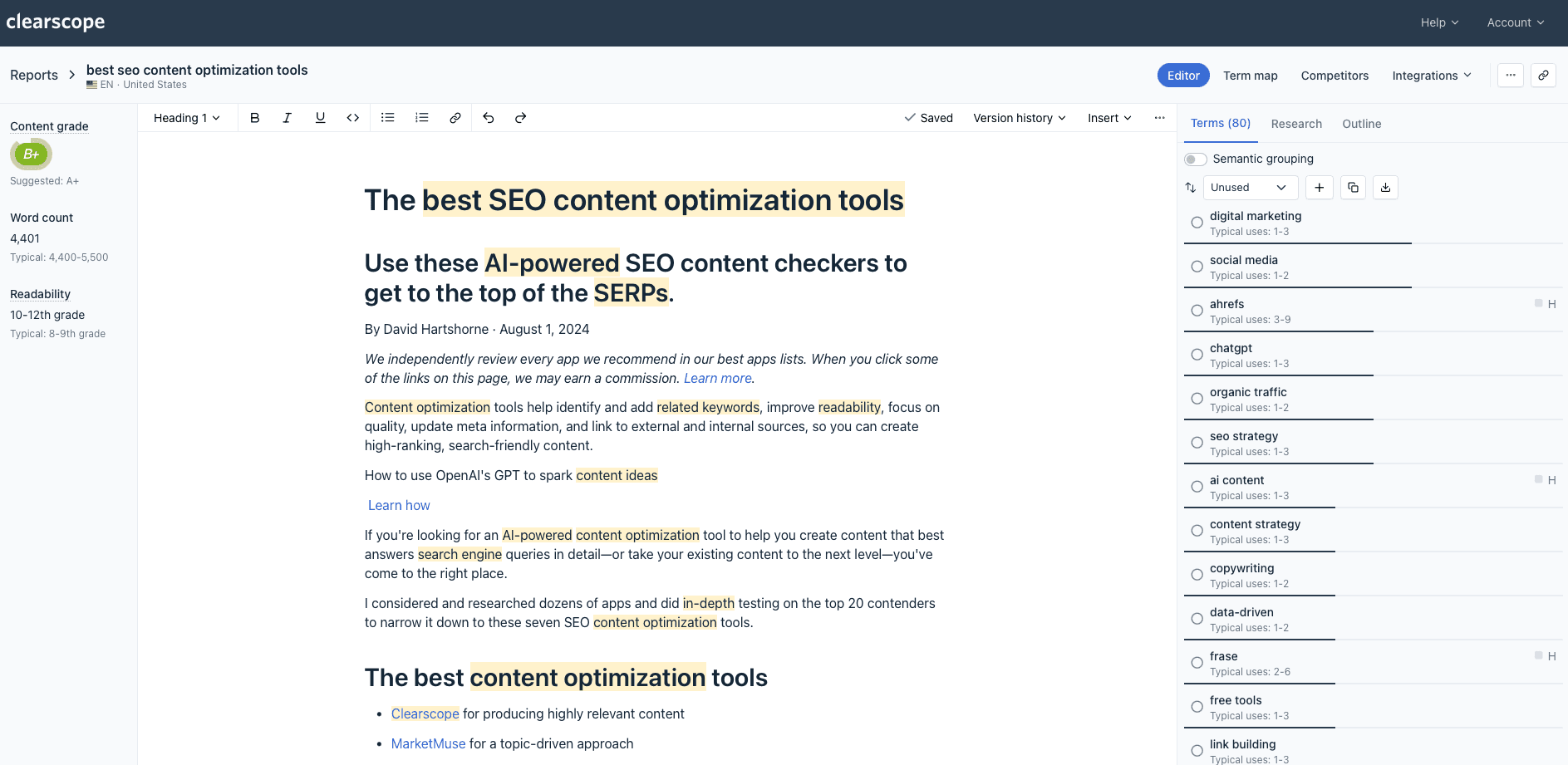
Teams that produce high volumes of SEO content often pair Clearscope with a traditional research tool. You use Ahrefs or Semrush to find keywords worth targeting, then use Clearscope to optimize the actual content. It's a workflow tool, not a research replacement.
Surfer: AI-Powered Content Editing
Surfer occupies similar territory to Clearscope but leans harder into AI-assisted writing. The platform analyzes SERP data to generate content briefs and provides real-time optimization scores as you write. Its AI features can suggest paragraph structures and heading hierarchies.
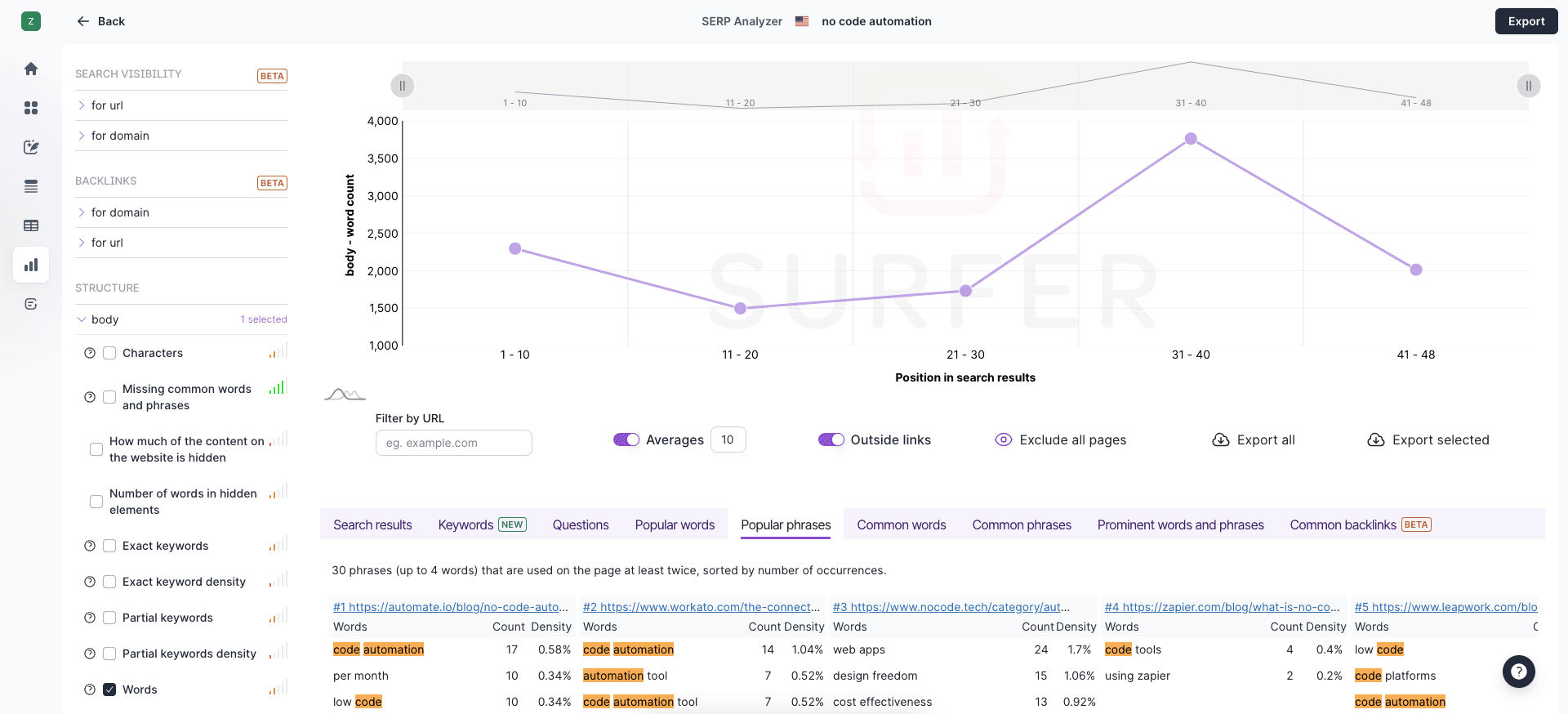
Surfer works well for teams that want more prescriptive guidance. The AI suggestions speed up the drafting process, though heavy reliance on them can make content feel formulaic. Best used as a starting point rather than a template to follow exactly.
Mangools: Entry Point for Beginners
Mangools strips away complexity. The interface is clean, the learning curve is gentle, and the price is significantly lower than Ahrefs or Semrush. You get keyword research, rank tracking, backlink analysis, and site audits in a package that doesn't overwhelm new users.
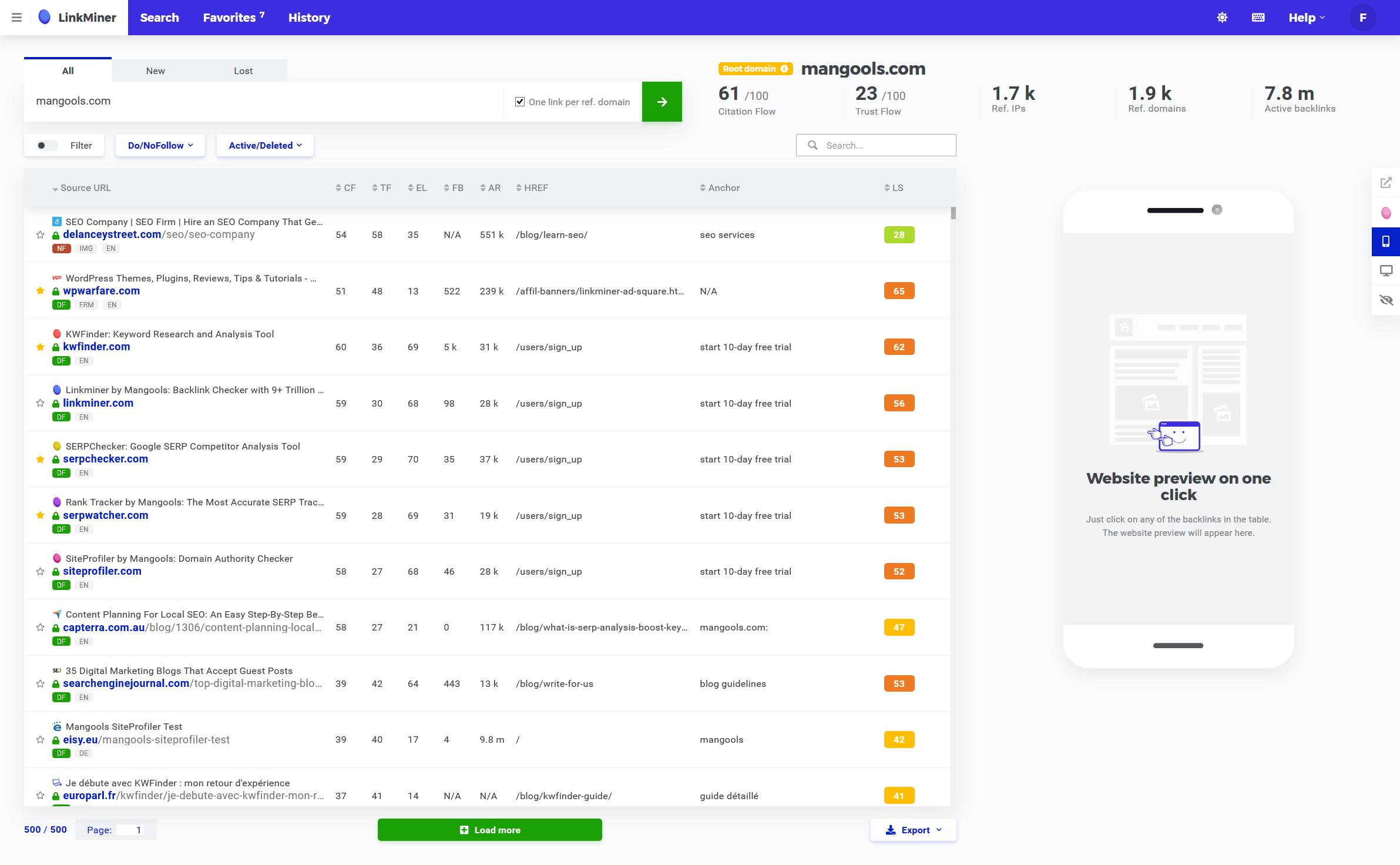
The tradeoff is depth. Mangools' databases are smaller, and advanced users will hit limitations quickly. But for small businesses or solo operators just starting with SEO, Mangools provides enough capability without the cognitive overload of enterprise tools.
seoClarity: Enterprise Scale
seoClarity targets large organizations with complex SEO needs. The platform handles massive keyword sets, provides granular permission controls for large teams, and integrates with enterprise analytics stacks. Reporting is built for executives who need summaries, not just practitioners who want raw data.
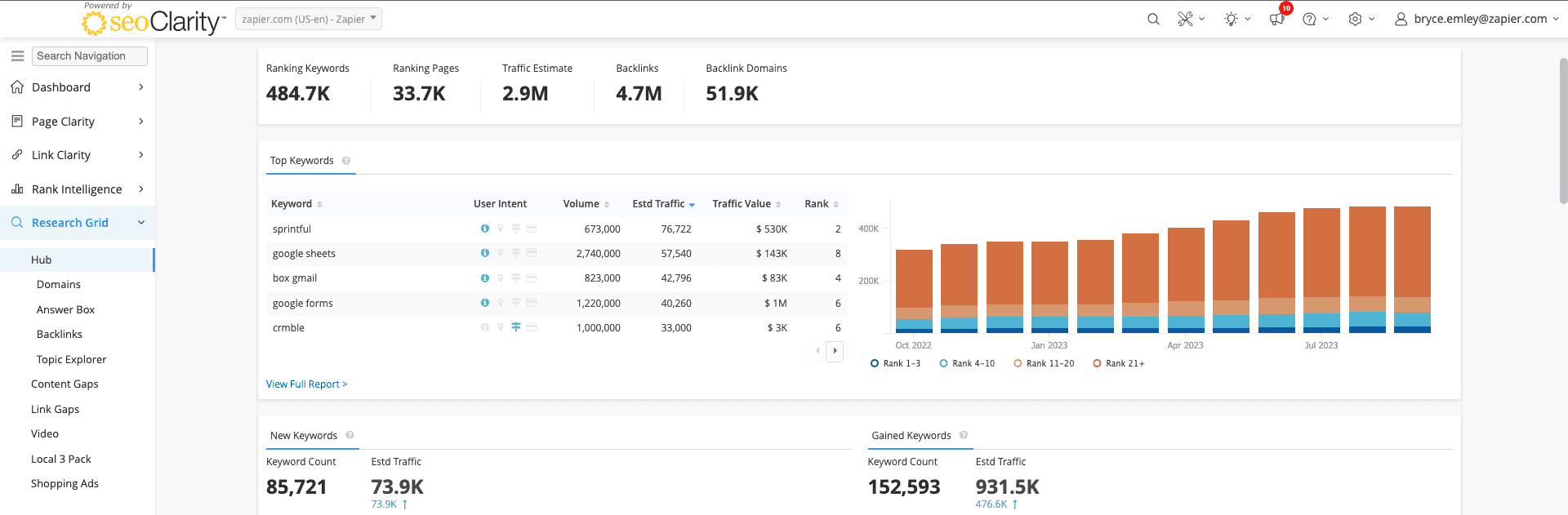
Pricing matches the enterprise positioning. seoClarity is not for small teams or budget-conscious buyers. But for organizations managing SEO across multiple brands, regions, or product lines, the coordination features justify the investment.
Google Keyword Planner: The Free Option
Google Keyword Planner remains the best free keyword research tool available. It draws directly from Google's search data, which means the volume estimates are more reliable than third-party tools. The catch: it's designed for advertisers, not SEO practitioners, so the interface and features reflect that focus.
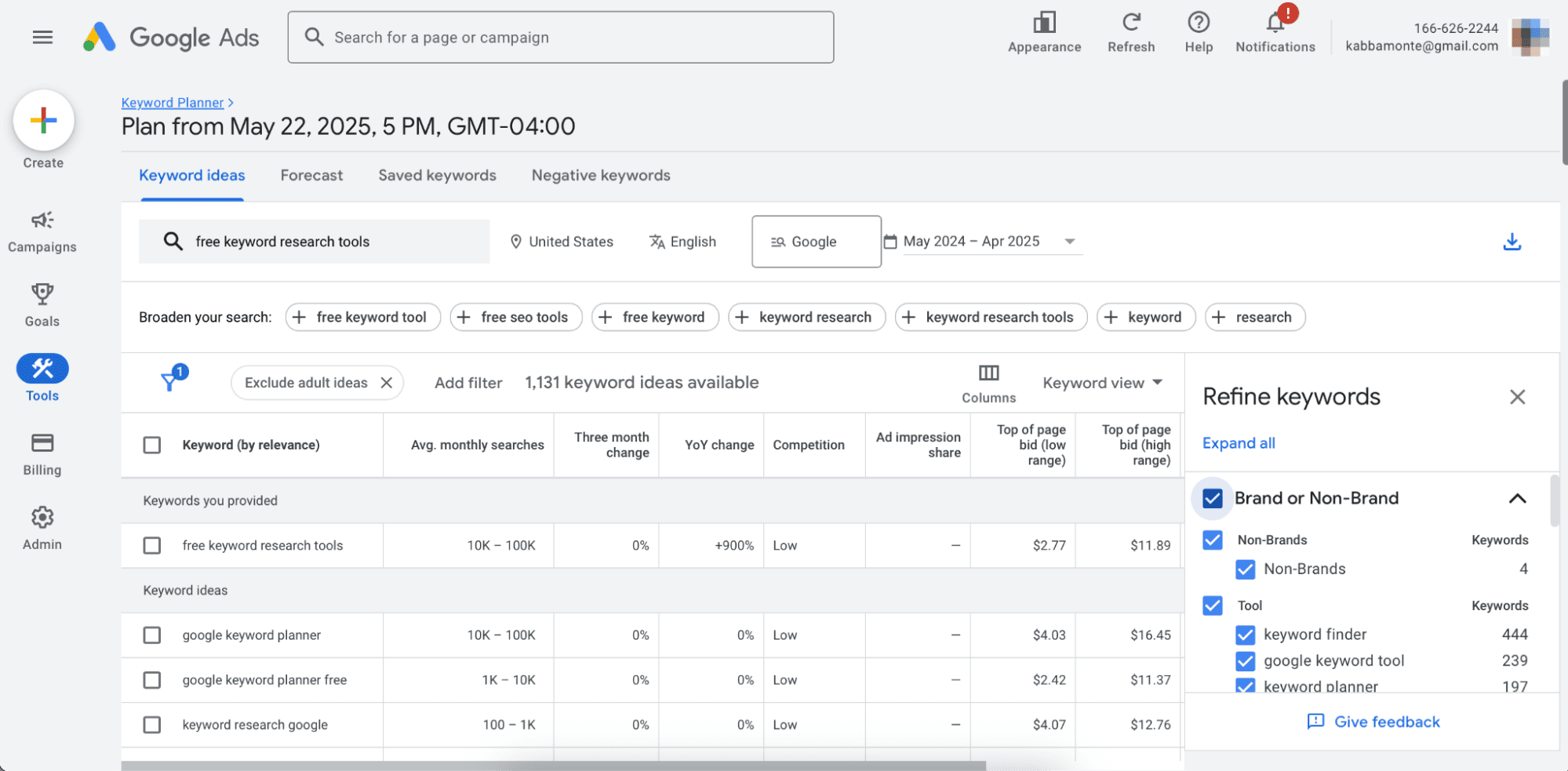
You need a Google Ads account to access it, though you don't need to run ads. The tool works well for initial keyword discovery and validating search volume. It lacks the competitive analysis and backlink data that paid tools provide, but the price is hard to beat.
Moz Pro: Rank Tracking with Integrations
Moz Pro has been in the SEO tool market longer than most competitors. Its domain authority metric became an industry standard. The current platform offers solid rank tracking, keyword research, and site crawling, with strong integrations into other marketing tools.
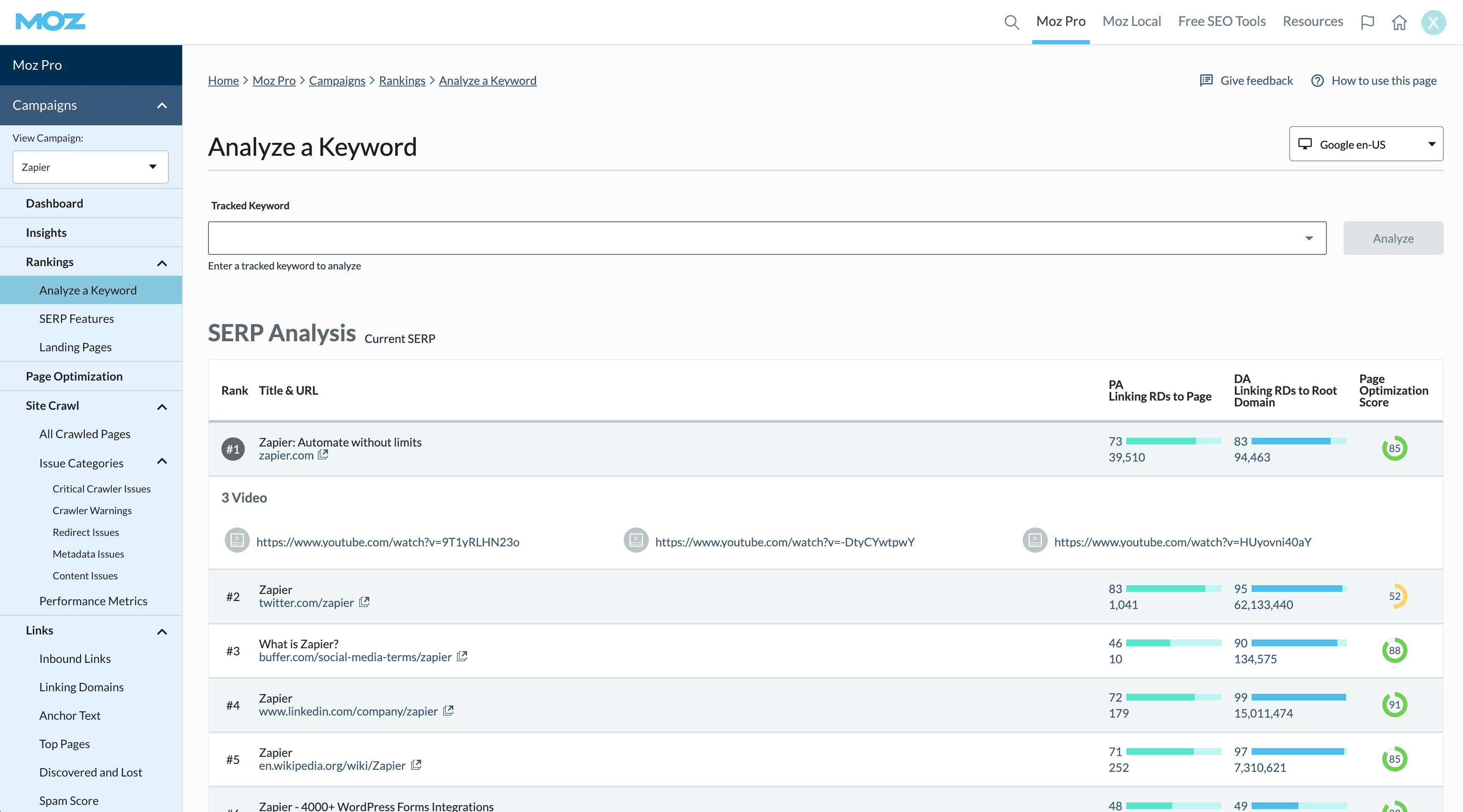
Moz's backlink index is smaller than Ahrefs', which limits its usefulness for competitive backlink analysis. But if rank tracking and on-page optimization are your priorities, Moz Pro delivers reliably at a moderate price point.
| Tool | Best For | Key Strength | Limitation |
|---|---|---|---|
| Semrush | All-in-one replacement | Competitor analysis depth | Steeper learning curve |
| Similarweb | Market intelligence | Traffic pattern insights | Less keyword depth |
| Clearscope | Content teams | Writing optimization | Not a research tool |
| Surfer | AI-assisted content | Real-time editing feedback | Can feel formulaic |
| Mangools | Beginners | Simple interface | Smaller databases |
| seoClarity | Enterprise teams | Scale and permissions | High price point |
| Google Keyword Planner | Budget-conscious | Free, reliable volumes | No competitive data |
| Moz Pro | Rank tracking | Integration options | Smaller backlink index |
Choosing Based on Your Actual Workflow
The right alternative depends on what you actually do day-to-day. If you run competitive analysis regularly and need a full-featured platform, Semrush is the closest substitute. If you produce content and want optimization tools, Clearscope or Surfer focus on that workflow without the bloat of general SEO features.
Budget matters too. Mangools and Google Keyword Planner serve users who can't justify enterprise pricing. seoClarity serves the opposite end, where coordination across large teams is worth the premium.
Many teams end up combining tools. A common setup pairs a research tool like Semrush with a content optimization tool like Surfer. This costs more than a single platform but avoids the compromises that come with tools trying to do everything.
Logicity's Take
Ahrefs earned its dominance through genuine product quality, not just marketing. But the SEO tool market has matured. Specialized tools now outperform Ahrefs in specific workflows. The question isn't whether alternatives exist. It's whether your workflow benefits from specialization or an all-in-one approach.
Frequently Asked Questions
Is Semrush better than Ahrefs?
Neither is universally better. Semrush offers stronger competitor analysis and broader marketing features. Ahrefs has a larger backlink database. Choose based on which capabilities matter more to your workflow.
What is the best free alternative to Ahrefs?
Google Keyword Planner is the most reliable free option for keyword research. It lacks backlink data and competitive analysis, but the search volume estimates come directly from Google.
Can I use multiple SEO tools together?
Yes, many teams combine a research tool like Semrush with a content optimization tool like Clearscope or Surfer. This costs more but provides specialized capabilities that all-in-one tools often handle less effectively.
Which Ahrefs alternative is best for small businesses?
Mangools offers the gentlest learning curve and lowest price point while still providing useful keyword research and rank tracking. Google Keyword Planner works for teams with no budget at all.
Do enterprise SEO tools like seoClarity justify their cost?
For large organizations managing SEO across multiple brands or regions, enterprise tools provide coordination features, permissions, and reporting that cheaper tools lack. For smaller teams, they're overkill.
Need Help Implementing This?
Choosing the right SEO tools and integrating them into your workflow can be complex. If you're evaluating platforms or building an SEO tech stack, reach out to the Logicity team. We can help you navigate the options based on your specific needs and budget.
Source: The Zapier Blog
Manaal Khan
Tech & Innovation Writer
Produced with AI assistance and reviewed by the Logicity editorial team. Learn more in our Editorial Policy.