Key Takeaways
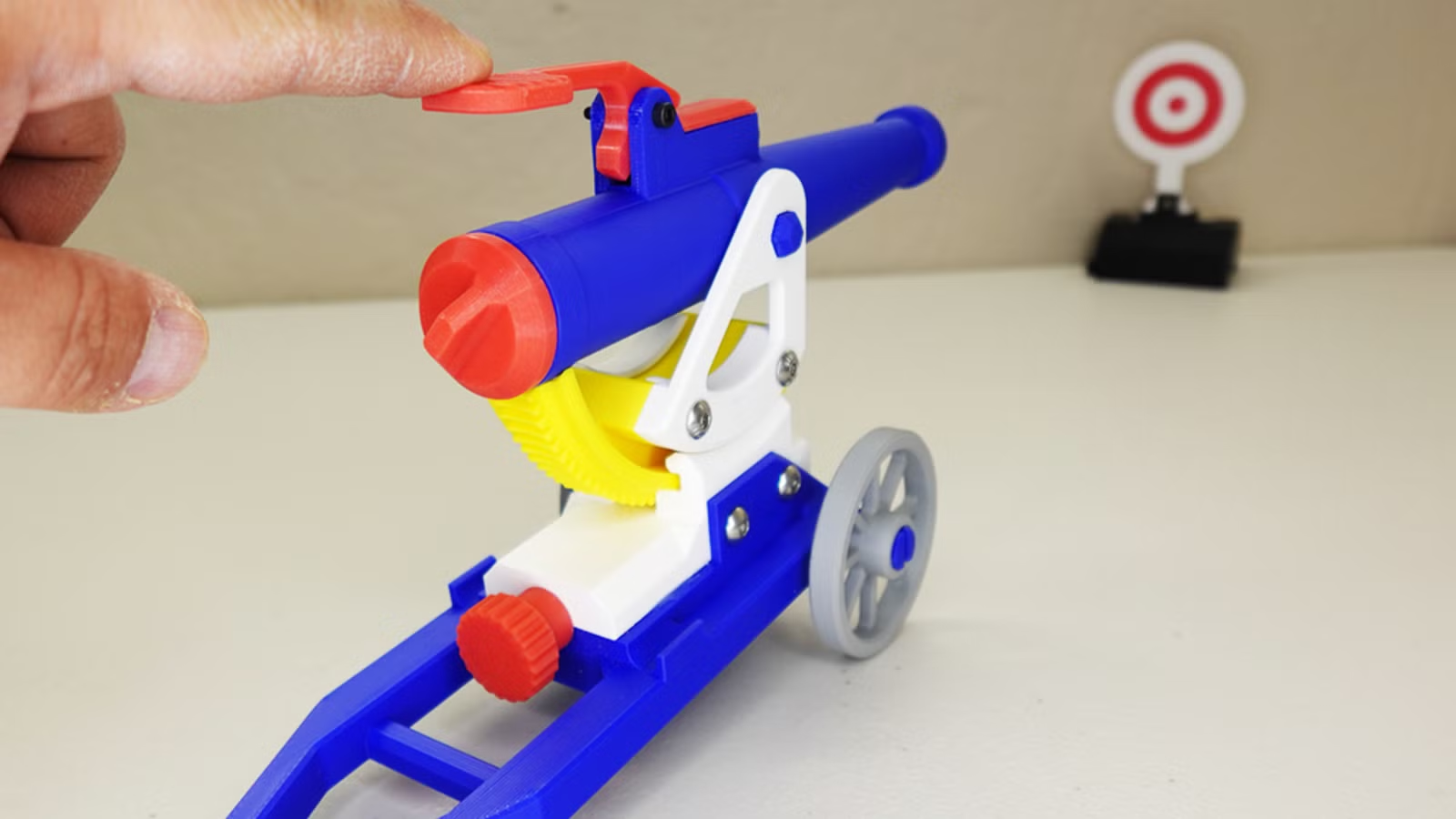
- 3D printed blasters reach 300 FPS compared to 70 FPS for store-bought NERF guns
- Print-in-place designs like Mini NERF Z require no assembly or additional parts
- The hobby has gone industrial with retailers like Out of Darts running 100+ printers
People buy 3D printers for all sorts of reasons. Some want custom phone cases. Others print replacement parts for appliances. But one of the fastest-growing use cases is foam dart blasters. The hobby has evolved from PVC pipe contraptions traded on forums into a professional-grade subculture driven by open-source CAD files and consumer 3D printers.
The numbers tell the story. A typical store-bought NERF blaster fires darts at around 70 feet per second. A competitive 3D printed blaster hits 300 FPS. That's not a minor improvement. It's a different sport entirely.
“3D printing hasn't just improved the hobby; it has democratized high-performance engineering for everyone with a printer and some filament.”
— Luke Goodman, Founder of Out of Darts
Here are seven projects worth building this weekend, ranging from wild experiments to serious competitive hardware.
NERF Alcohol Cannon: The Wildest Build on This List
This project sounds like a joke until you see it fire. The NERF alcohol cannon uses a piezoelectric igniter from a cheap electric lighter, a squirt of isopropyl alcohol, and some 3D printed parts to launch foam darts across the room. The alcohol vapor ignites with a satisfying crack.
You'll need screws, bolts, and a healthy respect for combustion to complete this build. The MakerWorld comments section has variations from other creators if the base design doesn't satisfy your need for controlled explosions.
LYNX 300FPS Blaster: Serious Power for Serious Players
Store-bought NERF blasters are fun. They also can't launch darts at 300 feet per second. If you want that kind of performance, you have to build it yourself.
The LYNX 300FPS is not a casual weekend project. The designer recommends printing in ABS for improved strength. PLA users have posted their broken parts in the comments as cautionary tales. You'll also need aluminum flat bars, acrylic tubes, sealing rings, and springs.
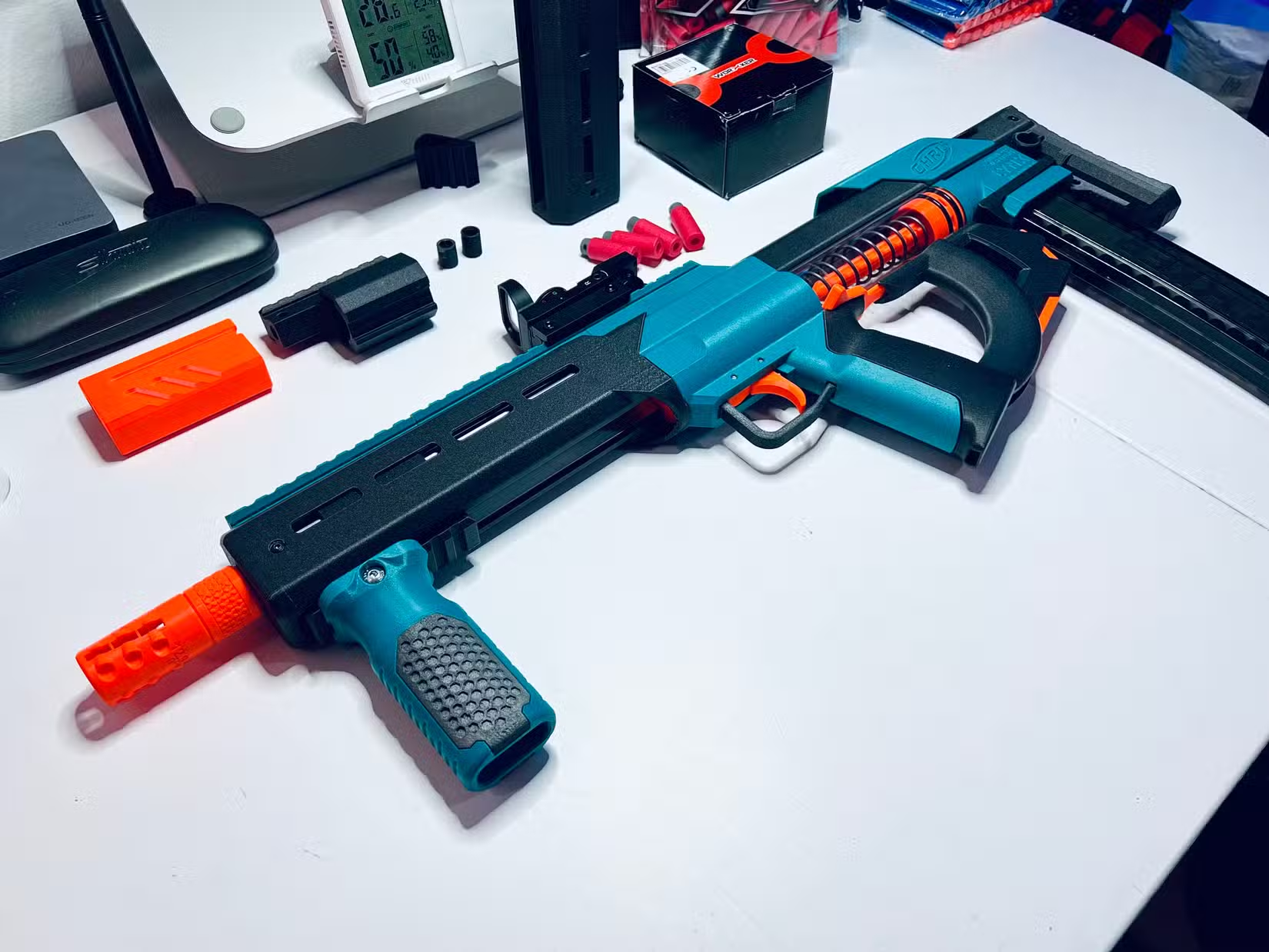
This build is for people who take foam projectile sports seriously. If that sounds excessive, you haven't met the competitive community.
Mini NERF Z: A Print-in-Place Sidearm
Not every project needs to be complex or overpowered. The Mini NERF Z is a tiny print-in-place model that fires darts one at a time over short distances. No assembly required. The hinges and mechanisms print as a single piece.
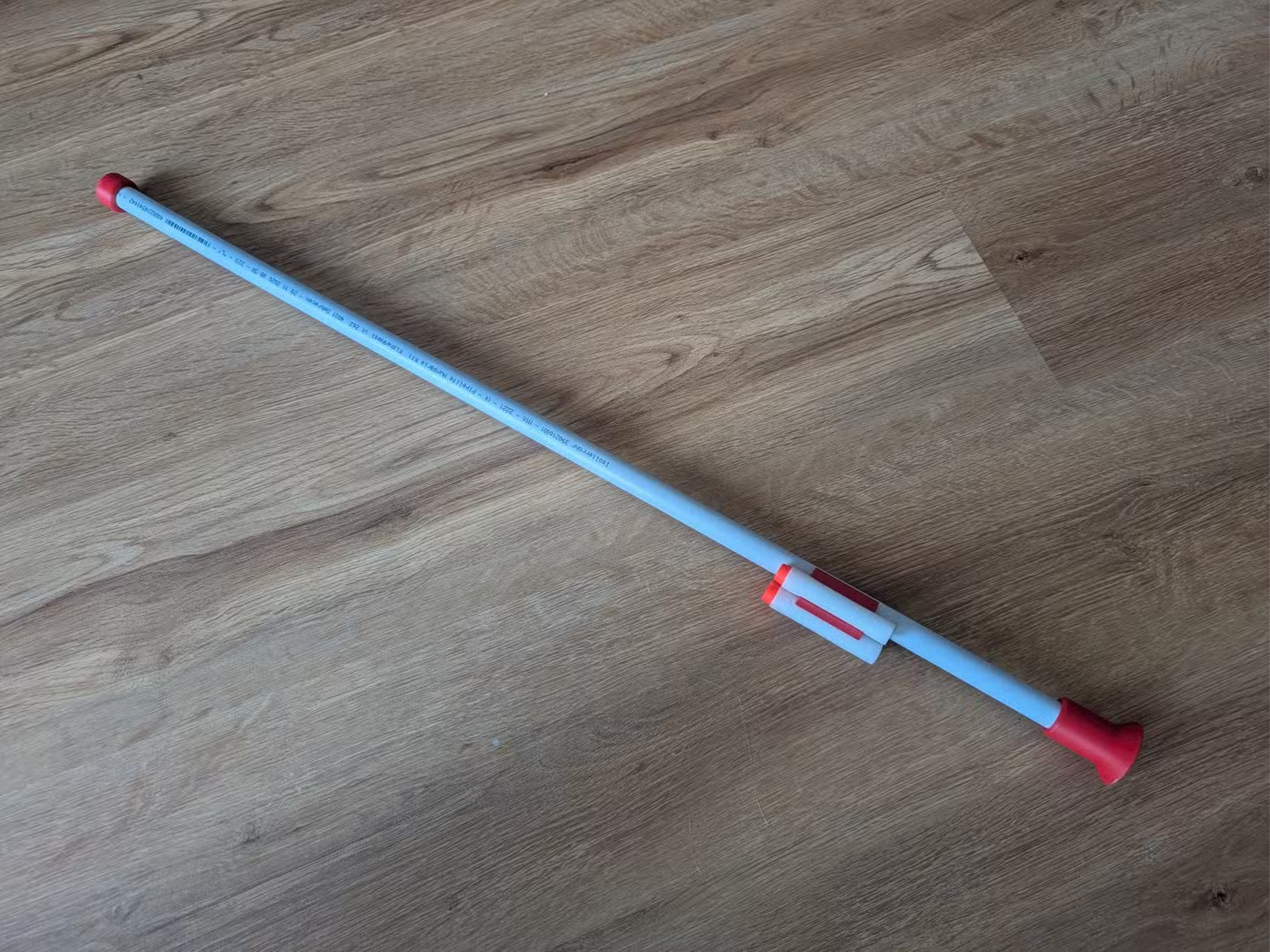
This is perfect for beginners or anyone who wants a quick win on their printer. Print it, load a dart, and you're done.
How 3D Printing Changed the Hobby
The foam blaster hobby existed long before affordable 3D printers. The "NIC" (Nerf Internet Community) built high-performance blasters from PVC pipes and hardware store parts. But the barrier to entry was high. You needed machining skills, specialized tools, and patience.
Consumer 3D printers changed everything. A new design can go from a CAD file shared on Discord to a fully functional, field-tested blaster in the hands of thousands of players within weeks. The r/Nerf and r/3Dprinting communities debate specific designs constantly, comparing "hardware-light" models against kits that require custom springs and CNC-machined parts.
The scale has shifted too. Out of Darts, a major hobby retailer, runs over 100 3D printers. What started as a garage hobby now looks like light manufacturing.
Printer Recommendations for Blaster Builds
You don't need an expensive printer to get started. The Bambu Lab A1 Mini handles most beginner projects without issue. The company reported 3,000% growth in 2023, driven partly by hobbyists in communities like this one.
For advanced builds like the LYNX 300FPS, you'll want something that handles ABS reliably. An enclosed printer with active chamber heating helps prevent warping and cracking on the larger structural parts.
Safety Considerations
A 300 FPS blaster is not a toy. Eye protection is mandatory. Many competitive leagues require barrel plugs when not actively firing. The alcohol cannon involves combustion and should be approached with appropriate caution.
Know your local regulations. Some jurisdictions have restrictions on projectile velocities or realistic-looking replicas.
Logicity's Take
Frequently Asked Questions
What 3D printer do I need for NERF blaster projects?
Entry-level printers like the Bambu Lab A1 Mini work for most projects. Advanced builds requiring ABS need an enclosed printer with chamber heating.
How fast do 3D printed NERF blasters shoot?
High-performance designs like the LYNX hit 300 FPS. Store-bought NERF guns typically reach 70 FPS.
Are 3D printed blasters legal?
Laws vary by jurisdiction. Check local regulations on projectile velocities and replica restrictions before building or using high-powered blasters.
What filament should I use for blaster parts?
PLA works for low-stress parts and beginner projects. ABS is recommended for high-power builds where structural integrity matters.
Where can I find 3D printed blaster designs?
MakerWorld, Thingiverse, and the r/Nerf community are primary sources. Many designers share files on Discord as well.
More weekend hardware projects for hands-on builders
Need Help Implementing This?
Source: How-To Geek
Huma Shazia
Senior AI & Tech Writer
Produced with AI assistance and reviewed by the Logicity editorial team. Learn more in our Editorial Policy.