Key Takeaways
5 Best Email Hosting Services for Businesses for 2026

- Google Workspace wins overall for freelancers needing email plus productivity tools, with Gemini AI now included in all tiers
- Proton Mail leads for privacy-focused businesses and regulated industries requiring end-to-end encryption
- Spike offers a chat-style interface that may appeal to teams tired of traditional email threads
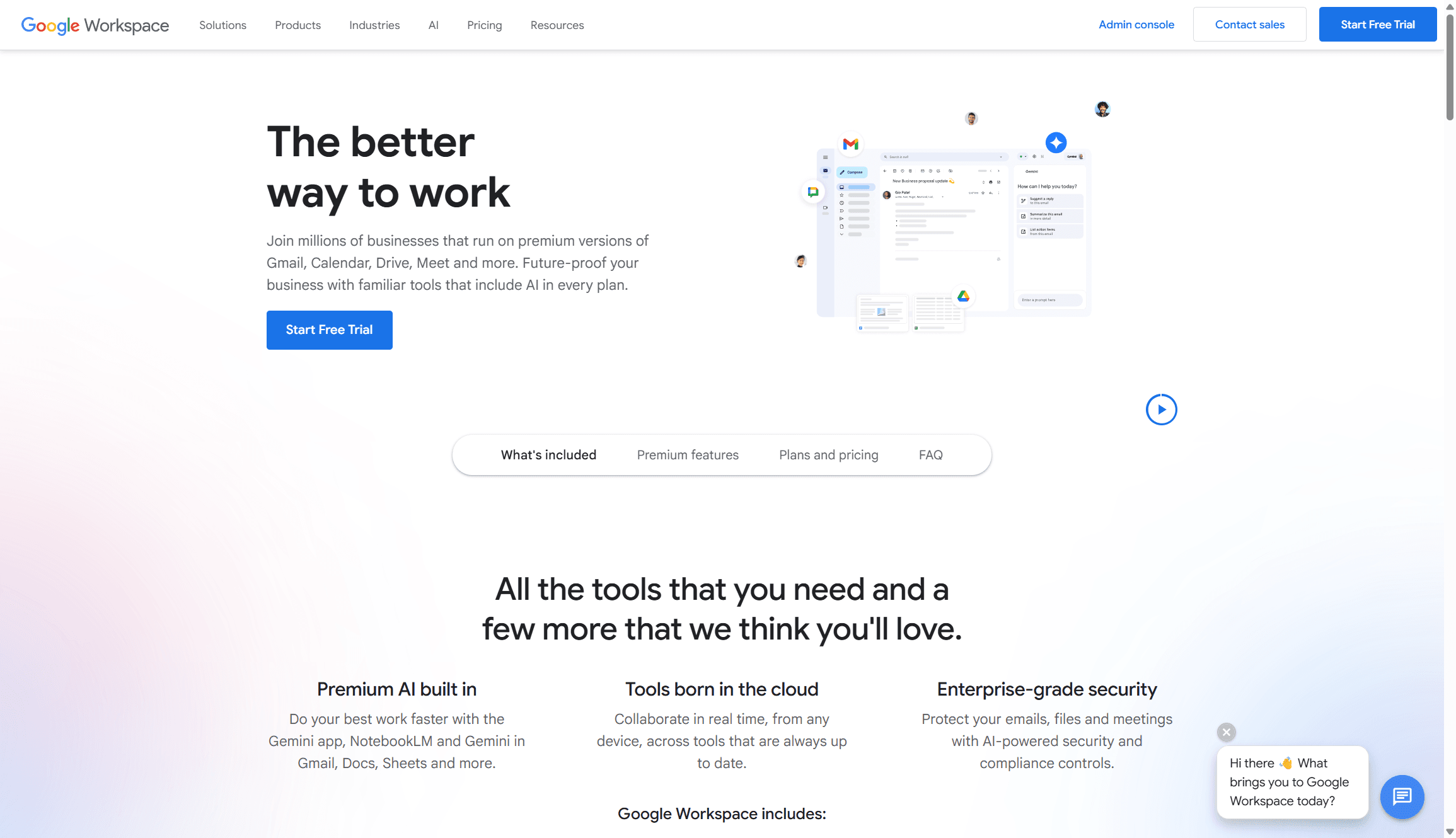
Google Workspace is the best email hosting for most small businesses in 2026, according to hands-on testing by ZDNET. The platform bundles custom-domain email with Docs, Drive, and Meet, giving solo founders or small remote teams a full office suite without juggling separate subscriptions. Setup takes minutes, and Gemini AI is now included in every tier rather than sold as a separate add-on.
Disclosure
Some links in this post are affiliate links — Logicity earns a commission if you sign up, at no extra cost to you. We only link products we have used or actively recommend.
The testing evaluated five platforms freelancers and small remote teams actually consider when they outgrow free email: Google Workspace, Proton Mail, Microsoft 365, Fastmail, and Spike. Each was judged on setup time, pricing transparency, and how well it serves a team that's rarely in the same room.
Which email host fits which business?
The short answer: it depends on what you need beyond email. Google Workspace wins for freelancers who want email bundled with a productivity suite they already know. The mobile apps are familiar, client compatibility is a non-issue, and the AI features now come standard.
Microsoft 365 makes sense if your team already lives in Word, Excel, and Outlook. The integration is tighter than stitching together separate tools, and enterprise clients often expect Office-format deliverables anyway.
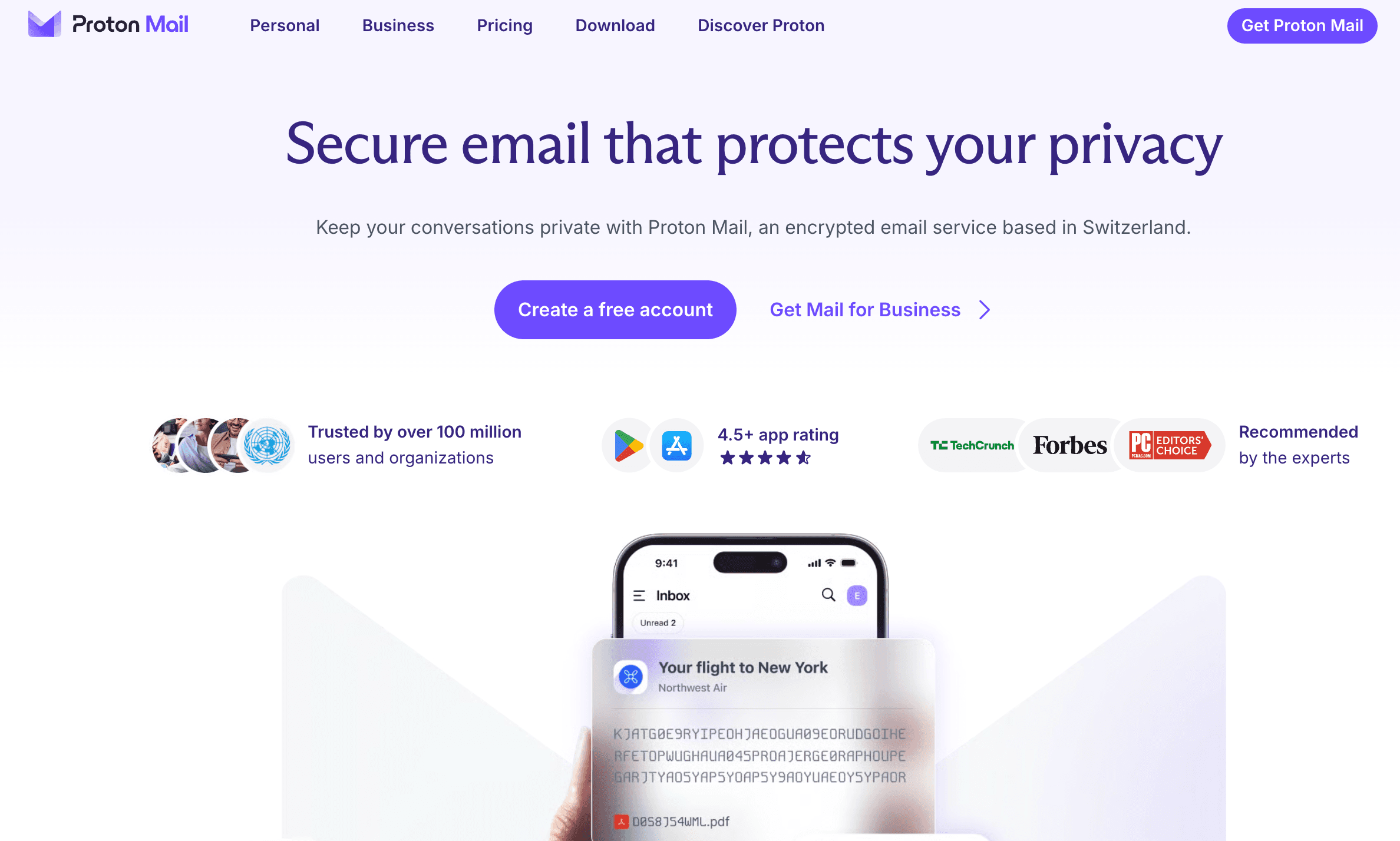
Proton Mail targets privacy-focused freelancers and regulated industries. End-to-end encryption is the default, not an upsell. For healthcare consultants, lawyers, or anyone handling sensitive client data, that's the deciding factor.
Fastmail appeals to people who want fast, clean email without the bundled extras. No productivity suite, no video calls, just email that works. It's the pick for anyone who finds Google Workspace bloated.
Spike reimagines email as team chat. Threads become conversations, replies feel more like Slack messages than formal emails. It's a fit for teams that want to collapse the gap between email and real-time communication.
| Provider | Best For | Key Feature |
|---|---|---|
| Google Workspace | Freelancers wanting full productivity suite | Gemini AI in all tiers |
| Proton Mail | Privacy-focused and regulated industries | End-to-end encryption by default |
| Microsoft 365 | Teams using Word, Excel, Outlook | Deep Office integration |
| Fastmail | No-frills email users | Fast, clean, no extras |
| Spike | Teams wanting chat-style email | Conversational interface |
What about budget alternatives?
Zoho Mail earned mention as the best budget alternative. It offers professional email at a lower price point than Google or Microsoft, with a reasonable set of collaboration tools. IceWarp was flagged as a collaboration-focused alternative worth considering.
For teams already using other Zoho products, the integration makes the choice straightforward. Zoho CRM users, for example, can connect email directly to their sales pipeline. Competitors like HubSpot and Salesforce offer their own email integrations, but those typically require higher-tier plans.
Why does custom-domain email matter?
A free Gmail or Outlook.com address works fine for personal use. It doesn't work when you're invoicing clients or trying to look like more than a one-person operation. Custom-domain email (you@yourcompany.com) signals professionalism without demanding an IT department.
The practical benefit is control. You own the domain, so if you switch providers later, your email addresses stay the same. You're not locked into a platform because your entire client history is tied to their free service.
How does AI change the equation?
Google including Gemini AI in every Workspace tier shifts the value calculation. Previously, AI features were add-ons with separate pricing. Now, smart compose, email summarization, and meeting scheduling come bundled. Microsoft 365 Copilot offers similar capabilities, but pricing structures differ.
The real question is whether you'll use these features. If you spend hours daily in email, AI assistance adds up. If you send five emails a day, it's a nice-to-have, not a deciding factor.
For automation beyond what's built in, tools like Zapier, Make, or n8n connect your business email to CRMs, project management, and other workflows.
What should you actually choose?
For most freelancers and small remote teams, Google Workspace remains the default answer. The combination of familiar apps, included AI features, and minimal setup friction is hard to beat.
If privacy is non-negotiable, Proton Mail. If you're already deep in Microsoft's ecosystem, Microsoft 365. If you want email without the extras, Fastmail. If you hate email threads, try Spike.
The worst choice is overthinking it. Pick based on what you need today. All five platforms support domain portability, so switching later costs time, not data.
Logicity's Take
The real story here is AI becoming table stakes rather than premium. Google bundling Gemini into every Workspace tier pressures Microsoft to match, which benefits buyers. For CTOs evaluating options, the differentiation has shifted from features to philosophy: do you want a full suite (Google/Microsoft), privacy by default (Proton), simplicity (Fastmail), or a new interaction model (Spike)? Price differences between Google Workspace ($6-18/user/month) and Microsoft 365 ($6-22/user/month) are marginal enough that workflow fit matters more than cost.
Frequently Asked Questions
What is the best email hosting for a small business in 2026?
Google Workspace is the top pick for most small businesses, offering custom-domain email bundled with Docs, Drive, Meet, and Gemini AI in all pricing tiers.
Is Proton Mail good for business use?
Yes, Proton Mail is ideal for privacy-focused businesses and regulated industries like healthcare or legal services that require end-to-end encryption by default.
How much does business email hosting cost?
Pricing ranges from around $6 per user per month for basic plans (Google Workspace, Microsoft 365) to $3-5 for budget options like Zoho Mail. Enterprise tiers with advanced features cost $18-22 per user monthly.
Can I switch email hosting providers without losing my email address?
Yes, if you use a custom domain. Your email addresses stay the same when you switch providers because you own the domain. Migration involves moving historical messages and updating DNS records.
What's the difference between Google Workspace and Microsoft 365 for small business?
Both offer email plus productivity suites at similar prices. Google Workspace is browser-first with strong mobile apps. Microsoft 365 has deeper desktop integration, especially for Word and Excel power users.
AI features are now bundled into email platforms — here's how the underlying models are evolving
Need Help Implementing This?
Evaluating email hosting for your team? Logicity helps founders and CTOs make technology decisions without the sales pitch. Reach out for vendor-neutral guidance on your specific workflow.
Source: Latest news
Manaal Khan
Tech & Innovation Writer
Produced with AI assistance and reviewed by the Logicity editorial team. Learn more in our Editorial Policy.




