Key Takeaways
- The Theragun Pro massage gun now charges via USB-C, eliminating proprietary adapters
- USB-C bike lights like the CatEye Ampp500S end the frustration of micro-USB charging
- Even cheap accessories like reading lights benefit from USB-C standardization
USB-C has won. The connector that started in laptops and phones now shows up in massage guns, bike lights, and desk lamps. That shift matters because it means fewer cables in your bag, less e-waste, and no more hunting for a proprietary charger when the battery dies. Tech journalist Tim Brookes recently catalogued three USB-C gadgets he uses daily, and his picks highlight how far the standard has spread into unexpected categories.
Why USB-C keeps expanding beyond phones
The USB-C connector supports up to 240 watts of power delivery under the PD 3.1 specification. That headroom lets manufacturers use the same port for a 5-watt reading lamp or a 100-watt laptop. Regulators have pushed hard for this outcome. The EU's common charger mandate, which took effect in 2024, required most portable electronics to adopt USB-C. Similar rules are spreading globally.
The result is tangible. Global shipments of USB-C equipped devices hit an estimated 1.5 billion units in 2024. Industry analysts estimate universal charging mandates could cut annual e-waste by around 1,000 tonnes simply by eliminating proprietary bricks.
Theragun Pro: a $500 massage gun that charges like your phone
The Theragun Pro retails for about $530, though Brookes picked one up for around $350 on sale. It delivers percussive deep-tissue massage for post-workout recovery or everyday aches. What matters here is the charging. Previous generations of high-end massage guns often shipped with barrel plugs or proprietary docks. The current Theragun Pro takes USB-C.
That design choice sounds minor until you need to charge the device on a road trip or at a gym. A USB-C cable is almost always within reach. No need to pack a dedicated brick or worry about leaving the charger at home.
CatEye Ampp500S: bike lights finally ditch micro-USB
Bike lights have been rechargeable for years, but many cheaper models still rely on micro-USB. Anyone who has tried to plug in a micro-USB cable in the dark knows the frustration. It is not reversible, and the port feels fragile after a few dozen cycles.
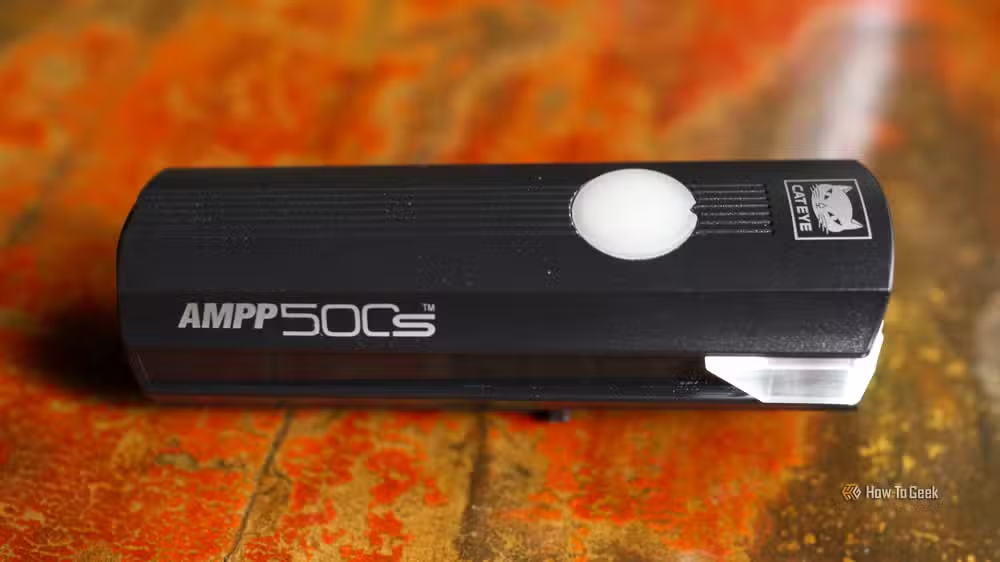
The CatEye Ampp500S costs about $40 and delivers 500 lumens through a USB-C port. Brookes calls it one of the best budget bike light purchases he has made. Brighter models in the CatEye lineup also use USB-C, so upgrading does not mean learning a new charging ecosystem.
For commuters who ride year-round, the convenience is real. Forget your charger at the office? Borrow any coworker's USB-C cable. The days of specialty adapters and dead lights on dark winter rides are fading.
A cheap reading light with a universal port
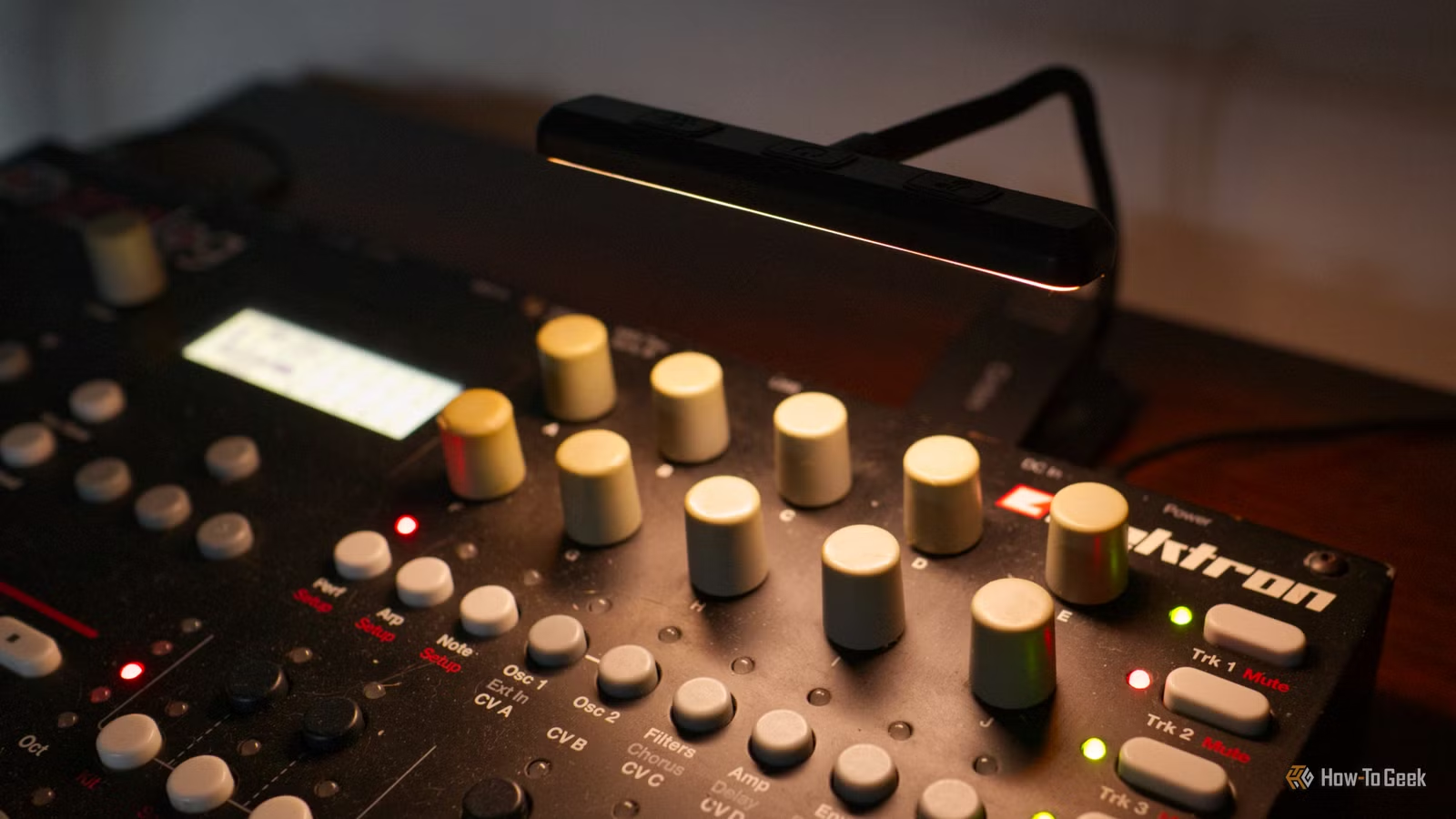
Not every USB-C gadget costs hundreds of dollars. Brookes mentions a simple reading light, originally bought by his partner, that he now uses to illuminate a synthesizer groovebox. The light is inexpensive, clips onto surfaces, and recharges via USB-C.
This is where standardization pays compound dividends. A $15 accessory that once would have shipped with a disposable micro-USB cable now works with the same charger as your laptop, phone, and game controllers. One cable type handles everything from a Steam Deck to a desk lamp.
The catch: not all USB-C cables are equal
Community discussions on Reddit and HackerNews frequently praise what some call cable liberation. But frustration persists around USB-C cable certifications. A cable's physical shape does not guarantee its data transfer speed or power delivery capability. A cheap cable might charge a reading light fine but fail to deliver the wattage a laptop demands.
The fix is straightforward: buy cables rated for the highest power and speed you need, and label them. A 240W cable works for everything. A 15W cable works only for low-power accessories.
What to look for when buying USB-C gadgets
When shopping for any small electronics, check the charging port before you buy. A product that still ships with micro-USB or a barrel plug is making a choice that costs you convenience over the device's lifetime. USB-C is not a luxury feature anymore. It is a baseline expectation.
The Theragun Pro, CatEye Ampp500S, and unnamed reading light are not revolutionary products. They are everyday tools that got a bit better because their manufacturers adopted a universal standard. That is how standards deliver value: quietly, across thousands of small decisions.
Frequently Asked Questions
Can I charge a Theragun Pro with any USB-C cable?
Yes, the Theragun Pro accepts standard USB-C cables. Any cable rated for the device's power draw will work, though higher-wattage cables charge faster.
Are USB-C bike lights brighter than micro-USB models?
The charging port does not affect brightness. However, USB-C models tend to be newer and often include more efficient LEDs. The CatEye Ampp500S delivers 500 lumens.
Why do some USB-C cables not work for high-power devices?
USB-C cables vary in power delivery ratings. A cable rated for 15W cannot safely deliver 100W to a laptop. Always check the cable's power and data specifications before purchase.
How much e-waste does USB-C standardization prevent?
Industry estimates suggest universal charging mandates could reduce annual e-waste by roughly 1,000 tonnes by eliminating proprietary chargers.
Another look at how everyday gadgets fail to meet expectations despite high prices
Logicity's Take
USB-C standardization is a rare win where regulation, industry incentives, and consumer demand aligned. The real story is not that a massage gun uses USB-C. It is that manufacturers no longer have a defensible reason to ship proprietary chargers. Any product that still relies on barrel plugs or micro-USB in 2026 is signaling either cost-cutting or indifference to user experience. Vote with your wallet.
Need Help Implementing This?
Looking to standardize charging infrastructure across your office or fleet of devices? Contact Logicity's editorial team for vendor recommendations and bulk purchasing guidance.
Source: How-To Geek
Huma Shazia
Senior AI & Tech Writer
Produced with AI assistance and reviewed by the Logicity editorial team. Learn more in our Editorial Policy.