Key Takeaways
- Claude can now request access to password-protected accounts through 1Password without ever seeing the actual credentials
- Access is granted per session and per task, requiring re-approval each time the AI needs to log in again
- Users must explicitly log out at the end of sessions to prevent persistent access via browser cookies
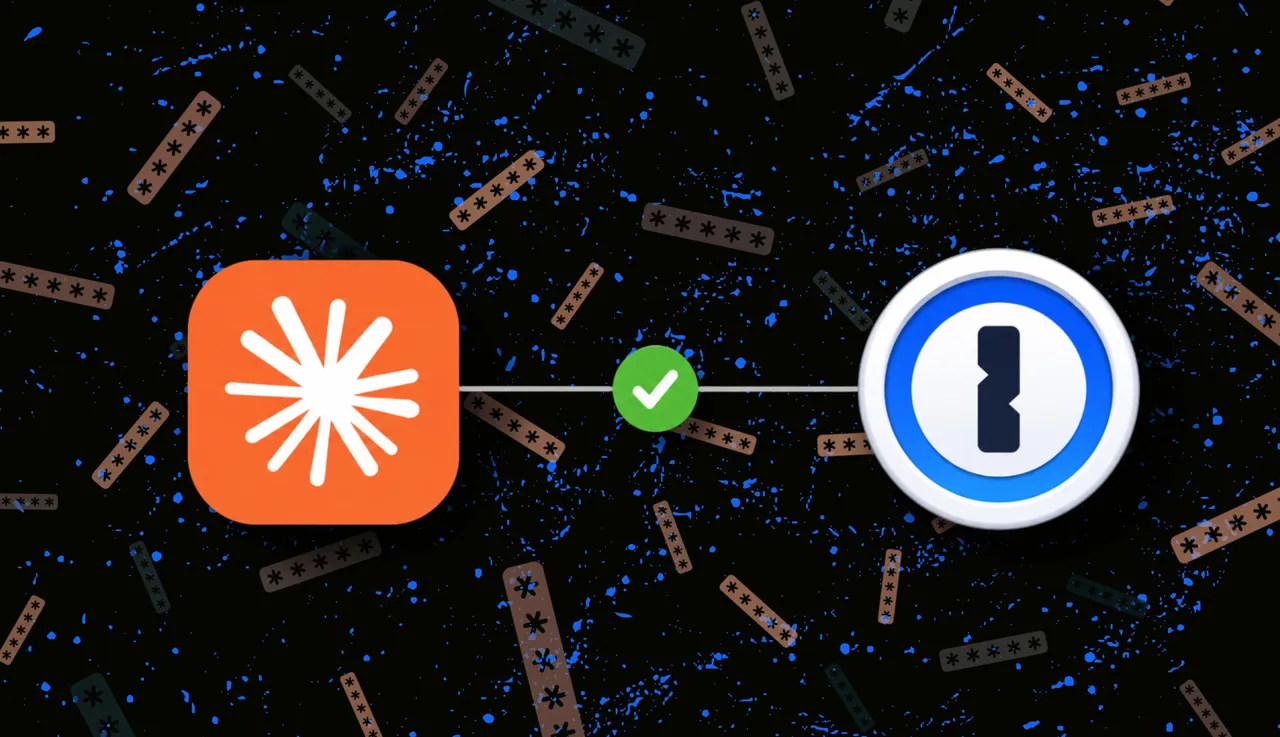
1Password has built an integration with Anthropic's Claude that solves one of the thorniest problems in agentic AI: how do you let an AI log into your accounts without handing over your passwords? The new Agentic Mode, announced today, allows Claude to request credentials from 1Password, which then injects them directly into login forms. The AI never sees the actual password or MFA code.
This matters because AI agents are only as useful as what they can access. You can ask Claude to analyze your Stripe transactions or pull reports from your CRM, but the moment it hits a login screen, the workflow breaks. The obvious workaround, giving the AI your password, creates obvious security risks. Your credentials would flow through Anthropic's systems, sit in context windows, and potentially leak through prompt injection attacks.
How the credential handoff actually works
When Claude needs to log into a service, it sends a request to 1Password. The user sees an authorization sheet asking for approval. This can be confirmed with biometrics, a master password, or Touch ID. Once approved, 1Password fills the credentials directly into the target site, bypassing Claude entirely. The AI sees only that access was granted, not the password itself.
1Password claims this access is scoped tightly. Each request is tied to a specific task in a specific session. If Claude finishes checking your Stripe revenue and later wants to access Stripe again, it has to request permission again. There's no standing access that persists across tasks.
But there's a catch. Many websites grant persistent access via session cookies once you've logged in. 1Password's per-task permissions don't override how browser sessions work. If you don't explicitly log out at the end of a task, the session may persist just like any normal browser session would. The company's guidance: prompt Claude with instructions like "Log in to Stripe, give me my current revenue, and log out when you're done."
What tasks can Claude handle with this access?
1Password demonstrated two use cases. In one, a manager uses Claude to sift through Stripe transactions looking for red flags, a legitimate financial forensics task. In the other, someone uses Claude to browse Audible for audiobook recommendations. The second example feels like overkill for demonstrating enterprise security features, but it shows the range of possible applications.
The more interesting scenarios involve administrative tasks that eat hours but require authenticated access: pulling reports from multiple SaaS tools, reconciling invoices across payment processors, or auditing user permissions across platforms. Teams using tools like Zapier or Make for automation often hit walls when workflows require logging into services that don't have API access. Agentic Mode could fill that gap.
Disclosure
Some links in this post are affiliate links — Logicity earns a commission if you sign up, at no extra cost to you. We only link products we have used or actively recommend.
YubiKey support is missing, but planned
1Password generally supports hardware security keys like YubiKey, but that option isn't available for Agentic Mode yet. The company says it's on the roadmap. For organizations with strict security policies requiring hardware authentication for sensitive operations, this is a gap worth noting. Biometric and password-based approval work for now, but enterprises may want to wait for YubiKey support before rolling this out for access to financial or HR systems.
More agents coming beyond Claude
1Password says Agentic Mode launches first with Claude, but the company has plans to expand to other AI agents. That likely means ChatGPT's Work mode and similar computer-use agents from other vendors. The underlying architecture, injecting credentials without exposing them to the AI model, should work with any agent that can signal when it needs authentication.
This positions 1Password as potential infrastructure for the agentic AI wave. If AI agents become the primary way people interact with their software stack, the password manager that can securely bridge that gap has a significant advantage. Competitors like Bitwarden and Dashlane will likely follow with similar integrations.
Logicity's Take
The credential problem is real, and 1Password's approach is architecturally sound: keep passwords out of the AI's context entirely. But the session persistence issue is a concern. Browser cookies don't care about 1Password's per-task permissions. Organizations evaluating this should build logout instructions into every prompt template and consider whether their security policies allow any AI agent access to sensitive systems. Competing password managers like Bitwarden (free tier available) and Dashlane (starts at $4.99/month for individuals) don't offer this capability yet, giving 1Password ($2.99/month personal, enterprise pricing varies) a meaningful head start in the agentic AI market.
The bigger question: should AI agents access your accounts at all?
Secure credential injection solves the password exposure problem, but it doesn't address whether you should trust an AI agent with access to your Stripe account, your hosting provider, or your customer database. Claude could still make mistakes, misinterpret instructions, or take actions you didn't intend. The accountability when something goes wrong remains with you.
For now, Agentic Mode is probably best suited for read-only tasks: pulling reports, checking balances, summarizing account activity. Write operations, anything that changes data or initiates transactions, need more guardrails than a per-session approval flow provides.
Frequently Asked Questions
Does Claude ever see my actual passwords with 1Password Agentic Mode?
No. When Claude needs to log in, it requests access from 1Password. You approve the request, and 1Password fills the credentials directly into the login form without exposing them to Claude or Anthropic's systems.
Is access persistent once I approve it?
1Password's permissions are granted per session and per task. However, browser session cookies may persist after login, so you should include logout instructions in your prompts to ensure access truly ends.
Can I use a YubiKey to approve credential requests?
Not yet. 1Password supports YubiKey generally, but hardware key authentication for Agentic Mode is not currently available. The company says it's planned for future updates.
Will 1Password Agentic Mode work with ChatGPT or other AI agents?
The feature launches exclusively with Claude, but 1Password has stated plans to expand to other AI agents in the future.
What happens if Claude makes a mistake while logged into my account?
You remain responsible for any actions taken. 1Password secures the credential handoff but cannot prevent the AI from taking unintended actions once logged in. Start with read-only tasks and monitor closely.
Understanding how different AI agent frameworks handle authentication and security complements this 1Password integration story.
Need Help Implementing This?
Setting up secure AI agent workflows requires careful planning around authentication, logging, and rollback procedures. Contact our team at Logicity for guidance on implementing agentic AI in enterprise environments with proper security controls.
Source: Latest news
Huma Shazia
Senior AI & Tech Writer
Produced with AI assistance and reviewed by the Logicity editorial team. Learn more in our Editorial Policy.