90s Giant TVs: Business Lessons from Tech That Looked Great on Paper
Key Takeaways
- Impressive specifications don't guarantee customer satisfaction or market longevity
- Total cost of ownership matters more than purchase price for technology investments
- Early adopter markets can collapse quickly when better alternatives emerge
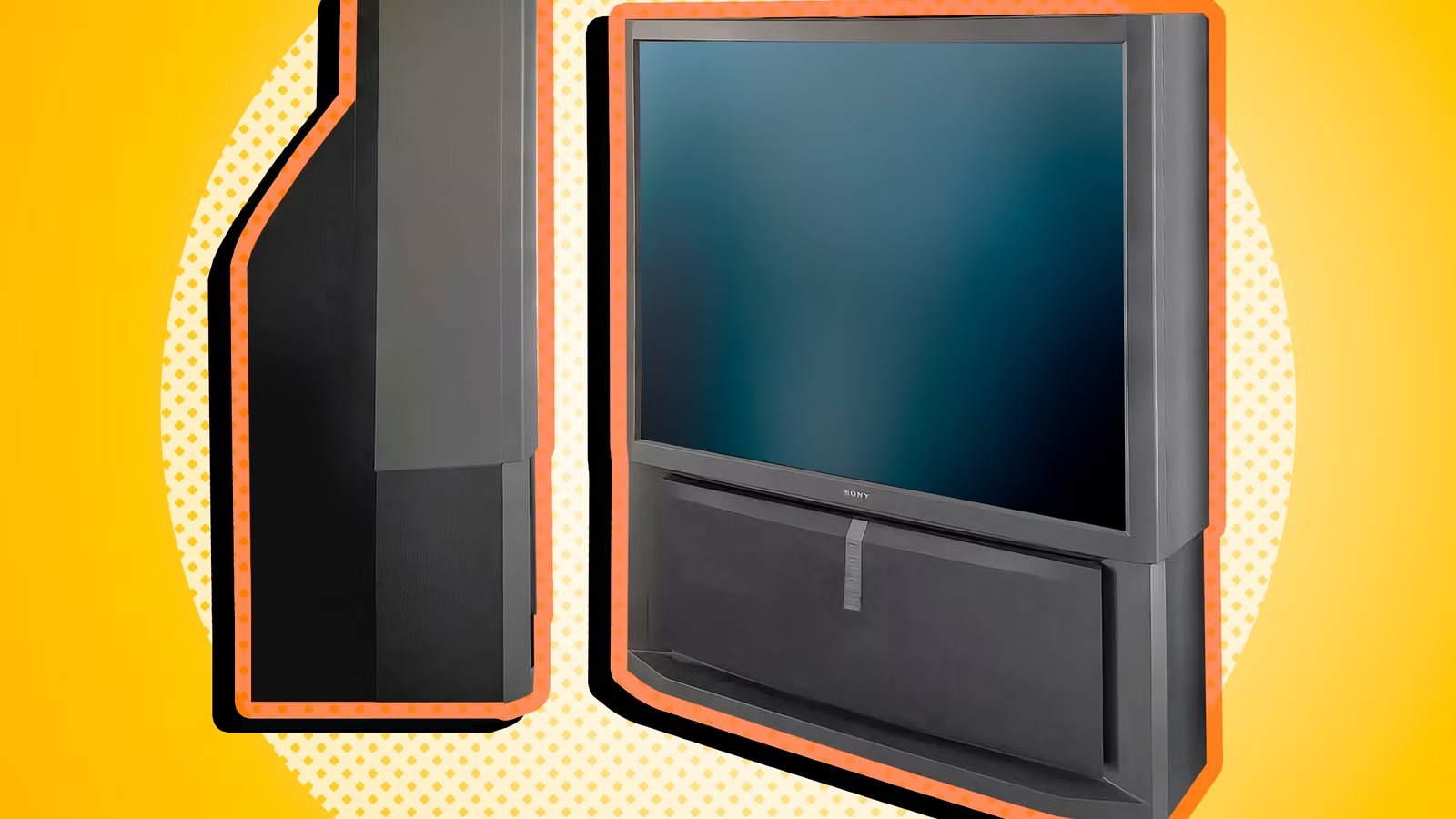
According to [How-To Geek](https://www.howtogeek.com/why-90s-giant-tvs-looked-amazing-but-were-actually-terrible-to-own/), the massive rear-projection TVs that dominated 1990s living rooms looked futuristic but delivered a frustrating user experience that made them terrible to actually own. For business leaders evaluating technology investments today, this cautionary tale offers surprisingly relevant lessons about the gap between impressive specifications and real-world value.
Read in Short
The 90s giant TV phenomenon shows why business leaders must look beyond headline specs. These 50-inch behemoths impressed on paper but failed on maintenance costs, viewing angles, image quality, and resale value. The same evaluation framework applies to enterprise tech purchases today: total cost of ownership, user experience in real conditions, and technology roadmap risk matter more than feature lists.
Why Did 90s Giant TVs Seem Revolutionary?
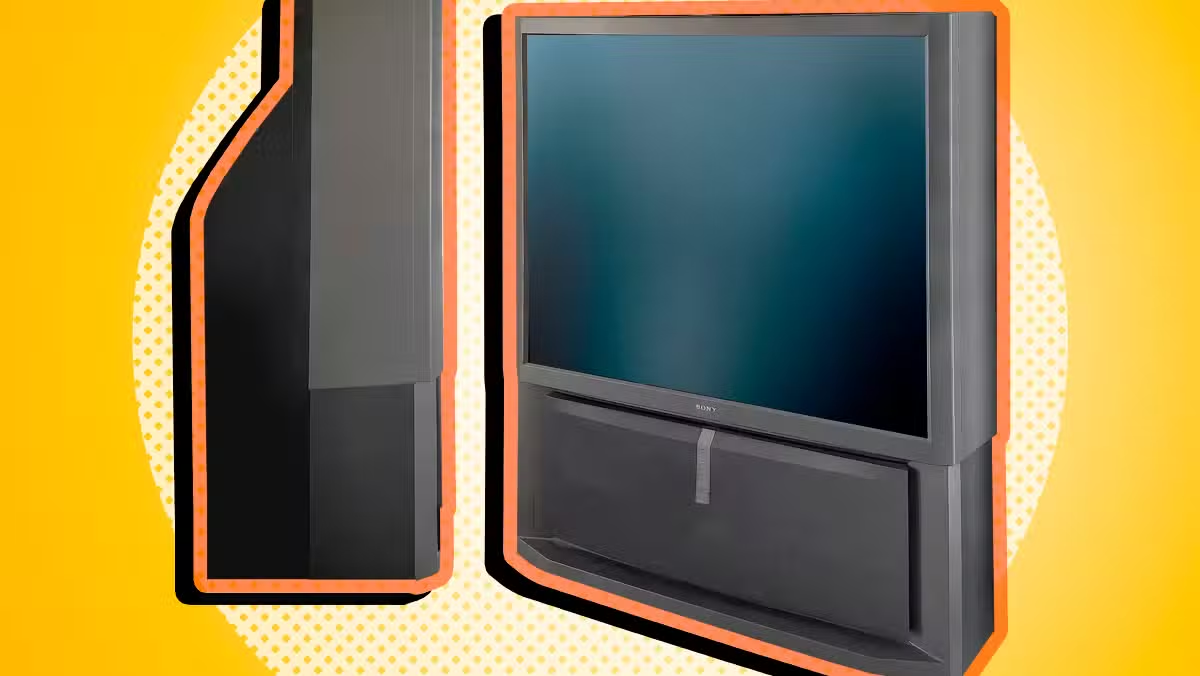
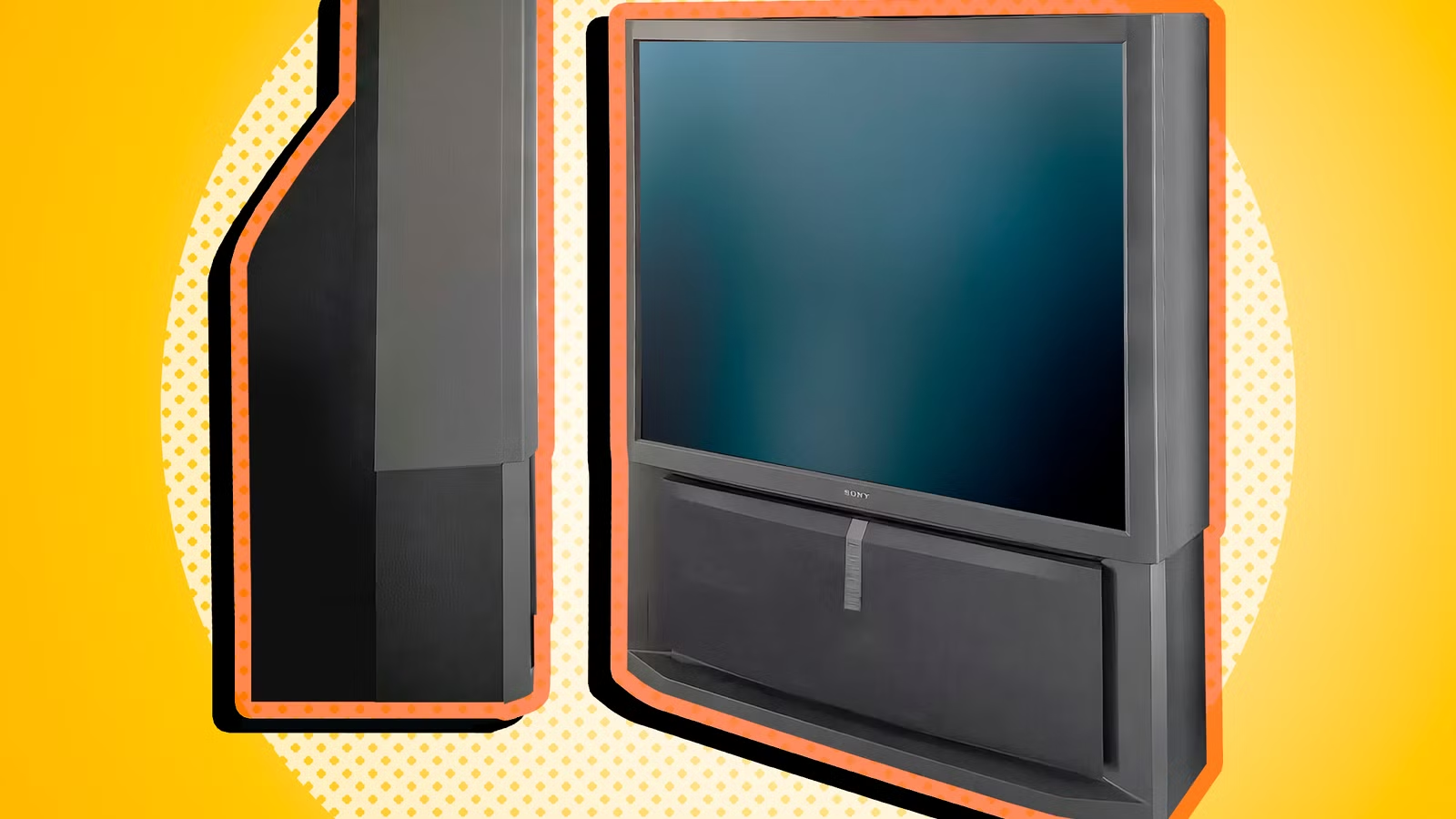
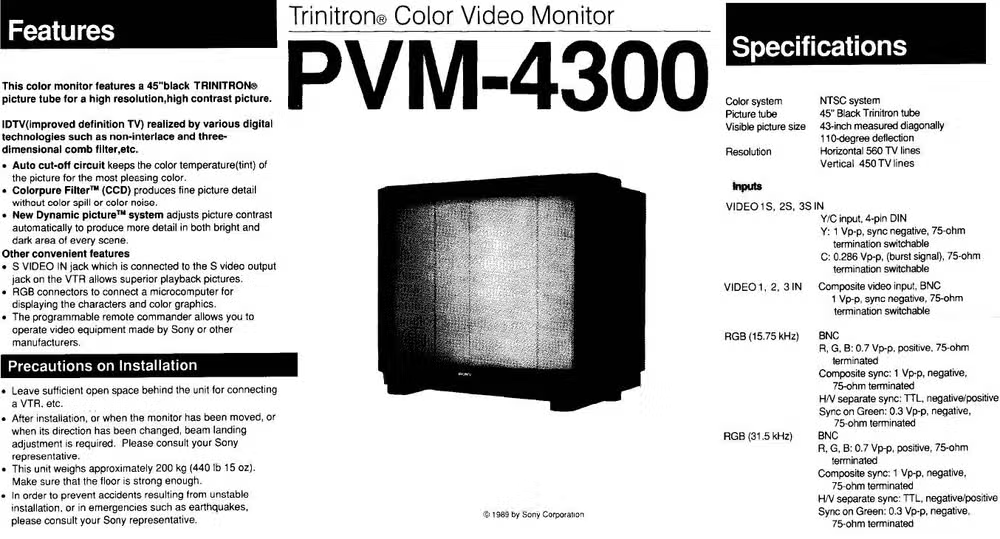
Picture walking into a 1990s living room and seeing a 50-inch television when most families watched on 20-inch screens. Rear-projection TVs (RPTVs) offered screen sizes between 40 and 60 inches at a time when the largest traditional CRT TVs topped out around 30 inches. The biggest CRT ever made, the Sony Trinitron PVM-4300, weighed a staggering 440 pounds. RPTVs solved this weight problem by using internal projectors instead of massive glass tubes.
From a business perspective, RPTVs represented exactly what investors and executives love: a technology that delivered something previously impossible. Big screens without structural reinforcement for your floor. A cinematic experience at home. The future, sitting in your living room.
But here's where the story turns into a case study for any CTO or procurement manager evaluating new technology.
What Made 90s Giant TVs Terrible to Own?
The problems with RPTVs weren't visible in the showroom. They emerged in real-world usage conditions, which is exactly the pattern that repeats with enterprise technology purchases today.
✅ Pros
- • Screen sizes 2-3x larger than affordable CRTs
- • Relatively lightweight compared to equivalent CRT size
- • Flat screens before flat-panel technology matured
- • Impressive specifications on paper
❌ Cons
- • Terrible viewing angles required precise seating
- • Image quality degraded rapidly over time
- • Expensive bulb replacements every 2-3 years
- • Deep cabinets consumed significant floor space
- • Convergence issues required constant adjustment
- • Near-zero resale value as technology aged
The viewing angle problem alone killed the value proposition for families. Sit more than 15 degrees off-center, and the image washed out significantly. In a living room with multiple seating positions, only one or two spots offered acceptable picture quality. For businesses, this translates to a familiar pattern: technology that works perfectly in controlled demos but fails when deployed across diverse real-world conditions.
Total Cost of Ownership: The Hidden 90s TV Expense
RPTVs looked like premium purchases. They cost thousands of dollars at a time when a decent CRT ran a few hundred. But the real costs came after the purchase, a pattern that enterprise technology buyers should recognize immediately.
| Cost Factor | RPTV Reality | Modern Tech Parallel |
|---|---|---|
| Initial Purchase | $2,000-$5,000 | Enterprise software licenses |
| Bulb Replacement | $200-$400 every 2-3 years | Maintenance contracts |
| Professional Calibration | $100-$200 per adjustment | Implementation services |
| Floor Space | 3-4 feet of depth | Server room or cloud costs |
| Resale Value | Near zero within 5 years | Legacy system migration costs |
The bulb replacement cycle alone added 10-20% to the annual cost of ownership. And unlike modern displays that maintain quality for a decade, RPTV image quality degraded noticeably year over year. You weren't just paying to maintain the device. You were paying to watch it get worse.
Another deep dive into total cost of ownership analysis for major purchases
Why Business Leaders Should Study Failed Consumer Tech
The RPTV story matters for business decision-makers because the same evaluation failures happen constantly in enterprise technology. Consider how many organizations have purchased impressive-sounding solutions that failed the real-world deployment test.
The RPTV Framework for Tech Evaluation
Before any major technology purchase, apply the RPTV test: 1) Does it work in diverse real-world conditions, not just demos? 2) What's the total cost over 5 years including maintenance, training, and integration? 3) What's the technology roadmap risk if something better emerges? 4) What's the exit cost if we need to migrate away?
RPTVs failed all four tests. They worked in showrooms but not living rooms. Maintenance costs exceeded expectations. Plasma and LCD technology emerged and killed the market within a decade. And the exit cost was total, as RPTVs became essentially worthless as newer technologies arrived.
What Replaced 90s Giant TVs and Why It Matters
The transition from RPTVs to flat-panel displays happened remarkably fast. By the mid-2000s, plasma and LCD TVs offered comparable screen sizes with none of the drawbacks. Better viewing angles, no bulb replacements, a fraction of the depth, and steadily declining prices.
For businesses, this timeline demonstrates technology roadmap risk. RPTV buyers in 2003 paid premium prices for technology that would be obsolete within three years. The same pattern repeats across enterprise technology. Organizations that invested heavily in on-premise solutions just before cloud alternatives matured. Companies that built custom systems right before SaaS options emerged.
See how AI pricing is reshaping creative technology investments
How to Avoid the RPTV Trap in Enterprise Tech Purchases
The 90s giant TV failure offers a practical framework for evaluating any significant technology investment. Here's how to apply these lessons to your next major purchase decision.
- Test in real conditions, not demos. RPTVs looked great in showrooms with controlled lighting and optimal seating. Insist on pilot deployments that mirror actual usage conditions.
- Calculate 5-year TCO before purchase. Include maintenance, training, integration, and the cost of staff time to manage the technology. If vendors can't provide clear TCO estimates, that's a red flag.
- Assess technology roadmap risk. What alternatives are emerging? What's the trajectory of competing solutions? Buying at the peak of a technology cycle is expensive.
- Plan your exit before you enter. What does migration look like if this technology fails or something better emerges? Vendor lock-in costs should factor into every purchase decision.
- Talk to users at year three, not month three. Early adopters are enthusiastic. The real feedback comes from organizations that have lived with the technology through multiple cycles.
These questions would have revealed RPTV weaknesses before purchase. They'll reveal weaknesses in enterprise technology purchases too.
An example of unglamorous technology that delivers on its promises
The Nostalgia Factor: Why We Remember 90s TVs Fondly
Despite all their flaws, RPTVs hold a special place in the memories of people who grew up with them. That first glimpse of a massive screen felt genuinely magical. The technology delivered on its core promise, which was a big picture, even if everything around that core promise disappointed.
This nostalgia factor matters for business leaders too. Organizations often maintain loyalty to technologies that delivered value at a critical moment, even when better alternatives exist. The CRM that was revolutionary in 2010. The ERP system that finally unified operations in 2015. The cloud platform that enabled remote work in 2020. Emotional attachment to legacy technology is real, and it costs money.
FAQ: 90s Giant TVs and Technology Investment Lessons
Frequently Asked Questions
Why did 90s rear-projection TVs fail despite impressive specifications?
RPTVs failed because their real-world performance didn't match showroom demos. Poor viewing angles, expensive bulb replacements, rapid image degradation, and the emergence of superior flat-panel technology made them obsolete within a decade.
How much did 90s giant TVs actually cost to own?
Initial purchase prices ranged from $2,000 to $5,000, but bulb replacements ($200-$400 every 2-3 years) and professional calibration added 15-25% annually. Total 5-year cost of ownership often exceeded the original purchase price.
What technology replaced rear-projection TVs?
Plasma displays emerged first, followed by LCD technology. By 2008, flat-panel prices had dropped enough to make RPTVs obsolete. Today, LED-backlit LCDs and OLEDs dominate, offering superior quality in thin form factors.
What lessons do 90s TVs offer for enterprise technology purchases?
Test in real conditions, calculate 5-year TCO, assess technology roadmap risk, plan exit strategies before purchase, and seek feedback from long-term users rather than early adopters.
Are any 90s giant TVs worth collecting today?
RPTVs have near-zero collector value due to maintenance requirements and bulk. However, high-end CRT monitors like the Sony PVM line are valuable for retro gaming enthusiasts who want period-accurate display technology.
Logicity's Take
At Logicity, we build AI agents and automation workflows for businesses, and the RPTV story resonates with what we see in enterprise AI adoption today. The pattern is identical: impressive demos that don't translate to real-world value. We've watched organizations invest heavily in AI solutions that work perfectly in controlled environments but fail when deployed across diverse business conditions. The lesson we apply in our own work is simple. Before we recommend any technology stack, whether it's Claude API integrations, n8n automation workflows, or Next.js applications, we run the RPTV test. Does it work in messy, real-world conditions? What's the actual 5-year cost including maintenance and updates? What happens if something better emerges next year? What's the migration path if we need to switch? For Indian startups and SMEs especially, technology roadmap risk is critical. Betting on a platform that becomes obsolete in 3 years can sink a growing business. We've seen too many organizations lock themselves into solutions that looked impressive in demos but became expensive liabilities. The 90s TV buyers learned this lesson the hard way. Smart technology investments in 2026 require asking the questions they didn't ask.
Need Help Evaluating Technology Investments?
Logicity helps businesses navigate technology decisions with clear-eyed analysis of real-world performance, total cost of ownership, and roadmap risk. Whether you're evaluating AI platforms, automation tools, or custom development approaches, we bring practical experience to help you avoid the RPTV trap. Reach out to discuss your next technology investment.
Source: How-To Geek
Manaal Khan
Tech & Innovation Writer
اقرأ أيضاً

رأي مغاير: كيف يؤثر اختراق الأمن الداخلي الأميركي على شركاتنا الخاصة؟
في ظل اختراق عقود الأمن الداخلي الأميركي مع شركات خاصة، نناقش تأثير هذا الاختراق على مستقبل الأمن السيبراني. نستعرض الإحصاءات الموثوقة ونناقش كيف يمكن للشركات الخاصة أن تتعامل مع هذا التهديد. استمتع بقراءة هذا التحليل العميق

الإنسان في زمن ما بعد الوجود البشري: نحو نظام للتعايش بين الإنسان والروبوت - Centre for Arab Unity Studies
في هذا المقال، سنناقش كيف يمكن للبشر والروبوتات التعايش في نظام متكامل. سنستعرض التحديات والحلول المحتملة التي تضعها شركات مثل جوجل وأمازون. كما سنلقي نظرة على التوقعات المستقبلية وفقًا لتقرير ماكنزي

إطلاق ناسا لمهمة مأهولة إلى القمر: خطوة تاريخية نحو استكشاف الفضاء
تعتبر المهمة الجديدة خطوة هامة نحو استكشاف الفضاء وتطوير التكنولوجيا. سوف تشمل المهمة إرسال رواد فضاء إلى سطح القمر لconducting تجارب علمية. ستسهم هذه المهمة في تطوير فهمنا للفضاء وتحسين التكنولوجيا المستخدمة في استكشاف الفضاء.