Key Takeaways

- ZTE demonstrated multi-agent AI systems that coordinate across network domains for autonomous decision-making and self-healing operations
- Joint trials with Chinese operators showed cross-domain fault management reducing mean time to repair and minimizing on-site maintenance
- Dynamic 5G slice management automates resource allocation across the full slice lifecycle for enterprise customers
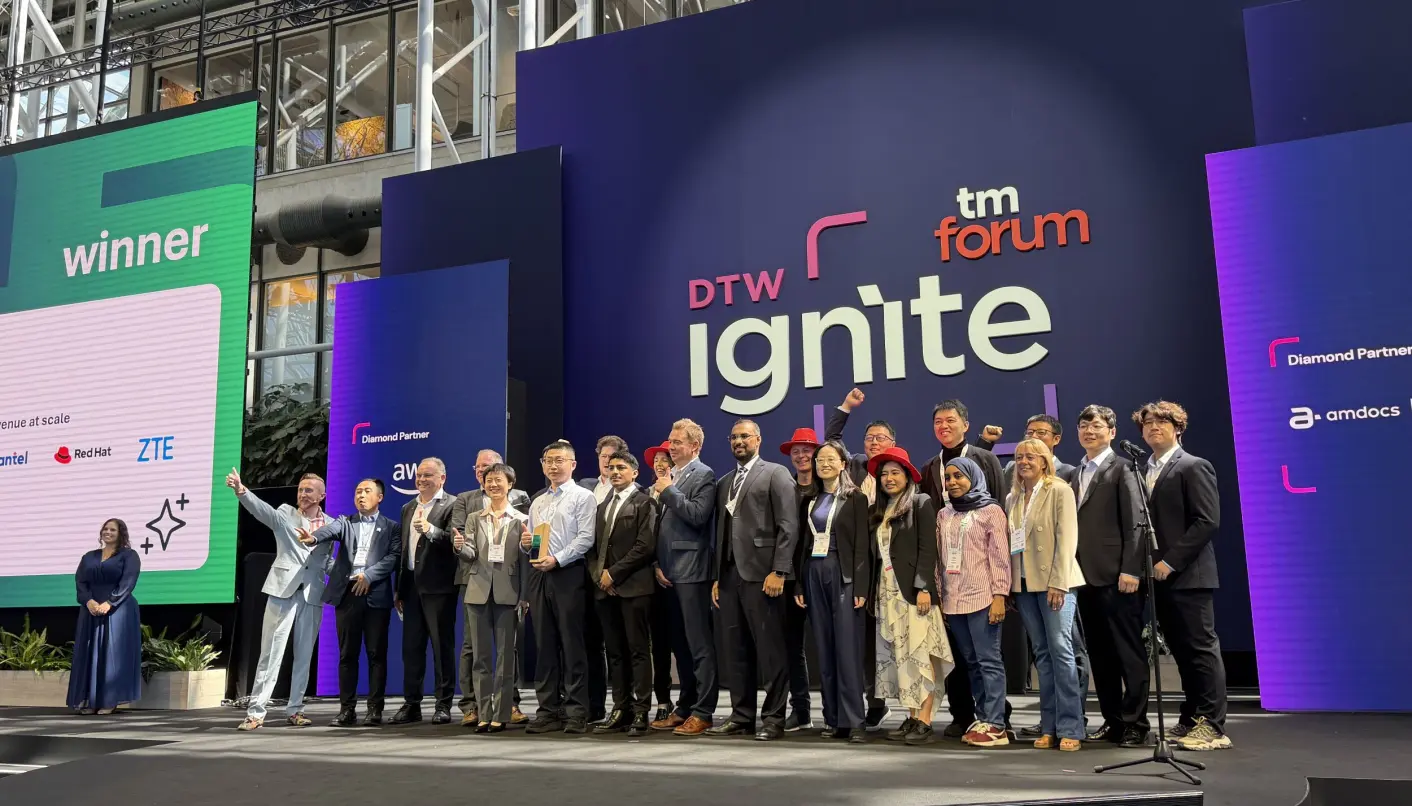
ZTE presented its approach to Level-4 autonomous networks at DTW Ignite 2026, demonstrating how multiple AI agents can coordinate across network domains to handle fault management and resource allocation without human intervention. The Chinese vendor showed commercial deployments with operators that cut repair times and automated 5G slice lifecycle management.
The showcase reflects where telecom operators are heading: away from isolated automation tools toward systems where AI agents collaborate across radio, transport, and core networks. On TM Forum's 0-to-5 autonomy scale, Level 4 represents networks where AI handles the vast majority of operations. Human engineers step in only for exceptions.
What does Level-4 autonomy actually mean?
TM Forum's framework defines Level 4 as "highly autonomous." At this stage, AI systems execute complex decisions across multiple domains without waiting for human approval. The network predicts failures, reroutes traffic, and optimizes resources in real time. Operators estimate this level can cut operational costs by 40 to 60 percent compared to manual or semi-automated operations.
ZTE's pitch centers on "agentic AI," a term the industry uses for AI systems that act independently rather than waiting for prompts. These agents specialize in specific domains. One handles radio access network faults, another watches transmission infrastructure, a third monitors power systems. A cross-domain orchestration layer coordinates them.
Zheng Peng, Vice President of ZTE, framed the shift clearly: "The journey to Level-4 autonomous networks is no longer about automating individual tasks. It is about enabling intelligent collaboration among AI agents across domains to achieve autonomous decision-making, self-healing operations and continuous optimization at scale."
Two operator trials show the approach in production
ZTE highlighted two joint projects with Chinese operators. The W2W Fault Management trial integrates power systems, environmental monitoring, wireless networks, and transmission infrastructure into one operational framework. Each domain has its own intelligent agent. The cross-domain layer correlates alarms and root causes across all of them.
The result: faster fault isolation and fewer truck rolls. When a fiber cut affects multiple cell sites, the system identifies the common cause rather than dispatching technicians to each site. ZTE claims significant reductions in mean time to repair, though it did not publish specific numbers at the event.
The second trial focused on Dynamic 5G Slice Management. Network slicing lets operators carve dedicated virtual networks for enterprise customers with guaranteed bandwidth and latency. The trial automates the full slice lifecycle: creation, assurance, and optimization. When an enterprise customer's traffic patterns change, the system reallocates resources automatically.
Catalyst projects point to what comes next
Beyond commercial deployments, ZTE contributed to four TM Forum Catalyst projects exploring edge cases and future capabilities.
- A2A-T Catalyst: Targets "Dark NOC" operations where network operations centers run with minimal human staff, relying on multi-agent systems for cross-domain fault location.
- Agentic AI for Customer-Centric O&M Phase II: Agents detect and resolve issues before they affect customer experience, shifting from reactive to proactive operations.
- OTAI for Vehicle Phase II: Applies multi-agent collaboration to connected vehicle services, breaking down AI silos between automotive and telecom systems.
- Robotic Dog AI at the Edge: Tests how AI-native networks can support embodied intelligence with reduced hardware complexity and power draw.
The connected vehicle project matters for automakers and fleet operators. Today, a connected car might interact with dozens of separate AI systems that do not share context. Multi-agent orchestration could let those systems coordinate, improving everything from over-the-air updates to real-time traffic routing.
Why operators care about this now
Telecom operators face a familiar squeeze: rising data traffic, flat or declining average revenue per user, and pressure to support enterprise 5G services with strict SLAs. Automation is not optional. The question is whether operators build their own AI stacks or buy from vendors like ZTE, Ericsson, Nokia, and Huawei.
ZTE's pitch to CTOs is straightforward. Cross-domain orchestration is hard to build in-house because it requires deep integration across multiple vendor systems. ZTE argues that its unified framework handles that complexity. Operators get a single operational layer rather than stitching together domain-specific tools.
The competition is real. Ericsson has its own AI-native network portfolio. Nokia pitches its AVA platform for network automation. Huawei offers similar multi-domain solutions. Each vendor claims faster deployment, better integration, or stronger AI capabilities. For operators, the choice often comes down to existing relationships and willingness to let a single vendor control the automation layer.
The gap between demo and deployment
Conference demonstrations prove concepts. They do not prove that a solution works at scale across a national network with legacy equipment, multiple vendors, and real-world fault conditions. ZTE showed finalists for TM Forum Excellence Awards, which suggests independent validation, but operators evaluating these solutions will want to see production metrics from comparable networks.
The "Dark NOC" vision, where network operations centers run nearly unstaffed, remains aspirational. Even at Level 4, operators will need engineers for edge cases, vendor negotiations, and strategic decisions. The question is whether the headcount drops by 30 percent or 70 percent.
Frequently Asked Questions
What is a Level-4 autonomous network?
On TM Forum's 0-to-5 scale, Level 4 means AI handles most network operations autonomously. Humans intervene only for exceptions and strategic decisions. The system predicts faults, optimizes resources, and executes changes without approval.
How does agentic AI differ from traditional network automation?
Traditional automation follows predefined rules. Agentic AI systems act independently, making decisions based on real-time data and coordinating with other AI agents. They adapt to situations not explicitly programmed.
Which vendors compete with ZTE in autonomous networks?
Ericsson, Nokia, and Huawei all offer competing autonomous network solutions. Each claims different strengths in AI capabilities, cross-domain integration, and operator deployment experience.
What cost savings do Level-4 networks deliver?
Industry estimates suggest 40 to 60 percent operational cost reductions at Level 4 autonomy, primarily from reduced truck rolls, faster fault resolution, and lower staffing in network operations centers.
Logicity's Take
ZTE's DTW presentation is credible but incomplete. The multi-agent architecture makes technical sense, and joint trials with operators add weight. What is missing: hard numbers. Without published MTTR improvements or deployment scale, CTOs cannot compare this against Ericsson's AI-native portfolio or Nokia AVA. Operators already running Huawei infrastructure will find ZTE integration easier; those in markets with Huawei restrictions will look elsewhere. The real test comes when an operator publishes a case study with actual metrics, not conference slides.
Explores the broader agentic AI opportunity that ZTE and other vendors are targeting
Need Help Implementing This?
Evaluating autonomous network solutions for your telecom infrastructure? Logicity connects you with advisors who have deployed multi-vendor AI orchestration in production environments. Contact us for vendor-neutral guidance on your autonomy roadmap.
Source: www.theregister.com
Huma Shazia
Senior AI & Tech Writer
Produced with AI assistance and reviewed by the Logicity editorial team. Learn more in our Editorial Policy.




