Key Takeaways
Zostel Approaches SEBI Against OYO's IPO | Startup Street | CNBC TV18
- Zostel claims Oyo's IPO documents inadequately disclose the ongoing legal dispute over a 7% equity stake
- PhonePe promoted Srijon Biswas to CTO while delaying its own IPO amid market volatility
- Dream Sports CTO Amit Sharma exits to build an AI startup after the company's regulatory-driven restructuring
Zostel Hospitality has petitioned the Securities and Exchange Board of India to halt Oyo's IPO, arguing that the hotel chain's updated draft prospectus buries critical details about their nine-year legal fight. The move escalates a dispute that traces back to a failed 2015 acquisition and could complicate Oyo's already rocky path to public markets.
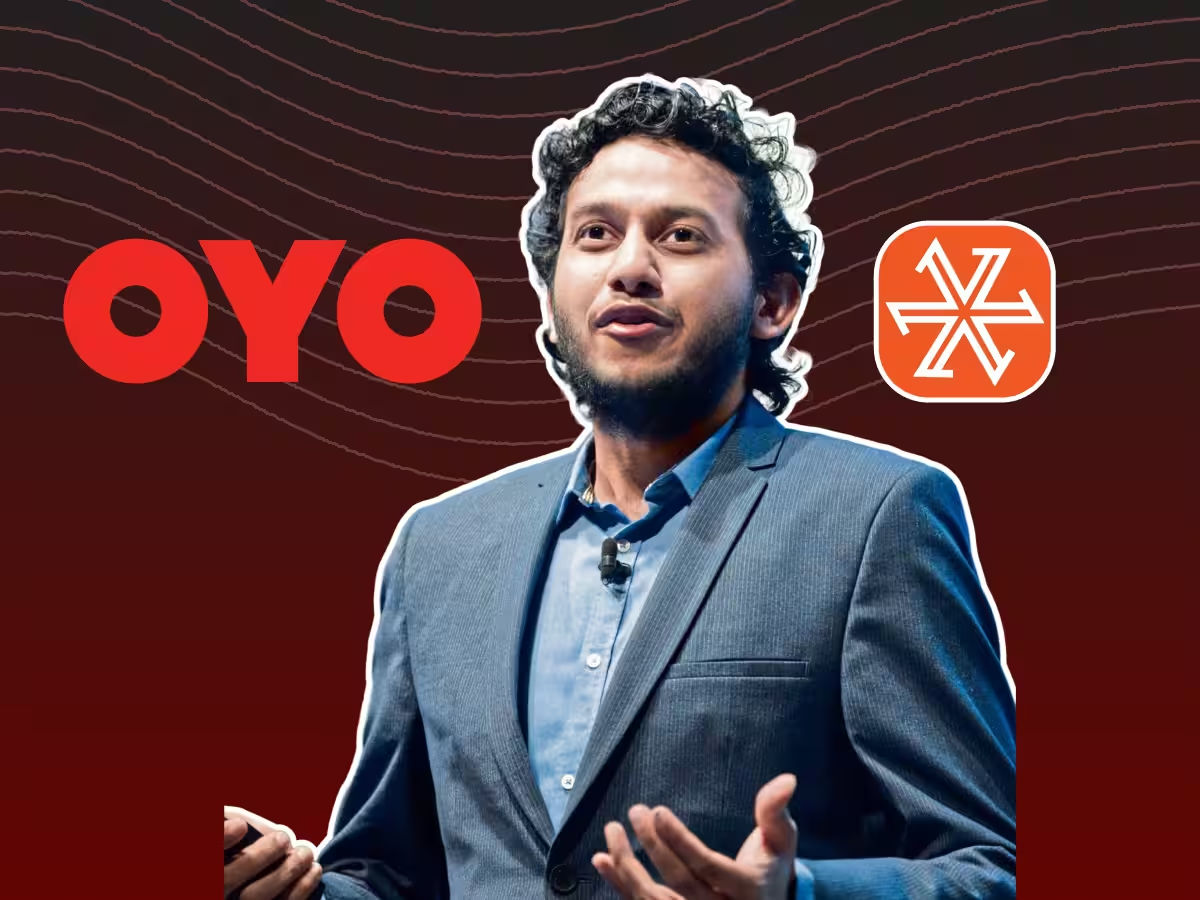
What does Zostel want from Sebi?
In a July 7 representation, Zostel told Sebi that Oyo parent Prism's updated draft red herring prospectus fails to spell out the background, nature, or commercial significance of their dispute. The filing describes the company's side of events while downplaying what investors should know about potential liabilities.
Zostel went further. It also wrote to the NSE, BSE, and the book-running lead managers, asking each to independently vet the disclosures and withhold the IPO until the offer document meets disclosure norms.
The core claim: Zostel says Oyo owes it roughly 7% equity, or equivalent economic value, from a proposed acquisition of Zo Rooms that never closed. Oyo disputes this. The Supreme Court dismissed Zostel's challenge last year, but Zostel maintains the matter remains pending before the Delhi High Court under Section 37 of the Arbitration and Conciliation Act.
Why the 2015 Zo Rooms deal still matters
In 2015, Oyo, then operating as Oravel Stays, proposed acquiring Zostel's budget hotel business Zo Rooms. The deal collapsed. Both sides have spent nearly a decade fighting over what was promised.
An arbitration tribunal ruled in 2021 that a binding term sheet existed between the parties. That gave Zostel significant legal leverage, but subsequent court rulings have swung in both directions. Prism's IPO documents do acknowledge the litigation. Zostel's complaint is that acknowledgment is not the same as adequate disclosure.
For investors, a 7% equity claim against a company once valued at $9.6 billion is material. Oyo has since gone through multiple down-rounds, but any listing would revive the question of what that stake is worth.
PhonePe promotes Srijon Biswas to CTO

Walmart-backed PhonePe has elevated long-time executive Srijon Biswas to chief technology officer. Biswas joined PhonePe in 2017 and most recently led engineering for its merchant and financial services businesses. He now heads the company's entire engineering organization.
Before PhonePe, Biswas worked at BrowserStack and Flipkart. He will continue reporting to cofounder Rahul Chari, who recently took on the role of chief product and technology officer.
The promotion comes at a transitional moment. PhonePe pushed back its planned IPO in March, citing geopolitical tensions and market volatility. The company holds roughly 46% of India's UPI market share with over 500 million registered users. It says it remains committed to listing, but timing is unclear.
Full coverage of PhonePe's leadership change and IPO delay
Dream Sports CTO exits to build AI startup
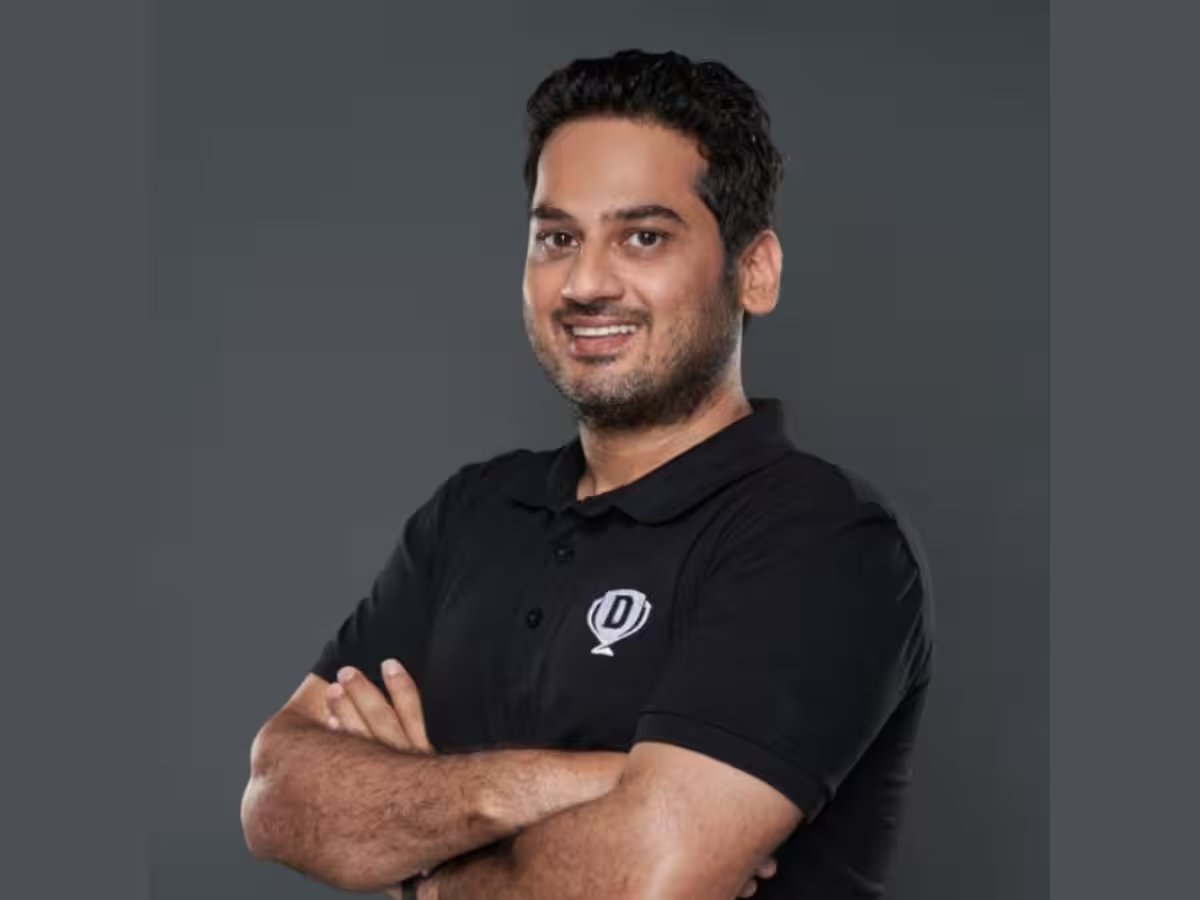
Amit Sharma, chief technology officer at Dream Sports, is stepping down after nearly a decade at the fantasy sports major. He says his next venture will involve building something "cool" with artificial intelligence. Sharma joined Dream Sports in 2016 after spending around 12 years in the US, including stints at Netflix and Yahoo.
His exit follows a difficult period for Dream Sports. In March, more than 100 executives left after the company restructured its business following the regulatory ban on online real-money gaming in India. The company also shut its fintech platform Dream Money within a year of launch.
Flipkart drops seller fees across fashion

Ahead of the festive season, Flipkart has waived seller commissions across its entire fashion category. Seller commission is the fee ecommerce platforms charge merchants for every sale, typically ranging from 5% to 30% depending on the platform and category.
Since November, Flipkart has offered zero commission on products priced below Rs 1,000 on its main platform and on all products on its hypervalue platform Shopsy. The expanded policy will now cover around 90,000 sellers, including MSMEs and direct-to-consumer brands. The company says the move aims to push sellers to list a wider range of products.
Amazon India announced a similar policy in March, removing seller fees for items under Rs 1,000. The race for Gen Z shoppers is driving both platforms to sacrifice short-term revenue for inventory breadth.
Other deals and moves

Adage Automation secured Rs 230 crore in funding led by private equity firm InCred. PhonePe insurance CEO Vishal Gupta quit to launch a new startup. Meta continued its child safety crackdown with new policy enforcement.
Logicity's Take
Zostel's petition is unlikely to derail Oyo's IPO on its own, but it adds friction at a time when Oyo can least afford it. Indian exchanges have historically deferred to issuer disclosures unless regulators flag specific deficiencies. The real pressure point is investor sentiment: institutional buyers evaluating Oyo will now factor in contingent liability for a 7% stake claim, however remote. For PhonePe, the CTO promotion signals continuity over disruption during its IPO pause. Companies preparing for public markets often lock in leadership to project stability. Compare this to Dream Sports, where CTO departure followed mass exits, a regulatory hit, and a shuttered fintech product. The contrast is stark.
Frequently Asked Questions
What is Zostel's dispute with Oyo about?
Zostel claims Oyo promised it 7% equity in exchange for acquiring Zo Rooms in 2015. The deal never closed, and Zostel has been fighting for that stake or its economic equivalent ever since.
Can Sebi actually block Oyo's IPO based on Zostel's petition?
Sebi can require additional disclosures or delay approval if it finds material information is missing. Blocking an IPO outright is rare but possible if disclosure norms are violated.
Why did PhonePe delay its IPO?
PhonePe cited geopolitical tensions and market volatility in March 2024. The company says it remains committed to listing but has not announced a new timeline.
What happened to Dream Sports that led to executive exits?
India's regulatory ban on online real-money gaming forced Dream Sports to restructure. Over 100 executives left in March, and the company shut its fintech platform Dream Money within a year of launch.
Why are Flipkart and Amazon waiving seller fees?
Both platforms are competing for Gen Z shoppers and trying to expand product selection ahead of the festive season. Waiving fees attracts more sellers and broader inventory.
Need Help Implementing This?
Logicity works with tech companies navigating IPO preparation, disclosure requirements, and market positioning. Contact our advisory team to discuss your path to public markets.
Source: Tech-Economic Times
Huma Shazia
Senior AI & Tech Writer
Produced with AI assistance and reviewed by the Logicity editorial team. Learn more in our Editorial Policy.