Key Takeaways
- Vercel launched 'eve', an open-source framework for building production AI agents in a single directory
- Vercel Connect provides temporary, scoped credentials for agents to access external services without storing long-lived tokens
- Vercel Services (launching July 1) enables microservices to communicate without touching the public internet
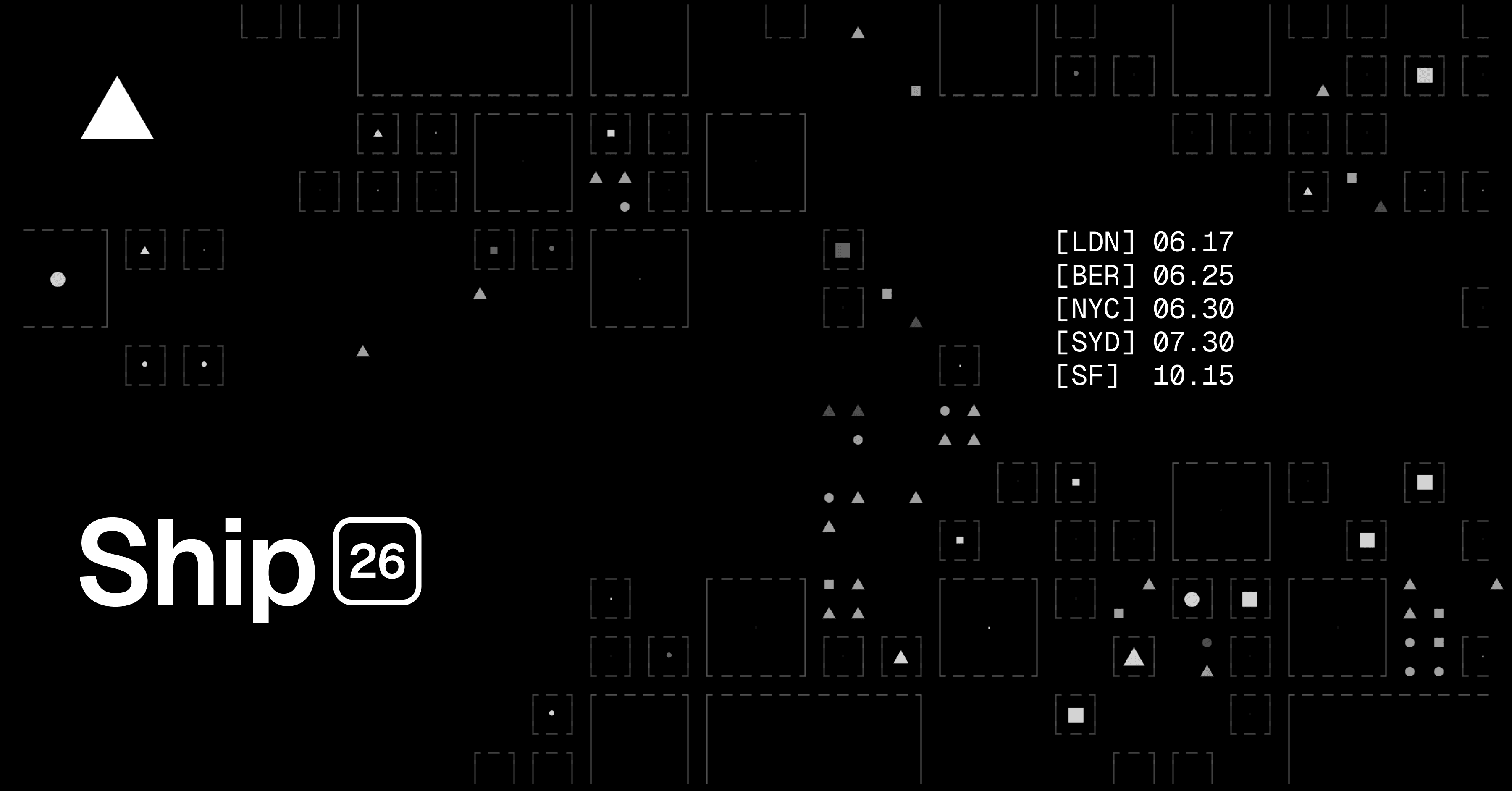
Vercel used its Ship 2026 conference in London to declare a new mission: become the default platform where AI coding agents deploy software. Over 2,500 developers and engineering leaders gathered to see CEO Guillermo Rauch outline what the company calls 'agentic infrastructure', a stack designed from the ground up for autonomous AI workflows.
The pitch is straightforward. When you ask Claude Code or OpenAI Codex where to deploy, Vercel wants to be the answer. That's not just marketing aspiration. The company claims both tools already default to Vercel because the platform matches how agents work: stateless, API-driven, and built for rapid iteration.
“We are deploying software that can think.”
— Guillermo Rauch, CEO at Vercel
What is the Agent Stack?
VP of Product Tom Occhino walked through what Vercel is calling the Agent Stack, an end-to-end set of primitives for building AI agents. The components address three problems every agent hits: calling models, running durable workflows, and connecting to external systems.
- AI SDK: One API for any model. Streaming, tool calls, and structured output work identically across providers.
- AI Gateway: Routes requests across hundreds of models from a single endpoint. Automatic failover when a provider goes down.
- Workflow SDK: Durable execution with automatic retries, state persistence, and built-in observability.
- Vercel Sandbox: Isolated microVMs where agents can run and test code before shipping to production.
- Chat SDK: Deploy agents to Slack, Discord, GitHub, and other platforms from one codebase.
The AI Gateway piece is notable. Model providers have reliability issues. OpenAI, Anthropic, and Google all experience outages. A gateway that auto-fails over to a backup model, without code changes, addresses a real pain point for production AI apps.
Vercel Connect: Scoped credentials for agents
Vercel Connect launched at Ship as the newest building block. It solves a security problem that comes with agentic systems: how do you give an AI agent access to external services without storing long-lived API tokens in environment variables?
Connect issues temporary credentials scoped to a single task. When the task completes, the credential expires. No standing secrets sit in your env file waiting to leak. For teams already worried about secrets management, this is a meaningful improvement over the current pattern of stuffing API keys into .env files and hoping for the best.
eve: Agents as directories
The biggest product announcement was eve, an open-source framework for building production agents. Vercel says it's the distilled architecture they use internally after building hundreds of agents.
The model is simple: each agent lives in a single directory. Instructions go in markdown files. Tools go in TypeScript. Durable execution, sandboxed compute, approval workflows, subagents, and evaluations are wired in by default. You scaffold, run, and deploy with the CLI commands you already know.
This competes directly with frameworks like LangChain and LlamaIndex, though eve takes a more opinionated approach. Where LangChain offers maximum flexibility (and maximum complexity), eve bets on convention over configuration. For teams that want to ship fast and don't need exotic customization, that tradeoff may work.
Full-stack expansion: Python, databases, microservices
Vercel also pushed its full-stack story forward. The company hired Python engineers earlier this year and now supports FastAPI, Flask, and other backend frameworks at scale. Backend-only services, REST APIs, durable workflows, queues, cron jobs, and MCP servers all run on the platform now.
The Vercel Marketplace added Amazon Aurora, Aurora DSQL, DynamoDB, and OpenSearch, accessible directly from the dashboard. Database provisioning without leaving your deployment platform cuts one more context switch from the workflow.
The largest infrastructure announcement: Vercel Services, launching July 1. Microservices become first-class citizens. You develop and deploy frontend and backend together. Backend-only changes still build in a full preview environment. And services can communicate with each other without touching the public internet. Private networking for microservices is table stakes at AWS or GCP, but it's new territory for Vercel.
Who should pay attention?
If you're building AI-powered products, Vercel is positioning itself as the path of least resistance. The Agent Stack addresses real infrastructure gaps. Scoped credentials, durable workflows, and sandboxed execution are problems every production agent team solves eventually. Having them built into the platform saves engineering time.
The question is lock-in. Vercel's primitives are convenient, but they're also proprietary. eve is open source, but the Workflow SDK, AI Gateway, and Vercel Connect tie you to the platform. Teams that prioritize portability may prefer assembling the stack themselves from Temporal, Envoy, and AWS IAM.
Logicity's Take
Vercel's bet is that AI coding agents will choose deployment targets, not human developers. That's a real shift in how infrastructure gets adopted. If Claude Code and Codex keep defaulting to Vercel, the company captures demand at the moment of decision, before a human ever opens a browser. The risk: OpenAI and Anthropic could build their own deployment layers, or partner with AWS and GCP instead. Vercel is racing to make its primitives sticky before the AI labs decide they want that margin for themselves. Competitors to watch include Railway, Render, and Fly.io, all of which offer simpler deployment but lack Vercel's AI-specific tooling.
Frequently Asked Questions
When does Vercel Services launch?
Vercel Services launches July 1, 2026, enabling microservices to communicate privately without touching the public internet.
Is eve open source?
Yes, eve is open source. Agents live in a single directory with markdown instructions and TypeScript tools.
What problem does Vercel Connect solve?
Vercel Connect issues temporary, scoped credentials for AI agents to access external services, eliminating the need to store long-lived API tokens in environment variables.
Which AI coding agents deploy to Vercel by default?
According to Vercel, both Claude Code and OpenAI Codex default to Vercel for deployment.
What databases does Vercel now support?
The Vercel Marketplace added Amazon Aurora, Aurora DSQL, DynamoDB, and OpenSearch, all accessible from the Vercel dashboard.
Need Help Implementing This?
If you're evaluating agentic infrastructure for your engineering team, reach out to the Logicity team. We can connect you with implementation partners who've deployed production agents on Vercel, AWS, and competing platforms.
Manaal Khan
Tech & Innovation Writer
Produced with AI assistance and reviewed by the Logicity editorial team. Learn more in our Editorial Policy.




