Key Takeaways

- Valve published complete hardware specs, STL files, and firmware for the Inkterface e-ink panel on GitLab under MIT license
- Total parts cost runs under $50 using off-the-shelf Adafruit components and 3D-printed mounting hardware
- JSAUX confirmed plans for pre-built 'Ink & Pixel versions' for buyers who skip the DIY route
Valve will not sell an e-ink display for the Steam Machine. Instead, the company dumped everything you need to make your own onto GitLab. The repository, released under the MIT license, includes schematics, STL files for 3D-printed brackets, and the firmware to drive what Valve now calls the "Inkterface."
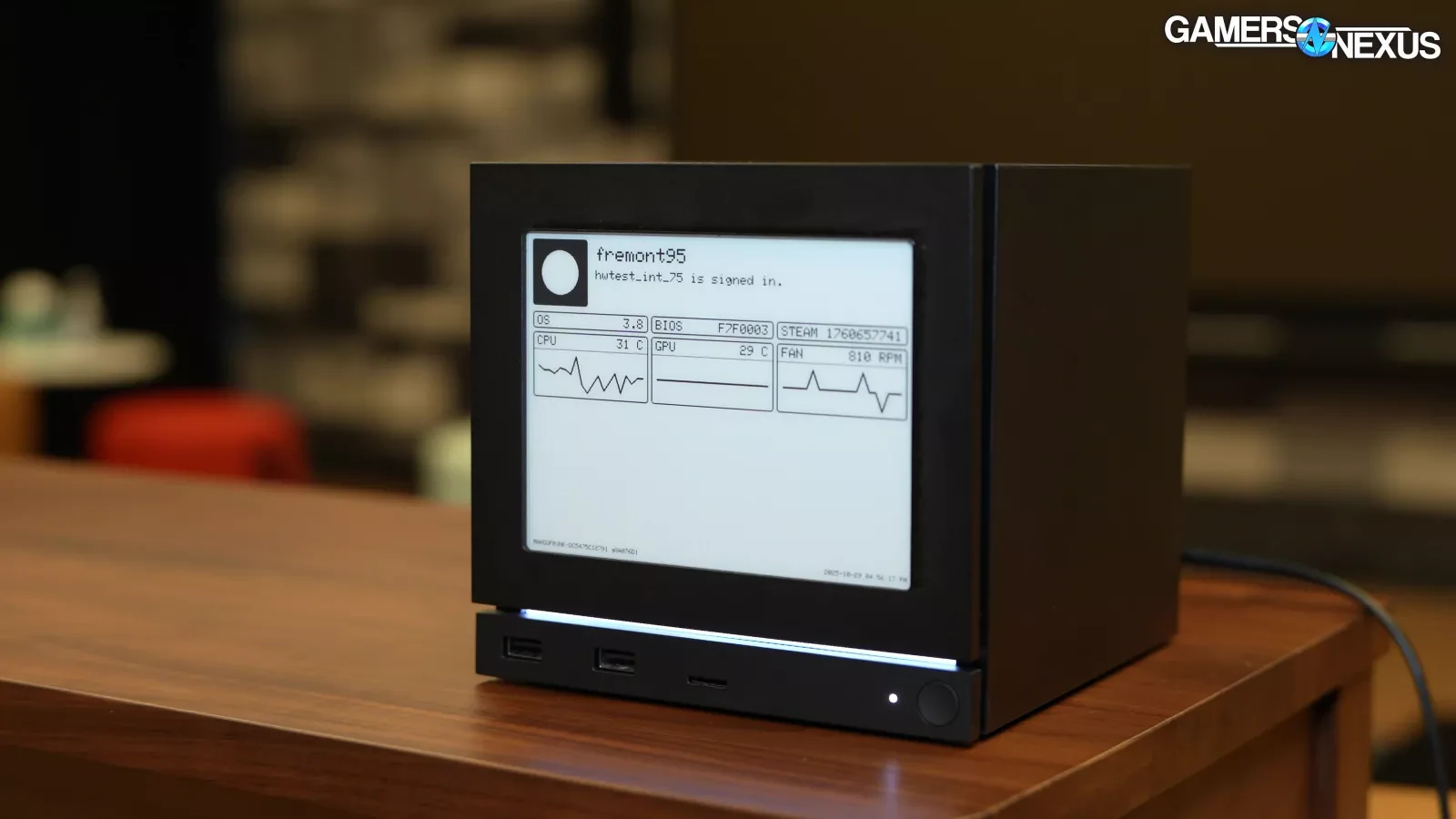
What parts do you need for the Inkterface?
The bill of materials is short and cheap. Valve specifies a handful of Adafruit components that total under $50 at retail:
- 1x Adafruit ESP32 Feather with 2MB PSRAM (microcontroller, ~$25)
- 1x Adafruit eInk Breakout Friend (display driver, ~$10)
- 1x Adafruit 5.83" Monochrome eInk Panel (~$45)
- 13x M2.5 x 5mm Pan Head Machine Screws
- 4x 1/4" x 1/4" x 3/16" Stepped Magnets (SB443-OUT)
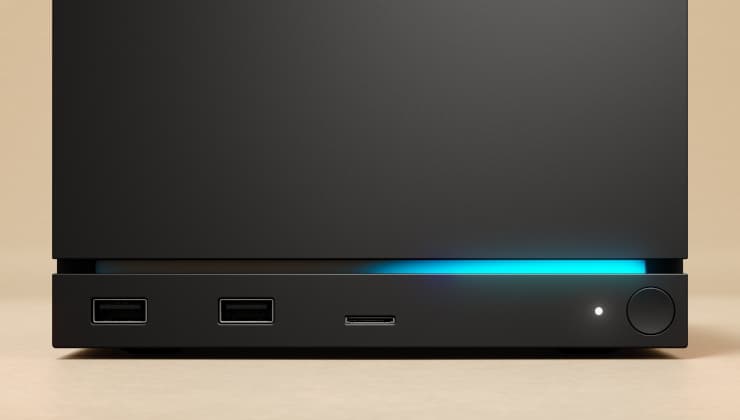
The magnets let you snap the panel onto the Steam Machine's front plate without permanent modification. Valve's decision to use standard, in-stock Adafruit parts matters: nothing here requires a custom PCB or waiting on slow shipping from Shenzhen. Anyone with a 3D printer and basic soldering skills can have a working display in an afternoon.
Why e-ink on a gaming PC?
An e-ink panel draws near-zero power when static, refreshing only when the displayed information changes. On a gaming desktop that sits idle most of the day, the Inkterface can show the current game, system stats, or artwork without touching your power bill. It also remains visible when the main display is off.
The 5.83-inch monochrome panel won't display video. That's fine. This is a status display, not a second monitor. Think of it as the gaming equivalent of the always-on info screens some NAS boxes use.
Valve's assembly video
The GitLab repo includes a walkthrough video showing the full assembly process. Valve edited it without narration, letting the visuals carry the instructions:
The video runs through mounting the ESP32, wiring the breakout board, and attaching the magnets to the 3D-printed frame. Nothing requires specialized tools beyond a screwdriver and a soldering iron.
JSAUX plans a pre-built version
Not everyone wants a DIY project. JSAUX, the accessory maker known for its Steam Deck docks and shells, teased e-ink front panels back in November 2025. The company confirmed this week that "Ink & Pixel versions" remain in the pipeline.
If the Steam Machine sells well, expect other accessory brands to follow. A pre-assembled Inkterface with plug-and-play USB is an obvious product, and the MIT license removes any legal friction.
Open hardware, Valve-style
This release fits a pattern. Valve published CAD files for the Steam Deck, allowing third parties to build docks, shells, and repair parts without reverse-engineering. The Index VR headset got similar treatment. Each time, the company bets that an ecosystem of mods and accessories drives hardware sales more than locking users into first-party options.
The Inkterface repo sits on gitlab.steamos.cloud, the same home as SteamOS and Proton. Valve treats this as infrastructure, not a product launch.

Thermal questions remain open
One commenter on GamingOnLinux raised a fair point: the stock front plate presumably factors into airflow. Swapping it for an e-ink panel with different geometry could affect thermals. Valve's files don't address this directly. Early adopters will likely benchmark both configurations and post results.
For now, the Inkterface is a weekend project for tinkerers, not a mainstream feature. That could change if JSAUX or another vendor ships a polished, thermal-tested version.
Logicity's Take
Valve's open-hardware strategy keeps paying dividends. By releasing the Inkterface under MIT, the company offloads manufacturing, support, and inventory risk to third parties while still expanding the Steam Machine's appeal. Compare this to closed ecosystems like Apple's Mac Pro, where a custom accessory market barely exists. For hardware startups watching Valve, the lesson is clear: open specs attract a developer community that markets your product for free. JSAUX, Dbrand, and others will compete on price and polish, and Valve collects a cut of every Steam game sold on machines those accessories make more attractive.
Frequently Asked Questions
Does the Steam Machine come with an e-ink display?
No. The e-ink panel is an optional mod. Valve released the design files so users can build their own or buy third-party versions.
How much does it cost to build the Inkterface?
Parts run under $80 total, assuming you already own a 3D printer. The Adafruit components cost roughly $50-60; screws and magnets add a few dollars.
What does the Inkterface display?
The firmware is open, so it depends on configuration. Common uses include game artwork, system stats, or notifications. The 5.83-inch monochrome panel refreshes slowly, so video is not practical.
Will JSAUX sell a pre-built version?
JSAUX confirmed plans for 'Ink & Pixel versions' but has not announced pricing or a release date.
Can I use a color e-ink display instead?
Potentially. Community members have pointed to Modos Paper Monitor, a low-latency color e-ink project. Adapting it to the Steam Machine would require custom firmware.
Need Help Implementing This?
Building hardware accessories or integrating open-source projects into your product line? Logicity's consulting network includes embedded systems engineers and supply chain specialists. Reach out at consulting@logicity.in.
Source: Hacker News: Best
Huma Shazia
Senior AI & Tech Writer
Produced with AI assistance and reviewed by the Logicity editorial team. Learn more in our Editorial Policy.




