Key Takeaways
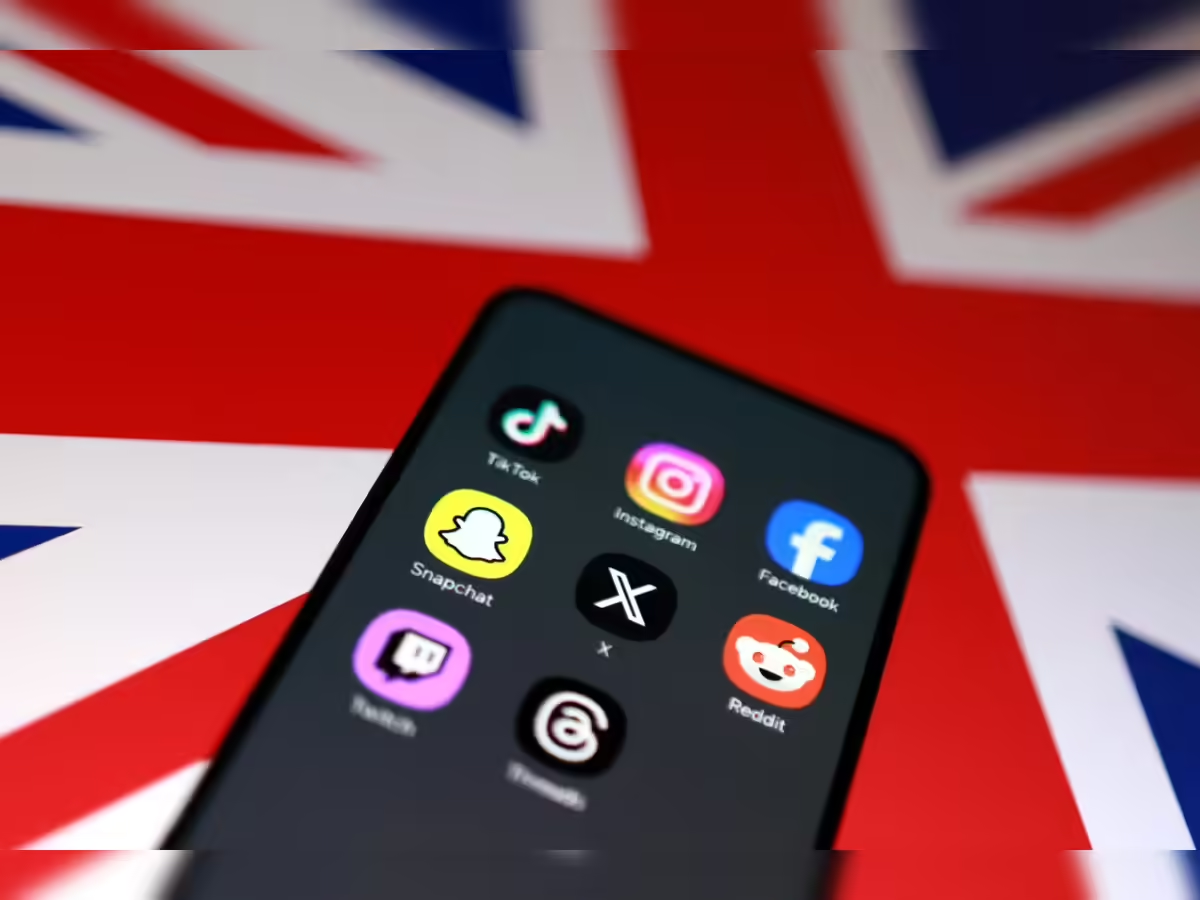
- UK government considering rules that would force platforms to make public service media content easier to find in user feeds
- Four in 10 UK adults encountered misinformation in a single month, according to Ofcom research
- Social media firms say such rules could override user choice and hurt other content creators
The UK government announced Monday it is weighing regulations that would require Meta, TikTok, and YouTube to make content from the BBC, ITV, Channel 4, and other designated "trusted news providers" more visible in user feeds and search results. The proposal aims to combat misinformation by boosting regulated journalism over algorithmic content.
The announcement follows last week's ban on under-16s using most social media platforms. It represents London's latest attempt to tighten its grip on Big Tech, but this time the target is not harmful content. It is the fundamental question of what people see first when they scroll.
What the UK is proposing
The Department for Culture, Media and Sport said platforms would need to make public service media content "easier to find" in feeds and searches. The definition of "trusted" centers on broadcasters already regulated by Ofcom: the BBC, ITV, Channel 4, and STV in Scotland. These outlets carry legal obligations for impartial, accurate reporting.
Culture Minister Lisa Nandy framed the move as essential to fighting disinformation. "It is vital that we make sure that people have better access to trusted and accurate news and that our regulated public service media is seen and heard in the fierce battle against mis- and disinformation," Nandy said in a statement.
The government suggested these changes could prove especially useful during crises, when accurate information matters most and viral falsehoods spread fastest.
Why the UK government sees urgency
Ofcom data paint a clear picture of shifting news consumption. Social media is now a primary news source for a majority of UK adults. Among 16 to 24-year-olds, roughly three-quarters rely on it. Traditional broadcasters, despite their regulatory burdens, compete for attention against unverified content that algorithms often favor for engagement.
Separate Ofcom research from 2024 found that four in 10 UK adults had encountered misinformation within a single month, most of it online. For policymakers, that statistic represents both a public trust problem and a potential national security risk during elections or emergencies.
Platform response: radio silence so far
X, Meta, TikTok, and YouTube did not respond to requests for comment. But the government acknowledged the policy will face pushback. Social media companies have consistently argued that mandating content rankings overrides user choice and disadvantages independent creators who lack the institutional backing of national broadcasters.
The tension is real. An algorithm tweaked to favor the BBC inherently demotes something else. For platforms built on personalization and engagement metrics, government-mandated visibility hierarchies conflict with core product logic.
This debate echoes conflicts elsewhere. Australia forced platforms to pay for news content, prompting Meta to threaten pulling news entirely. The EU's Digital Services Act requires platforms to assess risks to "civic discourse" but stops short of dictating specific ranking outcomes.
Part of a broader media overhaul
The news prioritization proposal sits within a larger rethink of Britain's public service media framework. Ministers are considering several parallel changes: extending public service media status to online-only providers, protecting major sporting events for free-to-air viewing on streaming platforms, and planning a transition to internet-based TV by 2034 or 2044.
The underlying concern is survival. Legacy broadcasters face declining ad revenue and audience fragmentation. Streaming services and social platforms capture attention that once went to scheduled programming. The government's calculation: if regulated news cannot compete on algorithmic platforms, it needs regulatory help.
What happens next
The policy remains under consideration, meaning specifics on enforcement and scope are undefined. But it builds on the Online Safety Act, which granted Ofcom significant new powers over social media platforms starting in 2024. The regulator already has the infrastructure to pressure non-compliant companies.
For tech executives, the UK keeps adding to a growing list of jurisdictions willing to dictate platform behavior. And unlike content moderation rules that target illegal material, this proposal reaches into the feed itself, the commercial core of every social network.
Logicity's Take
This is less about misinformation and more about economic survival for traditional media. The UK is essentially asking platforms to subsidize legacy broadcasters with algorithmic real estate. Whether that produces better-informed citizens or just resentful users clicking past mandated content remains an open question. For global platforms, the real risk is precedent. If the UK succeeds, expect similar demands from other governments seeking to prop up their own national news outlets.
Frequently Asked Questions
Which social media platforms would be affected by UK trusted news rules?
The government specifically named Meta's Facebook, YouTube, and TikTok as platforms that would need to prioritize content from regulated news providers like the BBC, ITV, and Channel 4.
What counts as 'trusted news' under the UK proposal?
The proposal centers on public service media regulated by Ofcom, which includes the BBC, ITV, Channel 4, and STV in Scotland. These outlets have legal obligations for impartial and accurate reporting.
How does this relate to the UK Online Safety Act?
The proposal builds on the Online Safety Act, which came into force in 2024 and gives regulator Ofcom broad powers over social media platforms. The new rules would extend regulatory reach into how platforms rank and display news content.
Why are social media companies likely to oppose this regulation?
Platforms argue that mandating content rankings overrides user choice and disadvantages independent creators. Such rules conflict with algorithmic personalization, which is central to how these platforms operate and generate revenue.
When would UK social media news prioritization rules take effect?
The policy is still under consideration, with no implementation timeline announced. The government is consulting on the proposal as part of a broader public service media overhaul.
Related coverage on digital platform security and government oversight
Need Help Implementing This?
If your organization needs guidance on navigating evolving social media regulations across jurisdictions, contact our team at Logicity for analysis tailored to your compliance and communications strategy.
Source: Tech-Economic Times / ET
Huma Shazia
Senior AI & Tech Writer
Produced with AI assistance and reviewed by the Logicity editorial team. Learn more in our Editorial Policy.




