Key Takeaways
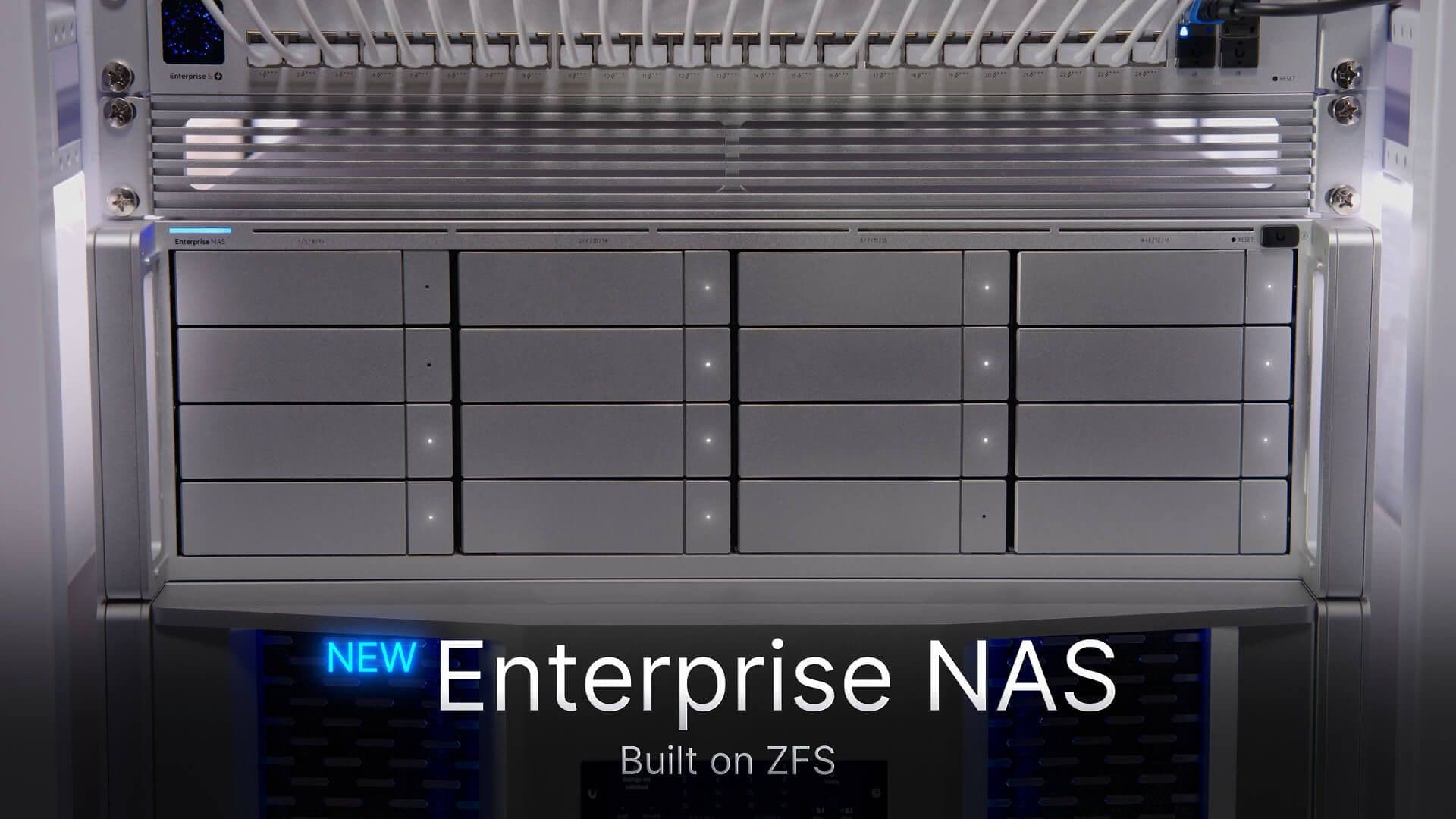
- Ubiquiti's ENAS uses ZFS, a filesystem known for data integrity and built-in RAID capabilities
- The product eliminates traditional enterprise storage licensing fees and proprietary hardware requirements
- This marks Ubiquiti's expansion from networking into the storage infrastructure market
Ubiquiti Networks has announced Enterprise NAS (ENAS), a storage platform built on ZFS that ships without the licensing fees typical of enterprise storage systems. The product targets businesses that want local, private storage with enterprise-grade features but have balked at the cost and complexity of traditional vendors like Dell EMC or NetApp.
The move represents a significant expansion for Ubiquiti. The company built its reputation by disrupting enterprise networking with UniFi products that offered professional-grade features at small-business prices. ENAS follows that playbook, applying it to storage infrastructure.
Why Ubiquiti chose ZFS
ZFS is not a casual choice. Originally developed by Sun Microsystems in 2001, the filesystem has become the gold standard for data integrity in storage systems. It uses copy-on-write architecture, meaning data is never overwritten in place. Instead, new data writes to a new location, and the system updates pointers only after confirming the write succeeded. If power fails mid-write, the old data remains intact.
The filesystem also includes built-in RAID capabilities (called RAIDZ), snapshots, compression, and end-to-end checksumming that detects and corrects silent data corruption. Oracle, which acquired Sun, uses ZFS in its enterprise storage line. TrueNAS, a popular NAS operating system, runs on ZFS. So does much of Netflix's content delivery infrastructure.
For Ubiquiti, ZFS provides enterprise data protection without requiring the company to build those features from scratch. It also appeals to the technical audience that already runs UniFi networking gear. On Hacker News, where this announcement surfaced, ZFS commands near-religious devotion among system administrators.
What ENAS actually delivers
Ubiquiti describes ENAS as a "private, local storage platform designed for performance, scalability, and simplicity." The pitch centers on three claims: no costly licensing, no proprietary hardware lock-in, and simplified management.
Traditional enterprise storage often charges separately for the hardware, the software, and ongoing support. Features like deduplication or encryption may require additional licenses. Capacity expansions can trigger new fees. Ubiquiti's model, if it follows the UniFi pattern, bundles software with hardware at a fixed price.
The "simplicity" claim matters too. Enterprise storage systems from EMC or NetApp require specialized training to configure and maintain. Ubiquiti has consistently prioritized user interface design in its networking products, making features accessible to IT generalists rather than storage specialists.
The competitive landscape ENAS enters
ENAS competes across multiple tiers. At the low end, Synology and QNAP sell NAS devices to small businesses and prosumers. Both offer ZFS-based options. At the high end, Dell EMC, NetApp, and Pure Storage dominate enterprise accounts with products that scale to petabytes and integrate with cloud services.
Ubiquiti appears to be targeting the middle: businesses large enough to need serious storage but not large enough to justify the six-figure contracts and dedicated storage teams that traditional enterprise vendors expect. Think regional hospitals, mid-size law firms, manufacturing companies, or school districts.
The global enterprise storage market reached approximately $103 billion in 2023 and continues growing as businesses generate more data. Even a small slice of that market represents substantial revenue for a company of Ubiquiti's size (roughly $1.9 billion in annual revenue as of fiscal 2023).
Questions Ubiquiti still needs to answer
The announcement leaves several details unclear. Ubiquiti has not published specifications, pricing, or availability dates in the initial blog post. For storage buyers, these gaps matter enormously. Maximum capacity, drive compatibility, network connectivity options, and iSCSI or NFS support all determine whether ENAS fits a given environment.
Ubiquiti's cloud account requirements also raise questions. UniFi controllers can run locally, but some features push users toward Ubiquiti's cloud services. For storage, where data sovereignty concerns run high, any required cloud connectivity will face scrutiny.
Support is another consideration. Enterprise storage buyers expect 24/7 support with guaranteed response times. Ubiquiti's support model, designed for products that cost hundreds rather than thousands of dollars, may need to evolve for customers betting their business data on ENAS.
Logicity's Take
Ubiquiti's track record in networking suggests ENAS will undercut competitors on price while offering 80% of their features. That formula works for companies frustrated by storage vendor lock-in but terrifies incumbents. The real test comes when ENAS handles its first drive failure or data recovery at a customer site. Storage is unforgiving; one botched firmware update can destroy trust permanently.
Who should pay attention
If your organization already runs UniFi networking, ENAS deserves evaluation when details emerge. The management interface will likely integrate with existing UniFi dashboards, reducing operational complexity. You already know what Ubiquiti support looks like and whether it meets your needs.
If you currently run Synology or QNAP and find yourself bumping against their limits, ENAS might offer a middle path between consumer-grade NAS and full enterprise systems. Wait for benchmarks and real-world reviews before committing.
If storage is business-critical and you need vendor support contracts with teeth, watch ENAS but do not rush to adopt. First-generation products, even from experienced companies, carry risk.
Another hardware vendor addressing enterprise security concerns
Frequently Asked Questions
What filesystem does Ubiquiti Enterprise NAS use?
ENAS uses ZFS, a filesystem developed by Sun Microsystems known for data integrity features including copy-on-write, snapshots, built-in RAID (RAIDZ), and end-to-end checksumming.
Does Ubiquiti ENAS require licensing fees?
Ubiquiti states ENAS eliminates the costly licensing typically associated with enterprise storage. The final pricing model has not been published, but Ubiquiti's history suggests software will be bundled with hardware.
Who competes with Ubiquiti Enterprise NAS?
ENAS competes with Synology and QNAP at the lower end, and Dell EMC, NetApp, and Pure Storage at the enterprise level. It appears to target mid-market businesses currently underserved by both tiers.
When will Ubiquiti Enterprise NAS be available?
Ubiquiti has not announced availability dates, pricing, or detailed specifications in its initial announcement. These details will determine whether ENAS fits specific deployment requirements.
Does Ubiquiti Enterprise NAS require cloud connectivity?
This has not been clarified. Ubiquiti's networking products allow local-only operation but encourage cloud connectivity for some features. Storage customers with data sovereignty concerns should verify this before purchasing.
Need Help Implementing This?
Evaluating enterprise storage options for your organization? Logicity covers storage infrastructure developments as they emerge. Subscribe to our newsletter for technical analysis that cuts through vendor marketing, or contact our team for guidance on enterprise storage decisions.
Source: Hacker News: Best
Huma Shazia
Senior AI & Tech Writer
Produced with AI assistance and reviewed by the Logicity editorial team. Learn more in our Editorial Policy.




