
Key Takeaways
- Prabhjeet Singh departs Uber India after 11 years, joining an unnamed frontier tech company
- Amazon CEO Andy Jassy confirms $48 billion India investment by 2030, with AI and quick commerce as priorities
- Byju's lenders negotiate 30% stake in Aakash Educational Services valued at $2 billion to settle disputes
Prabhjeet Singh, president of Uber India and South Asia, has resigned after 11 years at the ride-hailing company. He informed employees via email on Friday, citing an opportunity in "frontier technology" that he "couldn't ignore." His departure removes one of the longest-serving executives from India's mobility sector.
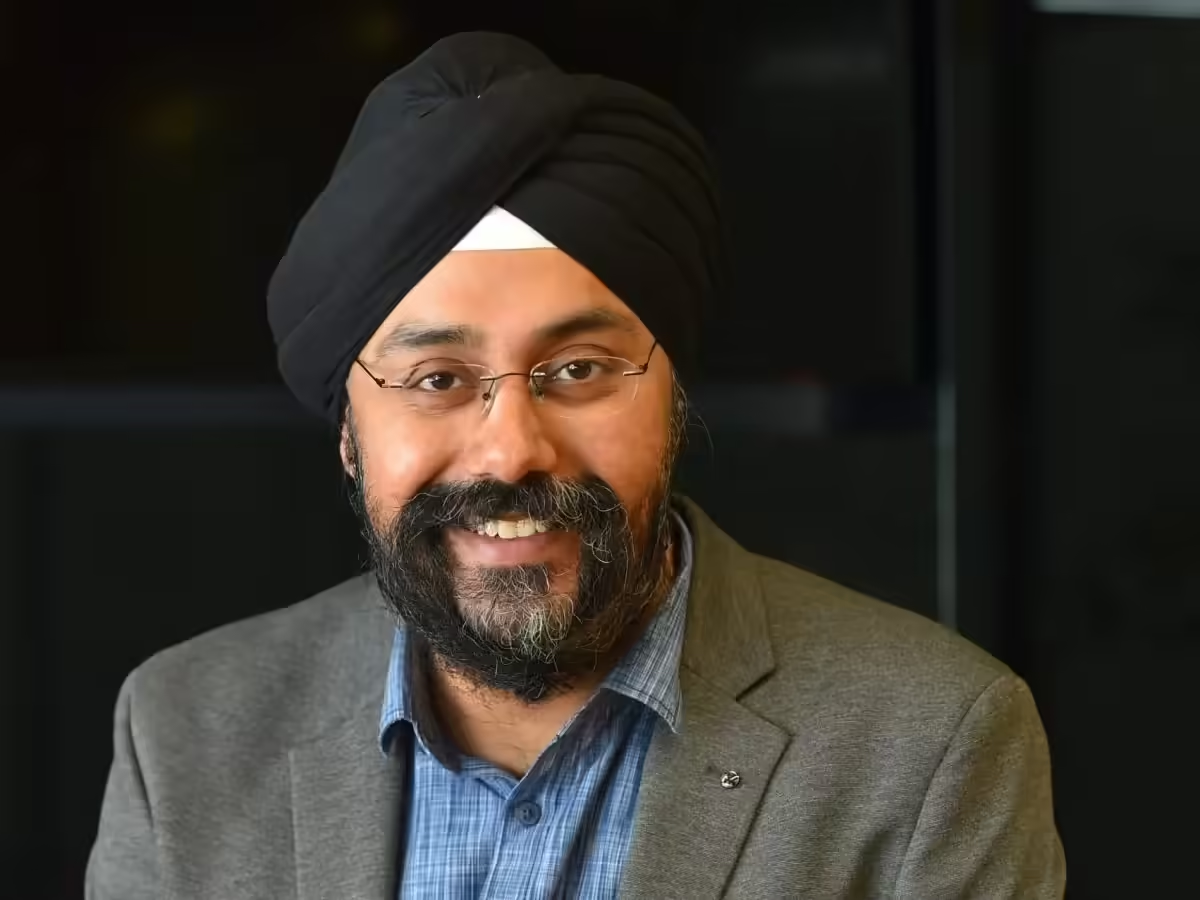
Singh joined Uber India in 2015 as general manager and head of strategy, when the company was still battling Ola for dominance in Indian cities. He rose to lead the entire India and South Asia region in 2020, steering operations through the pandemic's near-complete collapse of ride-hailing demand and the gradual recovery that followed.
"Over the past few weeks, I made the difficult decision to leave Uber to pursue an opportunity in frontier technology. It wasn't a decision to leave Uber as much as it was a decision to run toward something I couldn't ignore," Singh wrote in the email reviewed by ET.
Uber confirmed the exit but did not name a successor. "We thank Prabhjeet for his leadership and lasting contributions in his decade-long journey with Uber," a spokesperson said. The company added it remains "deeply committed" to growth in India.
What does Singh's departure mean for Uber India?
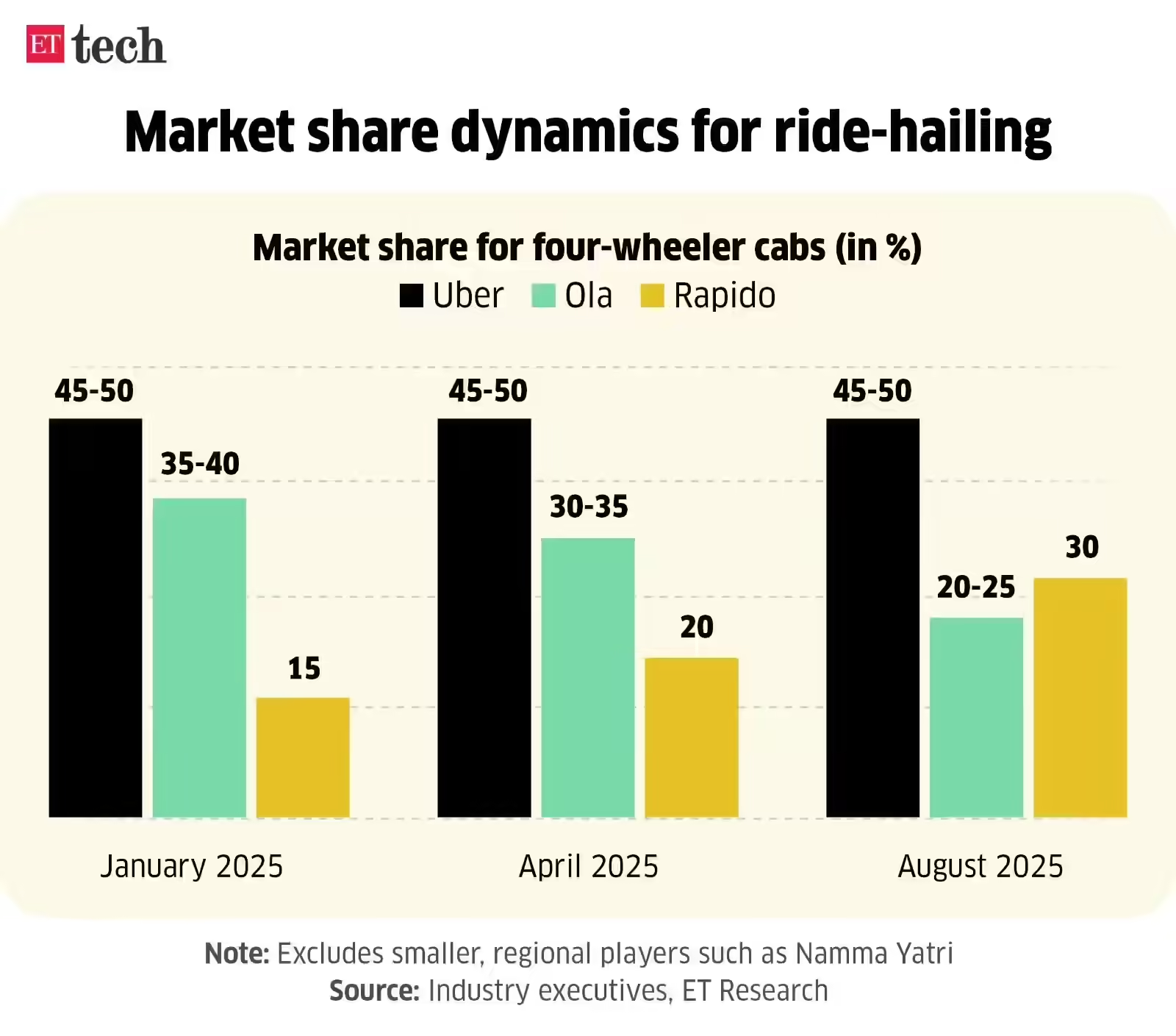
Singh leaves at a stable moment. Uber India has achieved profitability in recent quarters and operates in over 500 cities. Competition with Ola remains fierce, but the market has matured past the cash-burning subsidy wars of the mid-2010s. CEO Dara Khosrowshahi recently said Uber is "playing to win" in India despite stiffening competition.
The unnamed "frontier tech" company Singh is joining could signal a move into AI, autonomous vehicles, or another emerging sector. Several well-funded startups in these spaces have been recruiting experienced operators from established tech firms.
Amazon CEO outlines $48 billion India bet
The same week brought Amazon CEO Andy Jassy to India, where he met Prime Minister Narendra Modi and detailed Amazon's expansion plans. The company will invest $48 billion in India by 2030, on top of $40 billion already deployed since 2010.
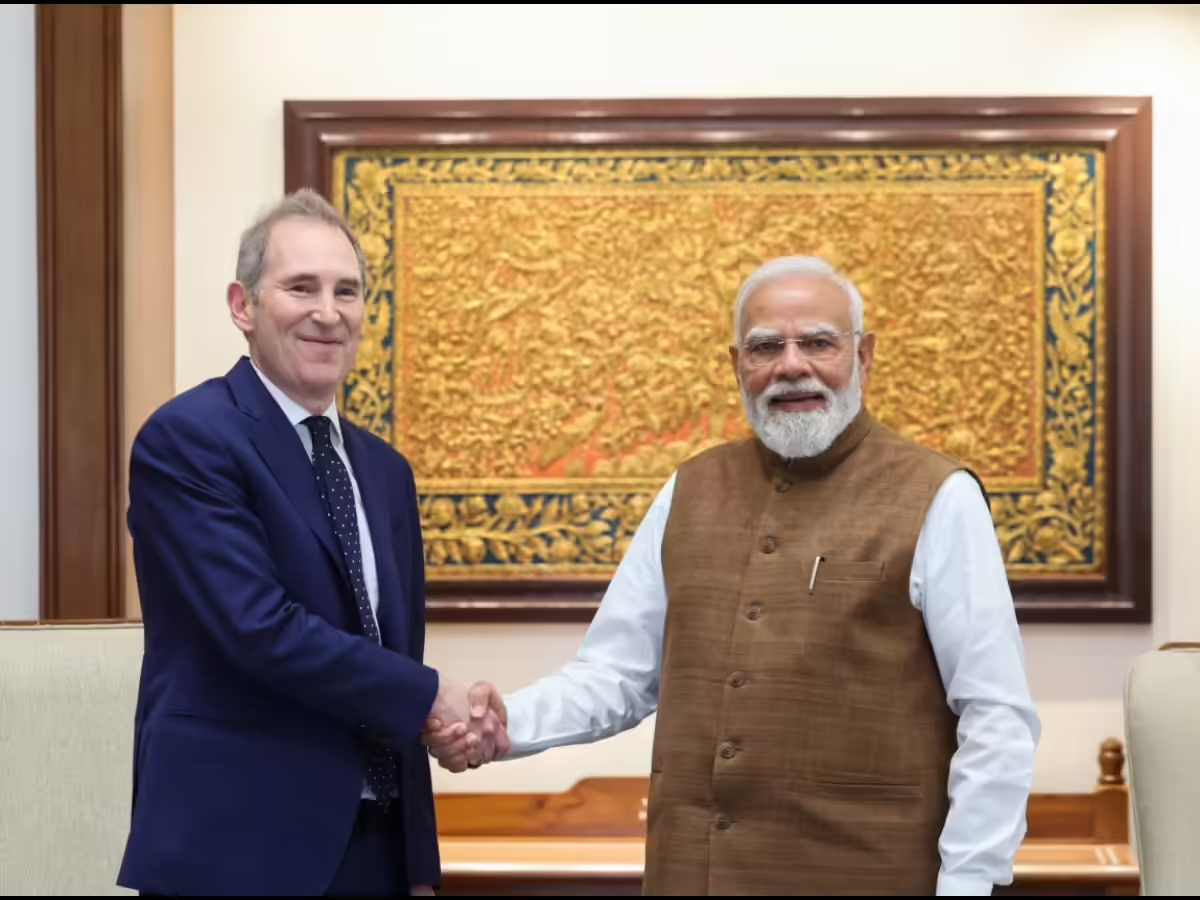
"India is one of the most important and largest businesses in all of Amazon," Jassy said. He pointed to AI, cloud computing, and quick commerce as the growth drivers.
On quick commerce, Jassy acknowledged that competitors entered the market first. "We have scaled fast. We moved quickly and experimented with our own solution for customers, which they have enjoyed," he said. Amazon's quick commerce offering now bundles with Prime membership and the company's broader product selection.
Jassy also signaled openness to acquisitions. "We like other companies; we're looking at companies we think have tech, customer experiences, and talent that would be great for our customers," he said. Amazon has previously acquired Indian firms including More Retail's grocery delivery operations.
Byju's lenders negotiate Aakash stake in settlement talks
Byju's global lenders are in advanced talks to take a roughly 30% stake in Aakash Educational Services in exchange for dropping legal action against founder Byju Raveendran, according to Reuters.

US-based Glas Trust, representing a group of lenders, has demanded $1 billion in unpaid loans following Byju's 2024 bankruptcy filing. The lenders accused Raveendran of mismanagement. He and Byju's deny wrongdoing.
Byju's acquired Aakash, an offline coaching institute, for $1 billion in 2021. But Byju's stake has since been diluted to a minority holding. Manipal Health is now the largest shareholder. The settlement talks value Aakash at $2 billion, sources told Reuters.
If the deal closes, lenders would drop all allegations against Raveendran and settle outstanding legal matters. For Raveendran, it offers a path out of litigation. For lenders, it provides tangible equity in an operating business rather than years of legal uncertainty.
IT giants pivot to mid-market enterprises
Large IT services firms are building dedicated units to target mid-market enterprises, selling cloud, cybersecurity, and AI services. The shift reflects two pressures: mid-market companies are ramping up tech adoption to keep pace with AI disruption, while traditional large-enterprise markets in the US are slowing amid geopolitical uncertainty.
The mid-market represents a different sales motion. Deals are smaller but faster to close. Firms like Infosys, TCS, and Wipro are creating specialized go-to-market teams to pursue this segment rather than leaving it to smaller IT players.

Frequently Asked Questions
Why did Prabhjeet Singh leave Uber India?
Singh said he is joining a 'frontier technology' company. He described it as running toward an opportunity he couldn't ignore rather than leaving Uber.
How much is Amazon investing in India?
Amazon CEO Andy Jassy confirmed $48 billion in investment by 2030, adding to $40 billion already invested since 2010.
What is the Byju's Aakash settlement about?
Byju's lenders are negotiating a 30% stake in Aakash Educational Services, valued at $2 billion, in exchange for dropping $1 billion in loan claims and legal action against founder Byju Raveendran.
Who will replace Prabhjeet Singh at Uber India?
Uber has not announced a successor. The company said it remains committed to growth in India.
Logicity's Take
Singh's exit to 'frontier tech' likely means autonomous vehicles, AI infrastructure, or robotics. Waabi, Nuro, and several Indian AV startups have been recruiting heavily from mobility platforms. His 11-year run spanning Uber's India entry through profitability makes him a rare operator with both startup intensity and scale experience. For Uber, the question is whether the India operation can sustain momentum without its most visible advocate. The company's next hire will signal whether it sees India as a mature market to manage or a growth market requiring aggressive leadership. Amazon's $48 billion commitment, meanwhile, puts pressure on Flipkart and Reliance JioMart to match infrastructure spending, particularly on AWS-competitive cloud services where margins are higher than e-commerce.
Need Help Implementing This?
If your organization is evaluating cloud infrastructure, AI adoption strategies, or navigating leadership transitions in tech operations, Logicity can connect you with advisors who've scaled similar challenges. Contact our team for curated introductions.
Source: Tech-Economic Times
Manaal Khan
Tech & Innovation Writer
Produced with AI assistance and reviewed by the Logicity editorial team. Learn more in our Editorial Policy.




