Key Takeaways
Dell family donates $6.25B as part of initiative tied to ‘Trump accounts’ program
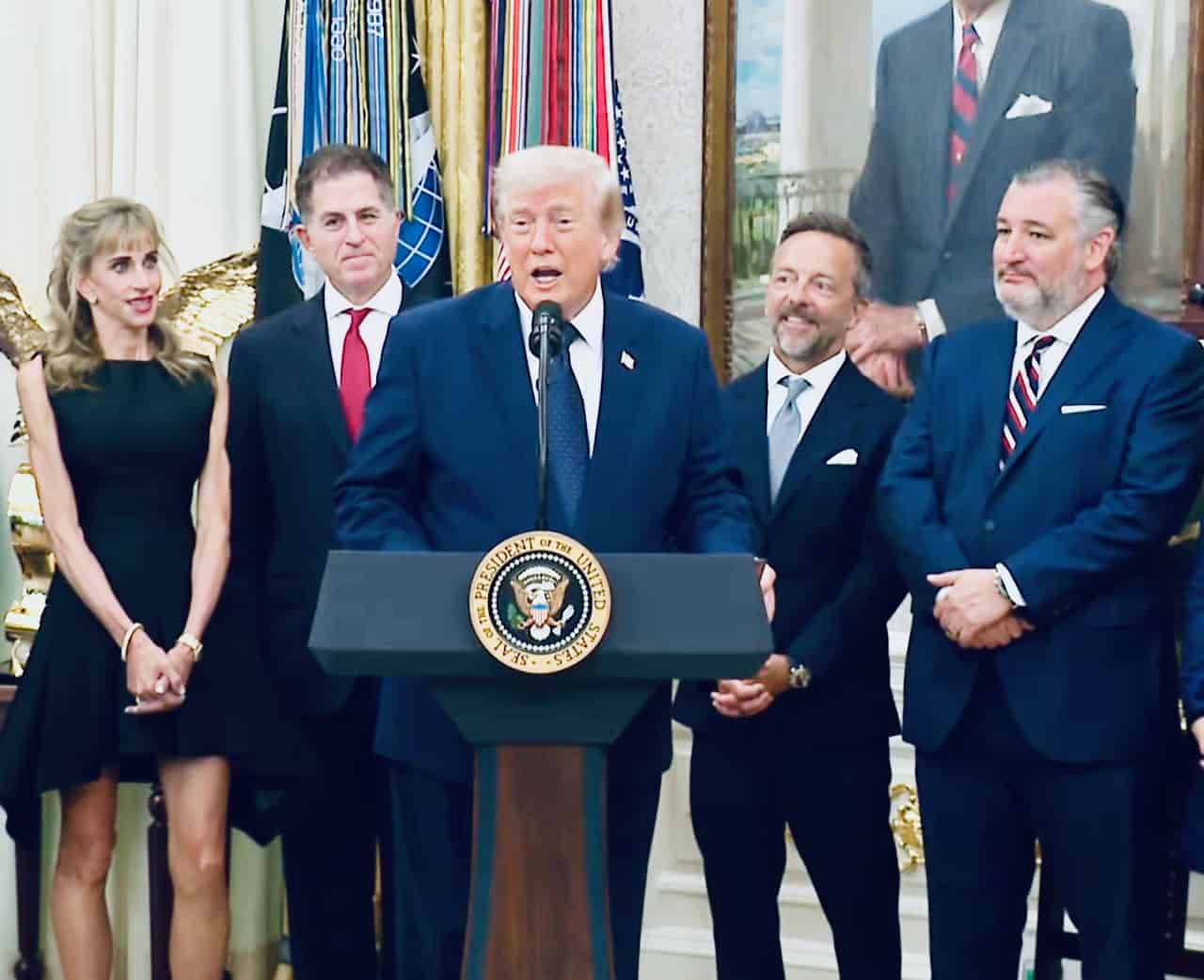
- Trump Accounts provide $1,000 Treasury contributions to children born 2025-2028 from households earning under $150,000
- Michael and Susan Dell committed $6.25 billion in private donations to supplement the government program
- Nearly 6 million accounts have been opened, with 1.4 million qualifying for the initial $1,000 pilot contribution
President Donald Trump rang both the NYSE and NASDAQ opening bells simultaneously today to mark the official launch of Trump Accounts. The program, created under the One Big Beautiful Bill signed in 2025, deposits $1,000 from the U.S. Treasury into tax-deferred stock market accounts for eligible newborns. Children born between 2025 and 2028 to households earning under $150,000 qualify. They can access the funds at age 18.
The White House announced that nearly 6 million Trump Accounts have been opened so far. Of those, 1.4 million are eligible for the $1,000 pilot program contribution. The structure mirrors baby bond proposals that have circulated in policy circles for years, but this marks the first time such a program has reached federal implementation.
Why is Michael Dell donating $6.25 billion?
Michael and Susan Dell announced a $6.25 billion commitment to the program, the largest private contribution disclosed so far. Dell has a personal connection to the $1,000 starting point. He founded Dell Technologies in 1984 with exactly $1,000 while a student at the University of Texas at Austin.
The Dells have been active philanthropists through the Michael & Susan Dell Foundation, which focuses on childhood poverty, education, and health. This donation extends their work into wealth creation for young Americans. The Treasury Department allows corporations and individuals to donate publicly traded stock directly to the program. Several firms have announced matching programs, though specific amounts beyond the Dell commitment remain undisclosed.
How do Trump Accounts work?
The mechanics are straightforward. Children born between 2025 and 2028 to households with income under $150,000 receive a $1,000 deposit from the Treasury. That money goes into a tax-deferred account invested in the stock market. The child cannot touch the funds until turning 18.
The tax-deferred structure means gains compound without annual tax drag. Assuming average stock market returns of 7% annually, a $1,000 deposit at birth could grow to roughly $3,400 by age 18. Additional private donations could significantly increase that figure. The program does not restrict how recipients use the money once they reach 18.
What role did Brad Gerstner play?
Venture capitalist Brad Gerstner, founder of Altimeter Capital, has been advocating for this type of program for years. He pushed the concept of giving every American child a stake in the stock market through his "Owned America" initiative. Gerstner predicts the program will eventually expand beyond the 2025-2028 cohort to cover all American children.
His involvement brought Silicon Valley credibility to the effort and helped recruit private sector participation. The dual bell-ringing ceremony at NYSE and NASDAQ, unusual for a policy launch, reflected the program's attempt to connect government action with market participation.
What are the program's limitations?
The $150,000 household income cap excludes higher-earning families entirely. Children born before 2025 or after 2028 are not eligible under current law. The program also depends on continued appropriations. Future administrations or Congresses could modify or defund it.
The reliance on private donations to scale the program raises questions about sustainability. The $6.25 billion Dell commitment is substantial, but it represents one family's generosity rather than a systemic funding mechanism. If corporate and individual donations slow, the per-child benefit stays at the baseline $1,000 Treasury contribution.
Logicity's Take
Trump Accounts represent the largest federal experiment in universal asset-building for children. The concept has bipartisan intellectual roots, appearing in proposals from both Cory Booker and conservative economists. For tech leaders, the interesting angle is the private-public hybrid structure. Dell's $6.25 billion pledge signals that major tech wealth may increasingly flow through government-adjacent programs rather than purely private foundations. Companies watching this should consider whether matching programs could become an expected form of corporate participation, similar to 401(k) matching or education benefits.
Frequently Asked Questions
Who qualifies for Trump Accounts?
Children born between 2025 and 2028 to U.S. households earning under $150,000 annually. Eligibility is determined by household income at the time of the child's birth.
How much money goes into each Trump Account?
The U.S. Treasury contributes $1,000. Private donations from corporations and individuals can add to this base amount.
When can children access Trump Account funds?
At age 18. The accounts are tax-deferred, meaning gains are not taxed until withdrawal.
Can parents contribute to Trump Accounts?
The program allows direct donations of publicly traded stock from corporations and individuals. Specific rules for parental contributions have not been detailed in the announcement.
What happens if the stock market declines?
The accounts are invested in the stock market and subject to market risk. Over an 18-year holding period, historical data suggests positive returns, but no guarantees exist.
Another major capital deployment announcement with implications for wealth management
Related financial markets development occurring this month
Need Help Implementing This?
If you're exploring how policy changes affect financial planning for your employees or customers, reach out to Logicity's advisory network for implementation guidance.
Source: Crowdfund Insider
Huma Shazia
Senior AI & Tech Writer
Produced with AI assistance and reviewed by the Logicity editorial team. Learn more in our Editorial Policy.