
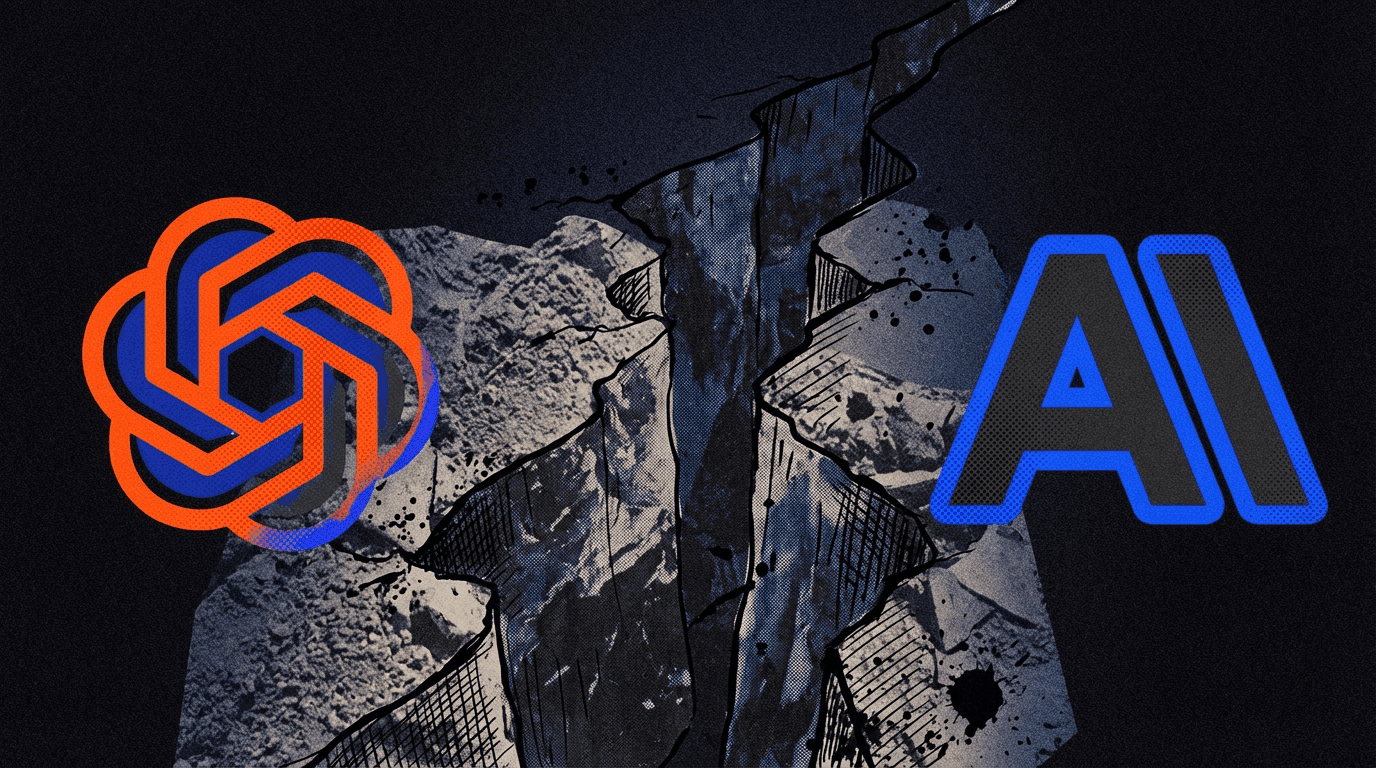
The battle for AI supremacy is heating up, with OpenAI and Anthropic vying for dominance. OpenAI claims its early infrastructure buildout has given it a decisive edge, while Anthropic explores custom AI chips to reduce dependence on Google and Amazon. As the competition intensifies, the tech world is left wondering who will come out on top.
Key Takeaways
- OpenAI claims its early infrastructure buildout has given it an edge over Anthropic
- Anthropic is exploring custom AI chips to reduce dependence on Google and Amazon
- The AI infrastructure war is heating up, with both companies vying for dominance
In This Article
- The AI Infrastructure War
- Anthropic's Response
- OpenAI's UK Setback
- Understanding AI Infrastructure
- What the Experts Say
- The Future of AI Infrastructure
The AI Infrastructure War
The world of artificial intelligence is witnessing a high-stakes battle between OpenAI and Anthropic, two of the leading players in the field. At the heart of this competition is the infrastructure that underpins these AI systems. In a recent investor memo, OpenAI claimed that its early and aggressive buildout of compute capacity has given it a critical edge over its rival.
- OpenAI's infrastructure buildout has allowed it to keep up with surging demand for AI products
- The company's compute capacity has outpaced that of Anthropic, giving it a significant advantage
Anthropic's Response
Anthropic is not taking the challenge lying down. The company is exploring the development of custom AI chips to reduce its dependence on Google and Amazon. This move is driven by the ongoing shortage of AI chips, which has forced Anthropic to rely on external suppliers.
- Anthropic is considering designing its own AI chips to reduce dependence on external suppliers
- The company has signed a long-term deal with Google and Broadcom to invest in US compute infrastructure
OpenAI's UK Setback
While OpenAI is touting its infrastructure lead, the company has hit a roadblock in the UK. Its Stargate data center project has been put on hold due to high energy costs and regulatory hurdles. This setback could give Anthropic an opportunity to catch up.
- OpenAI's Stargate UK project has been put on hold due to high energy costs and regulatory hurdles
- The company's UK plans are still in limbo, with no clear timeline for resumption
Understanding AI Infrastructure
So, what exactly is AI infrastructure, and why is it so important? In simple terms, AI infrastructure refers to the underlying systems and hardware that support the development and deployment of artificial intelligence models. This includes things like compute capacity, data storage, and networking.
- AI infrastructure is the backbone of AI systems, supporting the development and deployment of models
- Compute capacity, data storage, and networking are key components of AI infrastructure
What the Experts Say
While there are no direct quotes available, industry experts are weighing in on the AI infrastructure war. According to reports, designing an advanced AI chip can cost around half a billion dollars, a significant investment for any company.
- The cost of designing an advanced AI chip is a significant barrier to entry
- Industry experts are watching the AI infrastructure war with great interest
The Future of AI Infrastructure
As the AI infrastructure war heats up, one thing is clear: the company that wins the battle for dominance will be the one that can provide the most scalable, efficient, and cost-effective infrastructure. Whether it's OpenAI or Anthropic, the future of AI depends on the development of robust and reliable infrastructure.
- The AI infrastructure war will have a significant impact on the future of AI
- The company that wins the battle for dominance will be the one that can provide the most scalable and efficient infrastructure
Final Thoughts
The AI infrastructure war is far from over, and the outcome is still uncertain. One thing is clear, however: the future of AI depends on the development of robust and reliable infrastructure. As OpenAI and Anthropic continue to vie for dominance, the tech world will be watching with great interest to see who comes out on top.
Sources & Credits
Originally reported by The Decoder — Maximilian Schreiner
Manaal Khan
Tech & Innovation Writer
Produced with AI assistance and reviewed by the Logicity editorial team. Learn more in our Editorial Policy.




