Key Takeaways
- Tesla reported $158 billion as Musk's total 2025 compensation in a regulatory filing
- Musk's actual realized earnings were $0 because Tesla missed all performance milestones
- The pay package could be worth $1 trillion if Tesla reaches an $8.5 trillion market cap
A $158 Billion Figure That Exists Only on Paper
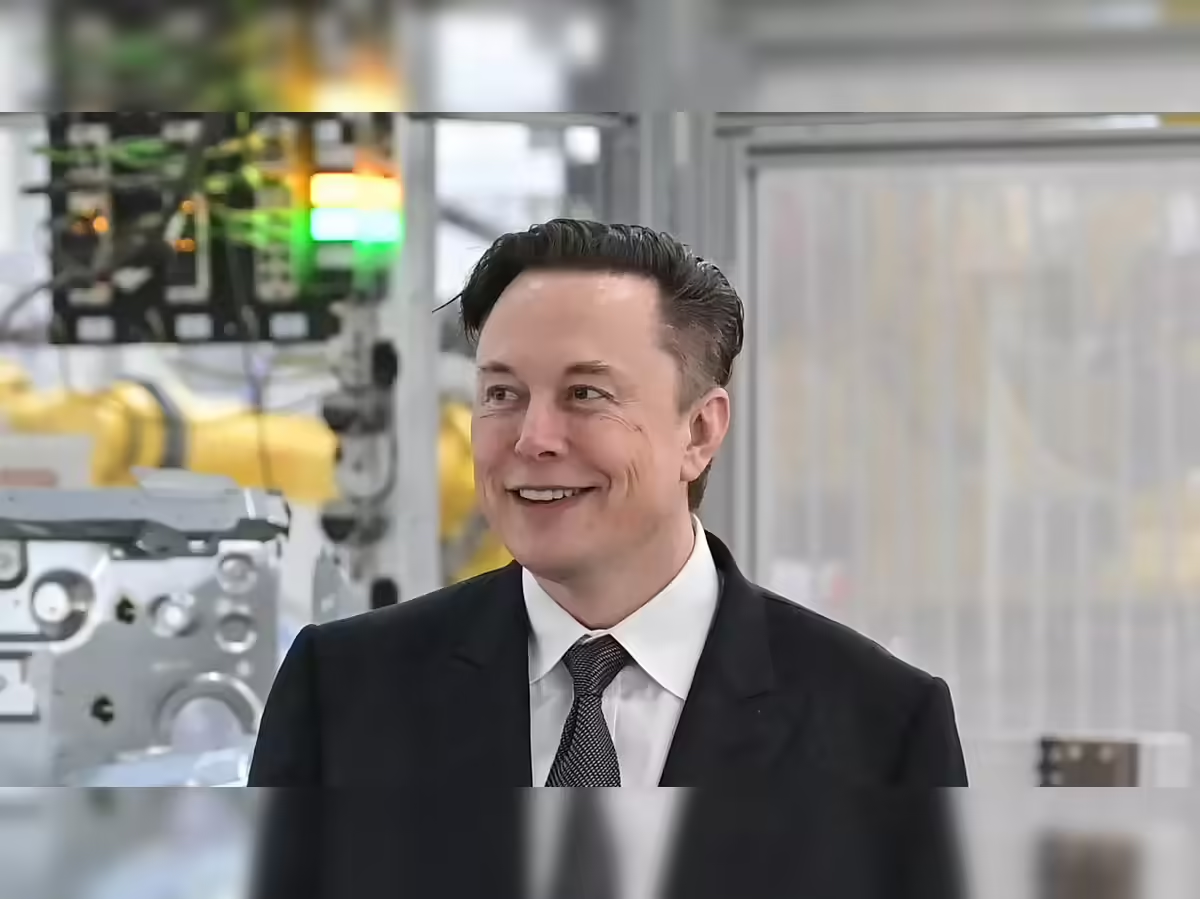
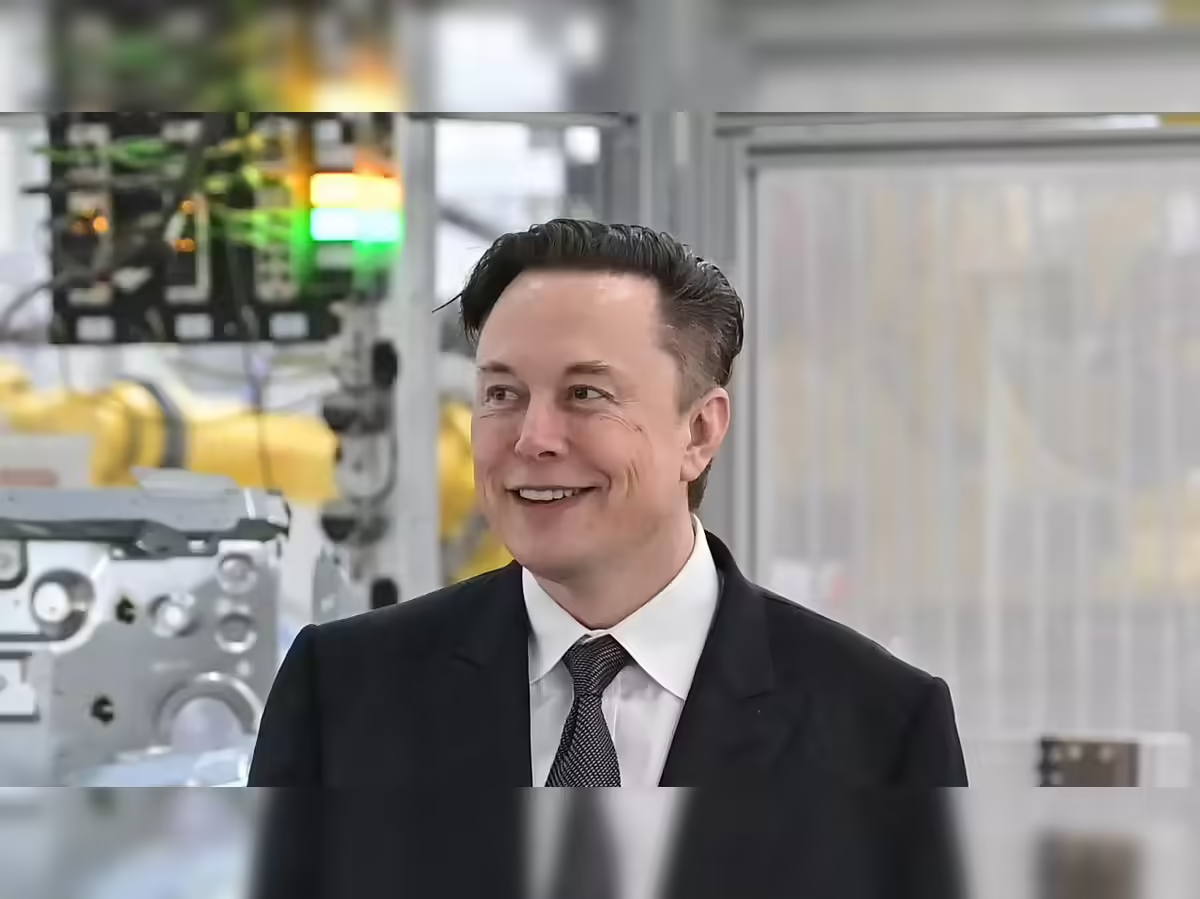
Tesla dropped a regulatory filing Thursday with a number that sounds like a typo: Elon Musk's 2025 compensation totals $158 billion. That makes it the largest executive pay figure ever reported by a public company. But before the pitchforks come out, there's important context.
Musk hasn't actually received a single dollar. Tesla itself warned in the filing that there may be a "significant disconnect" between reported compensation and "the value actually realised." In plain terms: this is what Musk could earn if Tesla's stock hits extraordinary targets. Right now, his realized compensation is zero.
How the Pay Package Works
The $158 billion breaks down into two components. About $132 billion represents the "grant date fair value" of Musk's 2018 pay package, which shareholders re-approved last year with more than 75% support. The remaining $26 billion came from an interim award Tesla's board approved in August 2024.
Here's the key detail: the entire package consists of stock options, not cash. Musk only earns money if Tesla hits specific market capitalization and operational milestones. The full package could theoretically be worth $1 trillion, but that requires Tesla to reach an $8.5 trillion market cap. For comparison, Apple currently sits around $3 trillion.
Since Tesla didn't reach any of its market value or operational targets in the past year, Musk gets nothing. The $158 billion is accounting for what he might earn if all conditions are met. It's a maximum potential value, not actual income.
“Retaining and incentivizing Elon is fundamental to Tesla achieving these goals and becoming the most valuable company in history.”
— Robyn Denholm, Chair of Tesla's Board
The Milestones Tesla Needs to Hit
Tesla structured the pay package around ambitious targets. The company needs to reach specific market capitalization thresholds and operational goals for Musk to unlock tranches of stock options. According to research, these include deploying around 1 million active Optimus robots and robotaxis.
None of these targets were achieved last year. Tesla's stock has been volatile, and the company's robotaxi ambitions remain more promise than product. Until milestones are met, Musk's compensation stays at zero regardless of what the regulatory filings say.
“There was little to lose for most Tesla holders in approving the deal. If Musk gets the $1 trillion, shareholders will have done very nicely indeed.”
— Russ Mould, Investment Director at AJ Bell
Why This Filing Matters
The $158 billion figure reflects Tesla's official pivot from traditional automaker to AI and robotics company. The compensation structure tells you what Tesla's board thinks the company could become: not just an EV manufacturer, but a leader in autonomous vehicles and humanoid robots.
Dan Ives of Wedbush Securities called it a signal that Musk is operating as a "wartime CEO" leading an AI revolution. Whether you buy that narrative depends on your view of Tesla's technology roadmap and Musk's ability to deliver on ambitious timelines.
Musk also forfeited the $26 billion interim award in April 2025 after the reinstatement of his original 2018 compensation package. The legal battles over that package have stretched for years, and shareholders effectively settled the matter with their 75% approval vote.
How another tech giant is approaching automotive AI
The Accounting vs. Reality Gap
SEC rules require companies to report the full potential value of stock awards at grant date. This creates situations where a CEO's "compensation" can be billions on paper while actual earnings are minimal. Tesla acknowledged this directly in its filing.
The practice isn't unique to Tesla. Many tech CEOs receive most of their pay in stock tied to performance. But the sheer scale of Musk's package makes the accounting-versus-reality gap especially stark. No one has ever been reported as earning $158 billion in a single year, even theoretically.
The robotics milestones Tesla needs to hit
What Happens Next
Musk's actual earnings depend entirely on Tesla's performance. If the stock soars and the company deploys its robotaxi fleet and Optimus robots at scale, he stands to become vastly wealthier. If Tesla stagnates, the options expire worthless.
For shareholders, the math is straightforward. The dilution from Musk's stock awards only costs them if Tesla succeeds spectacularly. In that scenario, their own holdings would have appreciated significantly. It's designed so Musk wins only when shareholders win bigger.
Logicity's Take
Frequently Asked Questions
Did Elon Musk actually earn $158 billion from Tesla?
No. The $158 billion is the maximum potential value of stock awards if all performance targets are met. Musk's actual realized compensation for 2025 was $0 because Tesla missed its milestones.
What milestones does Tesla need to hit for Musk to get paid?
Tesla must reach specific market capitalization thresholds and operational goals, including deploying robotaxis and Optimus robots at scale. The full package requires an $8.5 trillion market cap.
Why did shareholders approve such a large pay package?
More than 75% of voting shares supported the package because Musk only earns money if Tesla's stock soars. Shareholders benefit proportionally more than Musk does if the targets are hit.
Is $158 billion the largest CEO compensation ever reported?
Yes, it's the largest figure ever disclosed in a regulatory filing. However, it's theoretical maximum value, not actual compensation received.
What happened to the $26 billion interim award?
Musk forfeited the interim award in April 2025 after his original 2018 compensation package was reinstated following shareholder approval.
Need Help Implementing This?
Source: Tech-Economic Times / ET
Manaal Khan
Tech & Innovation Writer
Produced with AI assistance and reviewed by the Logicity editorial team. Learn more in our Editorial Policy.