Key Takeaways
TCS CEO: AI Could Reach 20% of Revenue, Reshape Jobs
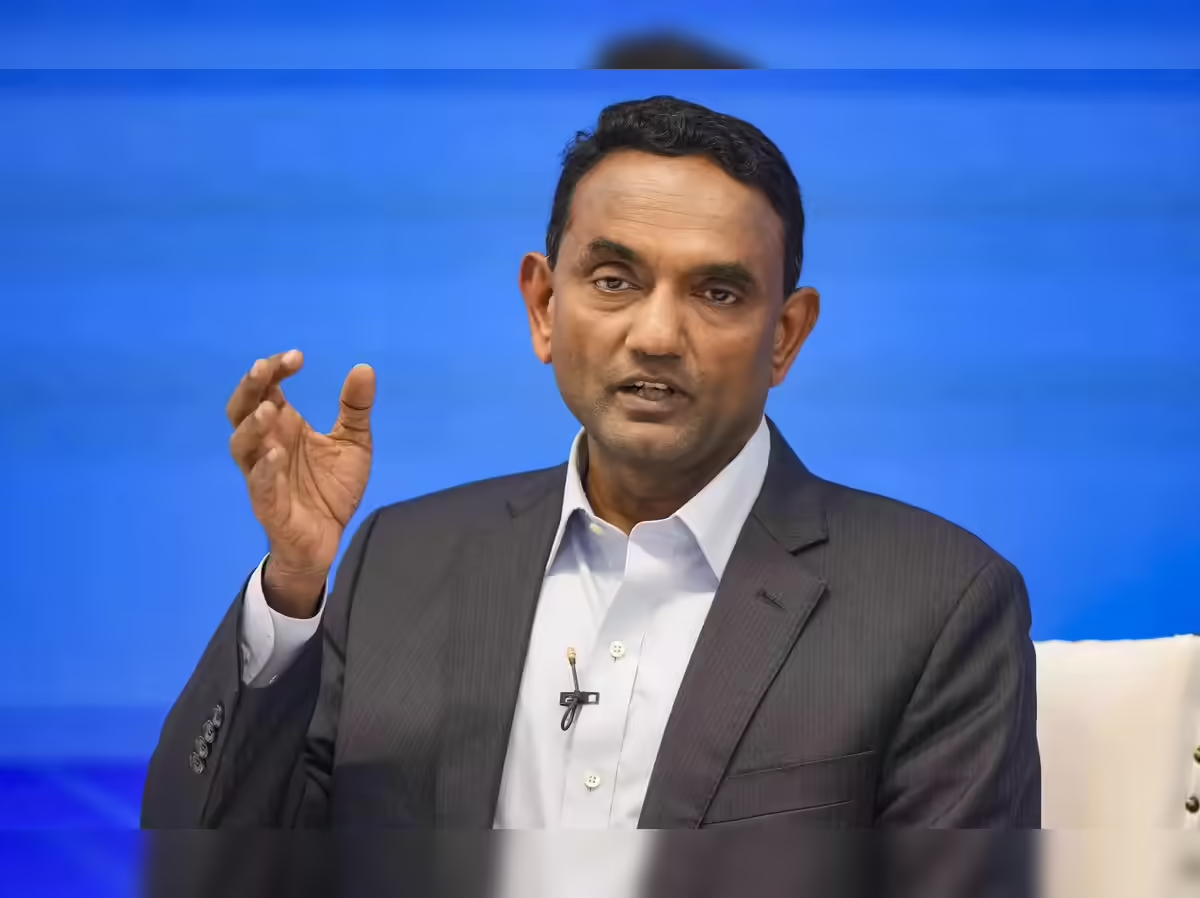
- TCS CEO K Krithivasan stated during Q1 earnings that AI will reshape white-collar roles rather than eliminate them
- TCS annualized AI revenue crossed $2.6 billion, up from $2.3 billion last quarter
- The company added 9,200 employees in Q1 and extended offers to 14,000 freshers, signaling continued hiring
TCS CEO K Krithivasan pushed back against fears of AI-driven job losses during the company's Q1 FY27 earnings call on Thursday. His position: white-collar roles will change shape, not disappear. The statement comes as India's largest IT services firm posted a 4.6% rise in net profit to ₹13,349 crore and grew its workforce by over 9,200 employees in a single quarter.
"We do not believe that there would be a drastic reduction in employment," Krithivasan said. "There will be people doing different things. Like currently, if they are doing software engineering and coding, there could be more skill sets required in terms of prompt engineering. People will be training models, testing models, and lifecycle management."
The numbers behind the optimism
TCS backed its CEO's words with hiring data. The company's headcount rose to 593,798 as of June 30. Chief HR officer Sudeep Kunnumal said TCS extended offers to more than 14,000 freshers in Q1 and remains "active on campuses in search of AI-native talent." Voluntary attrition held steady at 13.6%.
Revenue climbed 13.9% year-on-year to ₹72,275 crore. More telling: TCS's annualized AI revenue crossed $2.6 billion, up from $2.3 billion in December. That's a $300 million jump in a single quarter. The company attributed the growth to faster AI deployments across industries.
A contradiction from the top?
Krithivasan's reassurance sits awkwardly next to comments from TCS chairman N Chandrasekaran in June. Chandrasekaran said the company looks to add "half a million AI agents" to its workforce, and that this "would definitely lead to a decrease in hiring."
The two statements aren't necessarily incompatible. Chandrasekaran spoke about reduced hiring; Krithivasan about reshaping existing roles. But the gap between "fewer new hires" and "no job losses" is a distinction many employees won't find comforting.
Indian IT services firms face a squeeze. Clients want AI-driven efficiency, which means smaller project teams. But companies like TCS, Infosys, and Wipro employ millions collectively. Admitting to planned reductions would tank morale and invite regulatory scrutiny.
What "reshaping" actually looks like
Krithivasan pointed to specific shifts: software engineers moving toward prompt engineering, model training, and testing. These aren't fringe roles. They represent a fundamental change in how code gets written.
Consider how tools like GitHub Copilot have already changed developer workflows. A junior developer who once wrote boilerplate code now reviews and refines AI-generated output. The skill requirement shifts from syntax recall to judgment and debugging.
TCS's HR chief said the company is investing in "AI infrastructure and skilling platforms" to keep employees "future ready." The subtext: retrain or risk obsolescence. Companies aren't going to carry engineers who can't adapt.
Why this matters beyond TCS
India's IT services sector employs over 5 million people directly and anchors the country's middle-class aspirations. TCS, as the industry bellwether with nearly 600,000 employees, sets the tone for competitors.
When TCS says jobs will be "reshaped, not eliminated," smaller firms listen. So do engineering colleges churning out graduates who assume coding skills guarantee employment. The message is clear: the old career path no longer holds.
The $2.6 billion AI revenue figure deserves scrutiny too. It suggests enterprise clients are spending heavily on AI services, which could sustain IT workforce demand even as individual project teams shrink. The question is whether AI revenue grows fast enough to offset efficiency gains that reduce headcount per project.
Logicity's Take
Krithivasan's framing is corporate diplomacy at its finest. TCS won't announce layoffs, but it's signaling clearly that the company values different skills than it did five years ago. The real tell is where TCS puts its training budget. Engineers who bet on prompt engineering, model lifecycle management, and AI testing will likely survive the transition. Those waiting for the storm to pass may find themselves on the bench. For CTOs evaluating IT partners, the $2.6 billion AI revenue figure suggests TCS is actually executing on AI delivery, not just talking about it.
Frequently Asked Questions
Is TCS planning layoffs due to AI?
TCS CEO K Krithivasan explicitly stated the company does not expect drastic reductions in employment. However, chairman N Chandrasekaran previously mentioned that adding AI agents would decrease hiring, suggesting workforce growth may slow even if layoffs don't materialize.
What is TCS's current AI revenue?
TCS's annualized AI revenue crossed $2.6 billion as of Q1 FY27, up from $2.3 billion in December 2024, representing a $300 million increase in one quarter.
How many employees does TCS have?
TCS employed 593,798 people as of June 30, 2025, after adding 9,200 employees in Q1 FY27.
What new skills does TCS expect from employees?
TCS is prioritizing prompt engineering, model training, model testing, and lifecycle management as AI adoption reshapes traditional software engineering roles.
Is TCS still hiring freshers?
Yes. TCS extended offers to more than 14,000 freshers in Q1 FY27 and says it remains active on campuses looking for AI-native talent.
Understanding why AI projects underperform helps contextualize TCS's emphasis on model lifecycle management skills
Need Help Implementing This?
If your team is evaluating how AI will reshape your IT partnerships or internal workforce, Logicity can help you think through the transition. Reach out at hello@logicity.in.
Source: Tech-Economic Times / ET
Manaal Khan
Tech & Innovation Writer
Produced with AI assistance and reviewed by the Logicity editorial team. Learn more in our Editorial Policy.




