Key Takeaways
- SumUp now offers personal bank accounts with 5% cashback on purchases at its 4+ million merchant network
- Merchants using SumUp pay zero fees on transactions from SumUp consumer users
- The fintech is considering banking licenses in the EU, UK, and Brazil to enable lending and investment products
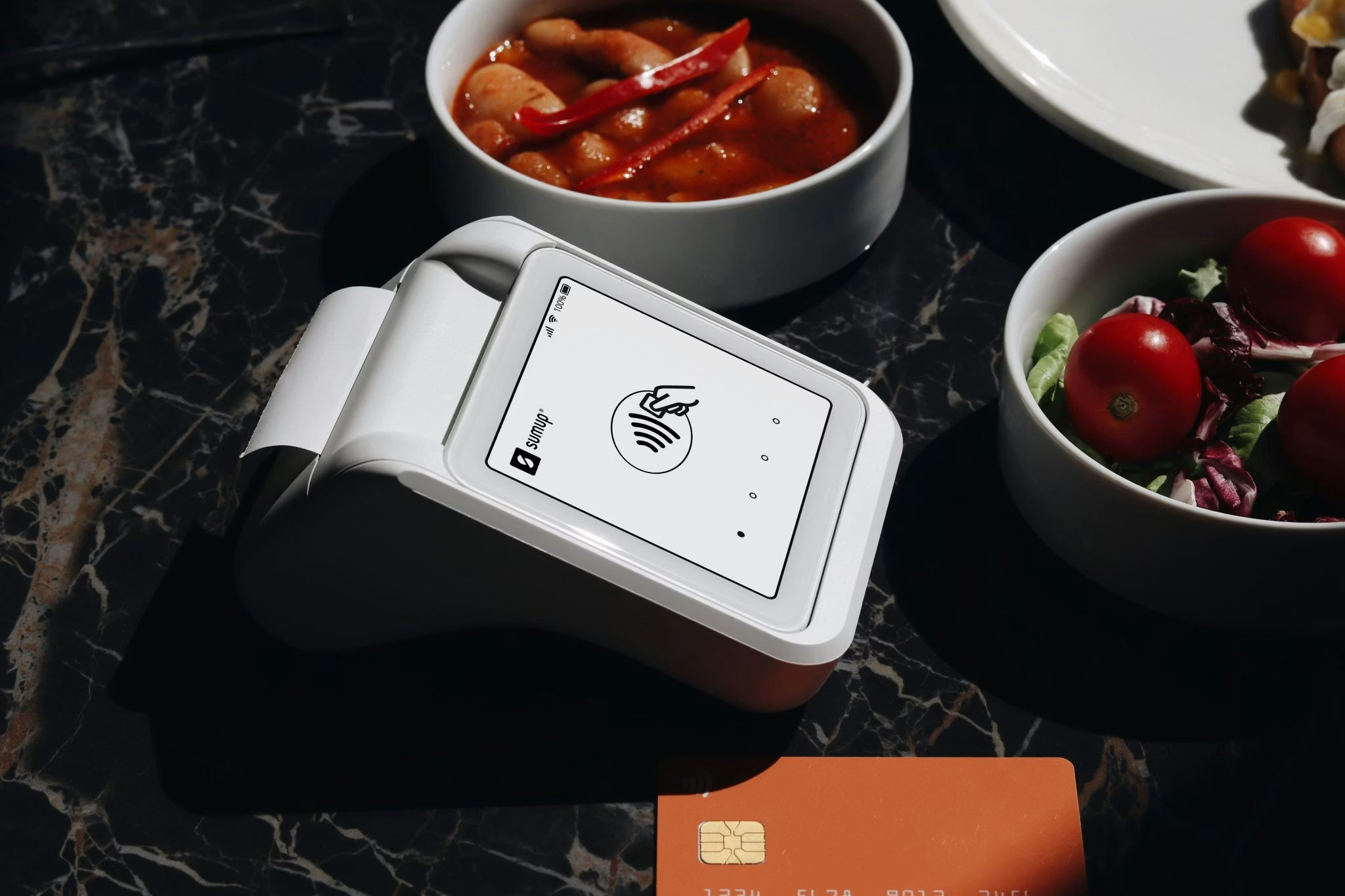
SumUp, the Berlin-based payments fintech valued at $8.5 billion, has launched personal banking accounts that pay consumers 5% cashback when they shop at businesses in its merchant network. The move marks SumUp's formal entry into consumer banking and pits it against established neobanks like Revolut, Monzo, and N26.
The accounts are live in the UK, Ireland, Germany, France, Italy, and Spain. SumUp plans to expand them to all 38 of its markets.
How SumUp's two-sided cashback model works
SumUp is betting on a classic marketplace play. On one side, consumers get 5% cashback at SumUp merchants, 2% at supermarkets, and 0.5% everywhere else. On the other, merchants pay zero transaction fees when SumUp account holders pay them.
"We see this intersection between helping merchants to grow their own businesses through providing them with tooling and support and helping drive consumers to them," Luke Griffiths, SumUp's chief commercial officer, told Sifted.
The math is straightforward. SumUp operates card readers and payment terminals for over 4 million merchants globally, most of them small businesses and independent service providers. If those merchants can attract loyal customers who specifically seek out SumUp locations for the cashback, both sides win. SumUp takes a cut of the increased transaction volume.
"More merchants means more consumers and more transactions flowing through our platform on the merchant side," Griffiths said. "Then more happy consumers means that they're going to try and search for more SumUp locations to get cashback."
Can SumUp compete with Revolut and Monzo?
The neobank space in Europe is crowded. Revolut has over 40 million customers. Monzo and N26 have carved out loyal user bases. SumUp is arriving late.
Griffiths acknowledges this. His answer: differentiate through merchant rewards rather than trying to out-feature the incumbents. The 5% cashback rate is aggressive. Most credit cards offer 1-3%. The question is whether that rate is sustainable or a customer acquisition cost SumUp will quietly reduce once it has scale.
The company is also betting on what Griffiths calls "Saturday morning energy." People feel good supporting local businesses when they have time to browse. If SumUp can attach a financial reward to that impulse, it creates a habit loop.
A consumer roadmap that started in 2022
This launch is not sudden. SumUp started testing consumer products in Ireland in 2022 with SumUp Pay, which offered 0.5% cashback on all spending. That product has now been rebranded to the SumUp app and upgraded to a full bank account.
The new accounts include spending insights, budgeting tools, and loyalty rewards at participating businesses. SumUp is building toward a "complete financial ecosystem" for both merchants and consumers.
The fintech is reportedly considering banking license applications in the EU and UK. It has already applied for one in Brazil. A banking license would let SumUp offer lending and investment products to consumers.
"Lending and investments are areas SumUp would be keen to develop consumer products in," Griffiths said. A banking license "would make sense to enable that."
A broader fintech trend
SumUp is not the first payments company to push into consumer banking. Wise launched everyday bank accounts in the UK in March 2025. Klarna introduced banking back in 2021. Square built Cash App into one of the most popular consumer finance products in the US.
The logic is the same across all of them. Payments are a low-margin, high-volume business. Bank accounts let companies capture more of a customer's financial life. Deposits, lending, and investments carry better margins than transaction fees.
For SumUp specifically, the consumer play also solves a distribution problem. The company has spent over a decade building relationships with small merchants. Now it can use those relationships to attract consumers, and use those consumers to make its merchant relationships stickier.
Logicity's Take
The 5% cashback rate is the headline, but the zero-fee merchant incentive is the more interesting strategic lever. SumUp is essentially subsidizing both sides of the marketplace to build network density. Founders building two-sided platforms should watch whether SumUp can sustain this or whether the cashback rate quietly drops to 1-2% once user acquisition slows. If you're a small merchant already using SumUp terminals, promoting the consumer app to your customers is a no-brainer. If you're a fintech founder, note that Stripe, Square, and now SumUp have all concluded that B2B payments alone is not enough. The playbook is clear: own the consumer relationship too.
Frequently Asked Questions
What is SumUp's consumer account cashback rate?
SumUp offers 5% cashback on purchases at SumUp merchants, 2% at supermarkets, and 0.5% on all other purchases.
Which countries have SumUp consumer accounts?
The accounts launched in the UK, Ireland, Germany, France, Italy, and Spain. SumUp plans to expand to all 38 of its markets.
Do merchants pay fees for SumUp consumer transactions?
No. Merchants pay zero transaction fees when a customer pays with a SumUp consumer account.
Is SumUp applying for a banking license?
SumUp is reportedly considering banking license applications in the EU and UK, and has already applied for one in Brazil.
How many merchants use SumUp?
SumUp has over 4 million merchants across 36+ countries, primarily small businesses and independent service providers.
European fintech funding context
Need Help Implementing This?
If you're building a fintech product or two-sided marketplace, Logicity covers the strategies and tools that work. Subscribe to our newsletter for weekly analysis on what's actually working in European startups.
Source: Sifted
Manaal Khan
Tech & Innovation Writer
Produced with AI assistance and reviewed by the Logicity editorial team. Learn more in our Editorial Policy.