Key Takeaways
Purism Librem 16 Announced – The World's Most Secure Linux Laptop?
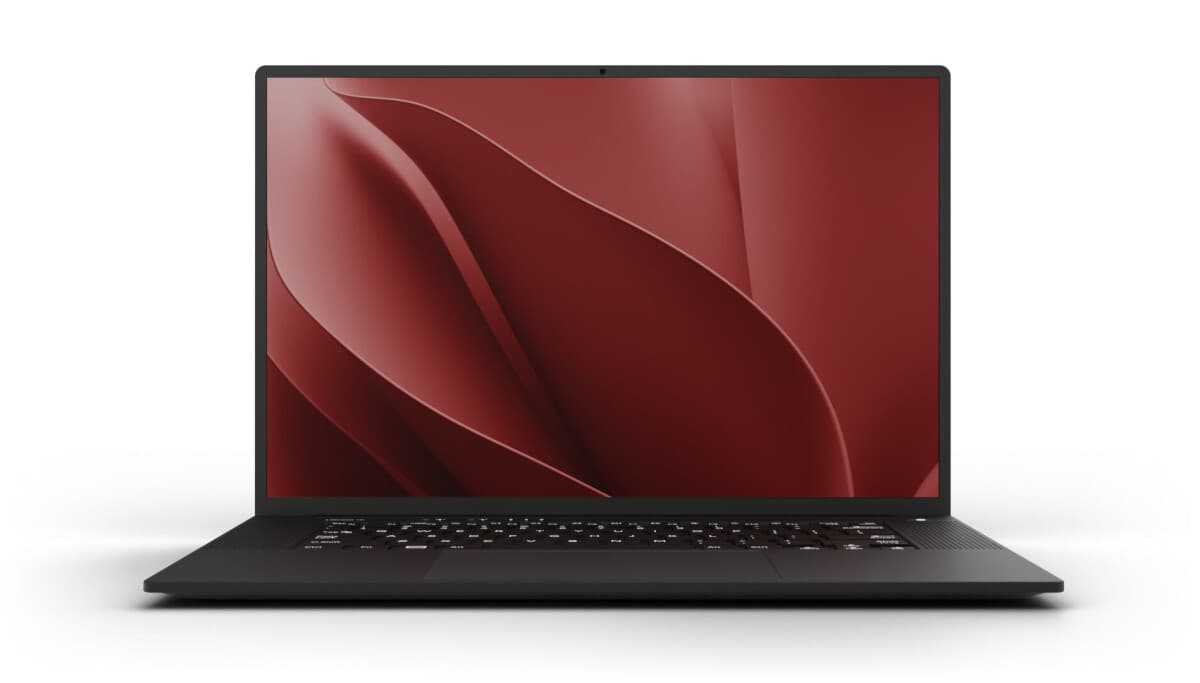
- The Librem 16 starts at $2,899 with an Intel Core i7, 16GB RAM, and hardware kill switches for camera, mic, and wireless
- Purism disables Intel Management Engine and uses Coreboot firmware, addressing security concerns about hidden subsystems
- The maxed-out Librem 16 Max costs $9,799 with 64GB RAM and dual 8TB SSDs, targeting security-conscious buyers over spec hunters
Purism has launched the Librem 16, a 16-inch Linux laptop built for buyers who want physical control over their hardware's most invasive components. The machine ships with two kill switches that electrically disconnect the webcam, microphone, Bluetooth, and Wi-Fi. Base price: $2,899.
That is not a typo. This laptop costs nearly three thousand dollars in its cheapest configuration, and the top-end model runs $9,799. Purism is not competing on specs or value. The company, founded in 2014 as a Social Purpose Corporation, builds for people who treat privacy as a hard requirement rather than a marketing checkbox.
What hardware does the Librem 16 include?
The base model runs an Intel Core i7-13620H with ten cores (six performance, four efficiency) that boosts to 4.9 GHz. It comes with 16GB of DDR4 RAM and a 500GB M.2 SSD. Ports are reasonable: two USB-C, two USB 3 Type-A, HDMI, Ethernet, a headphone jack, and a memory card slot.
All three configurations use integrated graphics. No discrete GPU option exists. Purism offers two higher tiers: the Librem 16 Plus at $4,199 (32GB RAM, 2TB SSD) and the Librem 16 Max at $9,799 (64GB RAM, dual 8TB SSDs).
The interesting options sit in the customization menu. You can remove the wireless card entirely. An optional USB key verifies the firmware has not been tampered with. Purism also offers an anti-interdiction service, designed to detect whether someone intercepted your laptop during shipping and modified the hardware.
Why disable Intel Management Engine?
Since 2008, most Intel chips have included the Management Engine, a subsystem that runs independently of your operating system. It has its own processor, its own memory, and network access. Security researchers have long criticized it as a potential backdoor that users cannot audit or control.
Purism figured out how to disable it back in 2017. CEO Todd Weaver told The Register at the time about the process. The Librem 16 continues this approach, running Coreboot open-source firmware instead of proprietary BIOS. For security-conscious organizations, this matters more than raw performance benchmarks.
What is PureOS and who should use it?
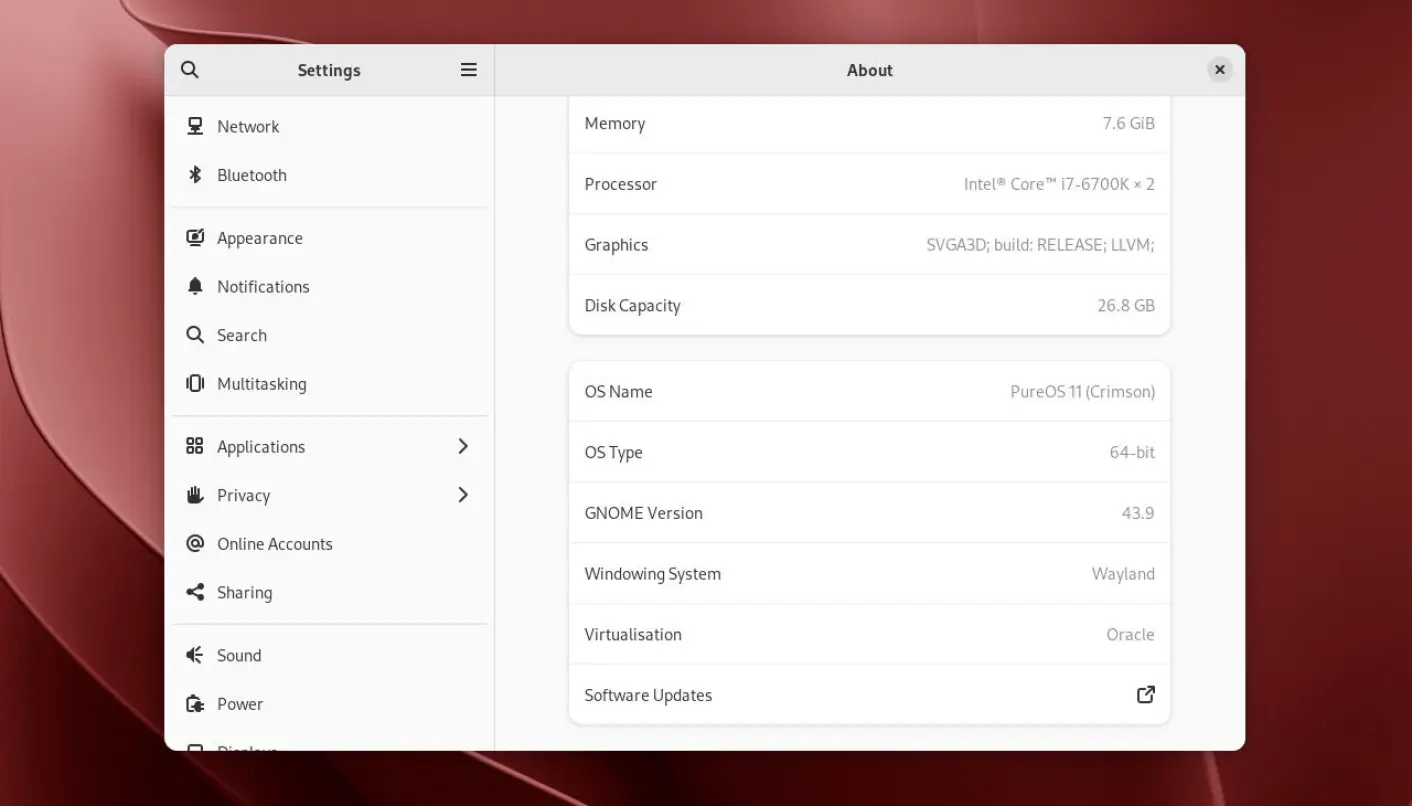
The laptop ships with PureOS, Purism's own Linux distribution. It is one of the few distros endorsed by the Free Software Foundation, meaning it contains zero proprietary code. PureOS 11, released in May, is based on Debian 12 and runs GNOME 43.9 on kernel 6.1.
This purity comes with tradeoffs. Since even Debian started including non-free firmware with version 12, PureOS may struggle with hardware that requires proprietary drivers. Wi-Fi cards and webcams are common failure points. You can download PureOS free and try it on your own machine, but expect some components to break.
Flatpak support is preinstalled, but the Purism Store offers only a limited selection of pure open-source apps. PureOS runs on Purism's Librem phones too, which is technically impressive even if the phones remain niche products.
How does the Librem 16 compare to other Linux laptops?
You can buy faster hardware for less money. Tuxedo Computers sells the Stellaris AMD Gen 4 with current AMD processors. Slimbook offers a range of Linux-first machines at lower price points. The It's FOSS portal maintains a directory of Linux laptop vendors.
None of those alternatives ship with disabled Management Engine, Coreboot firmware, and hardware kill switches out of the box. The Librem 16's price premium buys a specific set of security features, not benchmark performance.
Purism also sells a 14-inch laptop, a mini PC, an Atom-based tablet (Librem 11), and a server. The Librem 5 phone pairs with an optional LapDock that turns the phone into a laptop replacement.
Logicity's Take
The Librem 16 is not for most buyers, and Purism knows it. At $2,899 for a 10th-percentile spec sheet, you are paying for ideology and physical security controls that software cannot replicate. Enterprises handling sensitive data, journalists in hostile environments, and Free Software purists are the real audience. For general business use, a Framework laptop with user-replaceable parts offers better value. For pure Linux compatibility, System76 and Tuxedo price lower with stronger specs. Purism's bet is that a small market will pay a large premium for verified firmware and a camera that truly goes dark when the switch flips.
Who is this laptop actually for?
Security researchers. Activists operating under surveillance. Lawyers handling sensitive client data. Organizations that need to prove their hardware has not been compromised.
If you want a general-purpose work laptop that runs Linux well, look elsewhere. If you need to hand a machine to an auditor and demonstrate that the camera cannot physically activate without a visible switch flip, Purism built this for you.
The Librem 16 is available to order now from Purism's website.
Frequently Asked Questions
What are the hardware kill switches on the Librem 16?
Two physical switches sit between the keyboard and screen hinge. One disconnects Bluetooth and Wi-Fi. The other cuts power to the webcam and microphone. These are electrical disconnects, not software toggles.
Can I install a different Linux distribution on the Librem 16?
Yes. The Coreboot firmware works with other Linux distributions, though PureOS ships by default. Hardware compatibility may vary depending on which distro you choose.
Why is the Librem 16 so expensive compared to other laptops?
The price reflects Coreboot firmware development, Intel Management Engine disabling, hardware kill switch engineering, and small production volumes. Purism targets security-conscious buyers rather than mainstream consumers.
Does the Librem 16 have a discrete GPU?
No. All configurations use Intel integrated graphics. This laptop is not designed for gaming or GPU-intensive workloads.
What is the anti-interdiction service Purism offers?
This optional service adds tamper-evident measures to detect if someone intercepted and modified your laptop during shipping. It targets buyers concerned about supply chain attacks.
Need Help Implementing This?
Evaluating secure hardware for your organization? Logicity covers privacy-focused technology and enterprise security tools. Subscribe to our newsletter for weekly analysis of tech decisions that matter.
Source: www.theregister.com
Manaal Khan
Tech & Innovation Writer
Produced with AI assistance and reviewed by the Logicity editorial team. Learn more in our Editorial Policy.