Key Takeaways
- Station F's F/ai accelerator adds six new partners including HubSpot, GitHub, and Eleven Labs for its September 2026 batch
- First cohort of 20 AI startups collectively raised $34 million in pre-seed funding
- The program targets €1 million revenue within six months to match US startup commercialization speed
Station F is expanding its AI accelerator with six new corporate partners, including HubSpot, GitHub, and Eleven Labs, for a second cohort launching this September. The Paris startup hub's F/ai program, which debuted in January 2026, helped its first batch of 20 startups raise $34 million collectively in pre-seed funding.
Disclosure
Some links in this post are affiliate links — Logicity earns a commission if you sign up, at no extra cost to you. We only link products we have used or actively recommend.
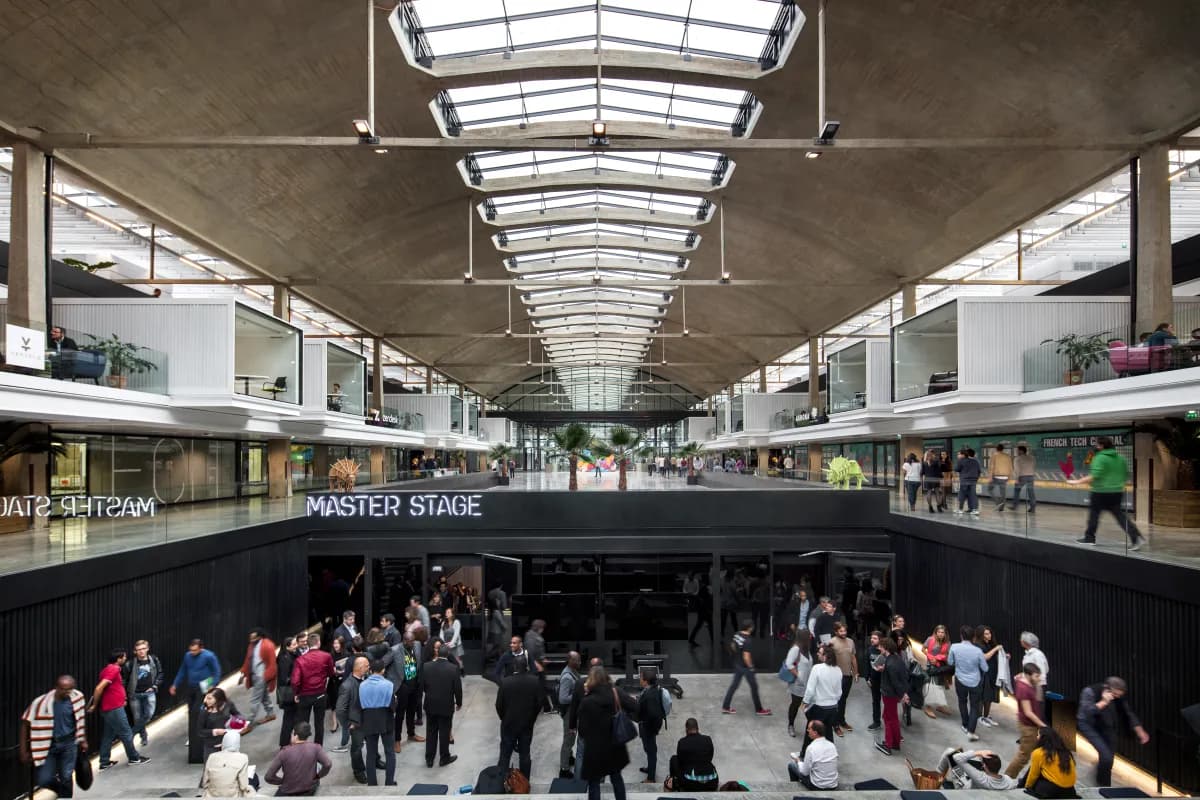
The accelerator operates from Xavier Niel's 538,000 square foot campus, the converted Halle Freyssinet train station that has become the physical center of France's tech ambitions. Director Roxanne Varza told TechCrunch the program exists to solve a specific problem: European AI startups commercialize too slowly compared to their American counterparts.
Who backs F/ai and what do startups get?
The first cohort drew backing from AMD, Anthropic, AWS, Google, Meta, Microsoft, Mistral AI, OpenAI, and Qualcomm, among others. The second batch adds Eleven Labs, Nebius, Rippling, OpenRouter, HubSpot, and GitHub to that list.
"The goal was to bring together all the major players and make it much easier for AI startups looking to launch in Europe to connect with them," Varza said. Startups get direct access to compute credits, API integrations, and executives at these companies. For early-stage founders, skipping the cold outreach queue matters.
Two startups from the first batch have already won international competitions. Alpic took the global grand finale of The Pitch, a competition organized by Deel. Rippletide won the OpenAI Codex Hackathon. Nice for press, but F/ai measures success differently.
Why €1 million in six months is the real benchmark
Station F set a specific revenue target: €1 million (about $1.14 million) within six months of program entry. The goal addresses a persistent criticism of European startups, that they build impressive technology but stumble on commercialization while American competitors sprint to market.
"We'd heard quite a bit of criticism about the slow pace of commercialization of European startups," Varza said. "This brings them on par with what investors are seeing in the U.S."
The founder profile skews experienced. Eighty percent of the first cohort's startups were founded by repeat entrepreneurs. A third hold PhDs. This is partly by design: F/ai selects its cohort exclusively via recommendations from founders, partners, and investors. No open applications.
The invite-only model and its tradeoffs
The referral-only process could reinforce the cliquishness France's tech scene sometimes gets accused of. Varza acknowledged the tension but noted that teams can approach F/ai's partners directly to get on the radar. Alumni referrals may open another channel soon.
Station F runs about 30 other programs with open applications for founders who don't have an inside track. But F/ai's exclusivity is the point. The program bets that curated cohorts outperform larger open batches, at least for AI companies where founder pedigree correlates with ability to recruit talent and close enterprise deals.
Station F's equity play in Future 40 companies
Beyond F/ai, Station F runs its Future 40 annual selection, naming the most promising startups from roughly 1,000 companies it hosts each year. In 2024, TechCrunch noted that nearly all Future 40 picks incorporated AI into their core business. Station F has taken equity stakes in Future 40 companies since 2022, turning the selection into a deal-flow engine.
The hub has hosted 11 presidential visits since Macron's inaugural tour in 2017. Sam Altman has stopped by. Turing Award winner Yann LeCun has given private talks to founders. Station F uses these connections to make a simple argument: you don't need to move to San Francisco to access top-tier networks.
"Today, if the founders here want to speak to people at this level, they all seem to think they need to go to the U.S. and join a program there," Varza said. "We actually want to show that you can stay here and do it from here."
What European AI founders should weigh
The case for staying in Europe got stronger this year. Mistral AI raised at a $6 billion valuation. Poolside AI landed $500 million. The infrastructure exists. But the commercial networks, the enterprise buyers, the growth-stage capital, still tilt American. F/ai is Station F's attempt to close that gap without asking founders to relocate.
For founders building AI tools that integrate with business software, the partner list matters. HubSpot, Salesforce, and Pipedrive dominate the CRM market where many AI copilots now compete. Having HubSpot as a program partner means faster integration partnerships and potential co-selling arrangements.
Logicity's Take
Station F is making a smart bet by targeting commercialization speed rather than just funding. Most European accelerators optimize for raising the next round. F/ai optimizes for revenue, which is harder to fake and more predictive of long-term survival. The invite-only model will limit applicant diversity, but for AI specifically, where talent density and technical credibility matter enormously, a curated cohort probably outperforms an open call. The real test comes in 18 months: will F/ai alumni outperform Y Combinator's AI companies on revenue-per-employee? That's the metric that would change the calculus for European founders weighing a Bay Area move.
Frequently Asked Questions
How do I apply to Station F's F/ai accelerator?
F/ai does not accept direct applications. The program selects startups exclusively through recommendations from existing founders, partners, and investors. Teams can reach out to F/ai's partner companies to get on the radar.
What funding did F/ai's first cohort raise?
The 20 AI startups in the first cohort collectively raised $34 million in pre-seed funding, according to Station F.
Which companies partner with F/ai?
Partners include AMD, Anthropic, AWS, Google, Meta, Microsoft, Mistral AI, OpenAI, Qualcomm, and new additions HubSpot, GitHub, Eleven Labs, Nebius, Rippling, and OpenRouter.
When does F/ai's second batch start?
The second cohort launches in September 2026.
What is Station F's revenue target for AI startups?
F/ai targets €1 million (approximately $1.14 million) in revenue within six months of program entry.
Another significant AI policy development shaping how startups build consumer AI products
Need Help Implementing This?
If you're building an AI startup and evaluating European accelerators, Logicity covers program announcements, funding rounds, and founder interviews weekly. Subscribe to our newsletter for the latest on AI startup infrastructure across Europe and the US.
Source: TechCrunch / Anna Heim
Huma Shazia
Senior AI & Tech Writer
Produced with AI assistance and reviewed by the Logicity editorial team. Learn more in our Editorial Policy.