Key Takeaways
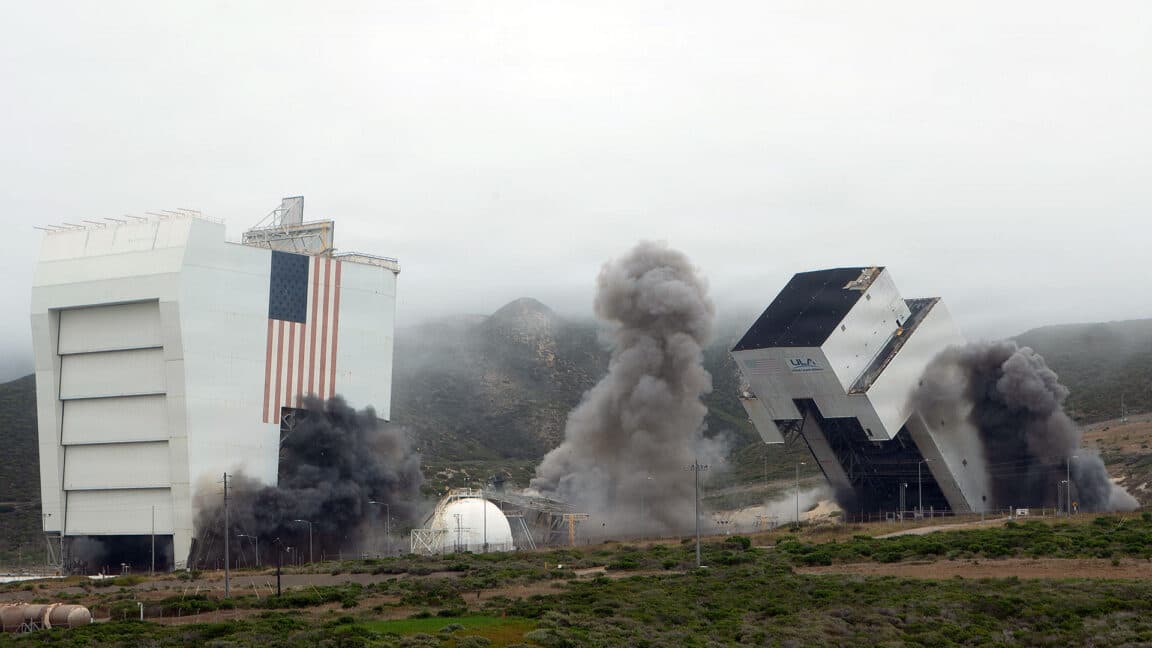
- Controlled demolition on June 16 brought down three Cold War and shuttle-era structures at Vandenberg's SLC-6
- The site never successfully launched astronauts despite being built for the Manned Orbiting Laboratory and Space Shuttle
- SpaceX plans to use the modernized pad for Falcon 9 and Falcon Heavy missions with a target of 100 launches per year
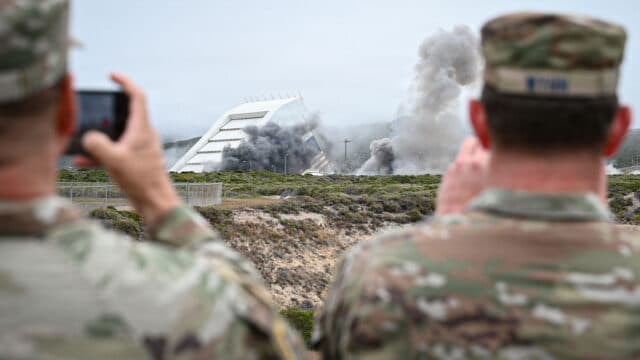
Controlled explosions brought down three massive structures at Vandenberg Space Force Base on Tuesday, ending a 60-year chapter of aerospace planning failures and clearing the site for SpaceX operations. The access tower, mobile service tower, and assembly building at Space Launch Complex-6 collapsed in sequence at 11 am PDT on June 16, 2026.
SLC-6, known as "slick-six," holds a peculiar distinction in American space history. The Air Force built it twice for human spaceflight programs. Astronauts never launched from it. Now SpaceX will retrofit the site for Falcon 9 and Falcon Heavy rockets, targeting up to 100 missions per year from the West Coast facility.
Why did SLC-6 never launch astronauts?
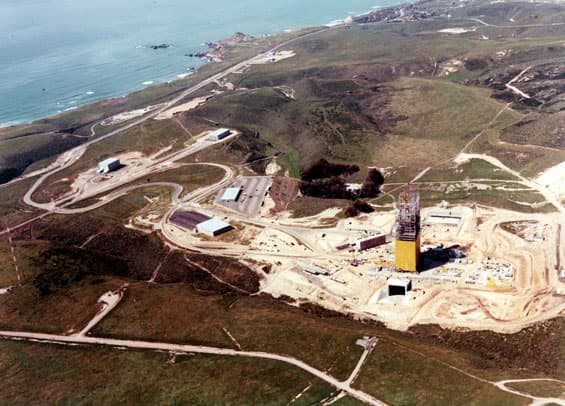
The site's history reads like a catalog of canceled ambitions. Construction began in 1966 for the Manned Orbiting Laboratory, a secret Air Force program that would have sent reconnaissance crews into orbit using modified Gemini hardware. The concrete apron and mobile service tower went up for the Titan IIIM rocket. Then the program was canceled in June 1969. Zero launches.
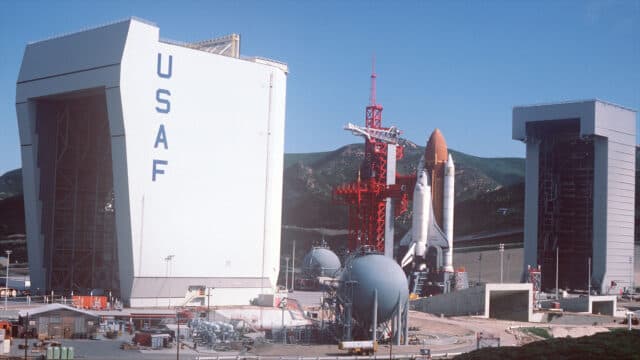
The Air Force tried again with the Space Shuttle. SLC-6 would handle Department of Defense missions, with the orbiter Discovery permanently assigned to California. Engineers designed a different stacking approach than Kennedy Space Center used, assembling the vehicle directly on the pad rather than in a distant building.
In February 1985, the prototype orbiter Enterprise stood on the pad, stacked with an external tank and solid rocket boosters. It was a test fit, not a flight vehicle. A year later, Challenger broke apart during launch. The Pentagon reconsidered its dependence on the shuttle. The Air Force walked away from SLC-6 a second time. Again, zero crewed launches.
What eventually launched from SLC-6?
The site finally saw operational use a decade later, though not for human spaceflight. Lockheed Martin's LMLV-1 lifted off in 1995. Athena I and Athena II rockets followed in 1997 and 1999 with NASA and commercial imaging payloads.
Boeing, later United Launch Alliance, leased the facility and adapted the shuttle-legacy infrastructure for Delta IV rockets. Ten NRO missions flew from SLC-6 before ULA shifted operations. The shuttle-era towers that survived those modifications are the same structures that fell on Tuesday.
What will SpaceX build at the site?
SpaceX plans to implement its standardized rapid-turnaround infrastructure at SLC-6. The company is adding two booster landing pads, which will allow first-stage recovery without the need for drone ship operations offshore. West Coast launches typically serve polar and sun-synchronous orbits for Earth observation and Starlink satellites.
"By modernizing this historic footprint in partnership with our defense industrial base, we are building directly upon the foundation of our pioneers," Col. James T. Horne III, commander of Space Launch Delta 30 at Vandenberg, said in a statement.
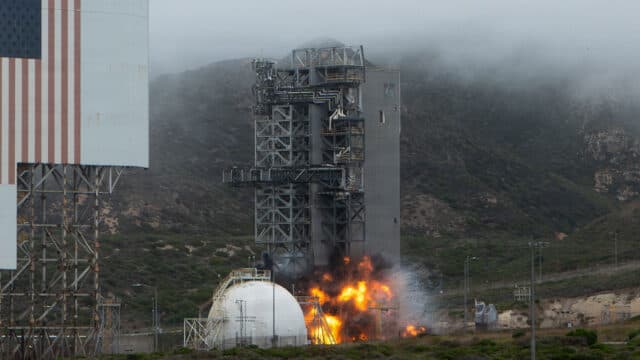
The demolition was planned but kept quiet until completion. A marine layer of fog and low clouds hung over the site during the sequence, adding what observers called a "somber" quality to the scene. The access tower fell first, then the mobile service tower, and finally the large assembly building with its American flag facade.
How has the space community reacted?
Online reactions split along generational lines. Older space enthusiasts on forums like r/SpaceX and HackerNews expressed nostalgia for the shuttle-era architecture. Younger commenters focused on the efficiency gains for polar orbit satellite constellations.
Several users noted what they called "poetic symmetry" in SpaceX modernizing a site that had become synonymous with aerospace planning failures. SLC-6 absorbed billions in Cold War and shuttle-era investment. It produced ten successful launches across 60 years. SpaceX aims to match that total in six weeks.
Logicity's Take
SLC-6's history is a useful reminder that space infrastructure bets can take decades to pay off, or never pay off at all. The Air Force built the site for programs that policy, not engineering, killed. SpaceX faces different risks: they need sustained commercial and government demand for West Coast polar launches. The 100-per-year target is aggressive. But SpaceX's track record of launch cadence at Cape Canaveral suggests the constraint will be demand, not capability.
Frequently Asked Questions
What was Space Launch Complex-6 originally built for?
The Air Force constructed SLC-6 in 1966 for the Manned Orbiting Laboratory, a secret program to send reconnaissance crews into orbit. The program was canceled in 1969 before any launches occurred.
Did the Space Shuttle ever launch from Vandenberg?
No. SLC-6 was modified for shuttle operations, and the prototype orbiter Enterprise was stacked on the pad in 1985. After the Challenger disaster in 1986, the Department of Defense abandoned its shuttle plans at the site.
What rockets has SpaceX launched from Vandenberg?
SpaceX currently uses Space Launch Complex-4 East at Vandenberg for Falcon 9 missions. The newly cleared SLC-6 will add capacity for both Falcon 9 and Falcon Heavy launches.
When will SpaceX begin launching from SLC-6?
SpaceX has not announced a specific date for first launch from SLC-6. Infrastructure construction and pad modifications will follow the demolition of the legacy structures.
Why does SpaceX need a second launch site at Vandenberg?
West Coast launches from Vandenberg access polar and sun-synchronous orbits that are geometrically impossible from Florida. Higher cadence requires additional pad capacity and booster landing zones.
Need Help Implementing This?
If you're building space-tech software or need to understand launch infrastructure for your business, Logicity.in covers the technical and business dimensions of the commercial space industry. Subscribe to our newsletter for weekly analysis.
Source: Ars Technica
Manaal Khan
Tech & Innovation Writer
Produced with AI assistance and reviewed by the Logicity editorial team. Learn more in our Editorial Policy.




