Key Takeaways
- The Katana V2X allows unauthenticated Bluetooth connections that can flash custom firmware without code signing
- Attackers within 15 meters can transform the speaker into a fake keyboard and execute commands on the host PC
- Creative Technology refuses to patch, claiming the flaw is not a cybersecurity risk
A $283 Soundbar Becomes a Remote Hacking Tool
Operating system makers invest heavily in preventing devices from accepting commands from untrusted sources. Firewalls, authentication protocols, and code signing exist specifically to block malicious actors. But what happens when a trusted peripheral becomes the attack vector?
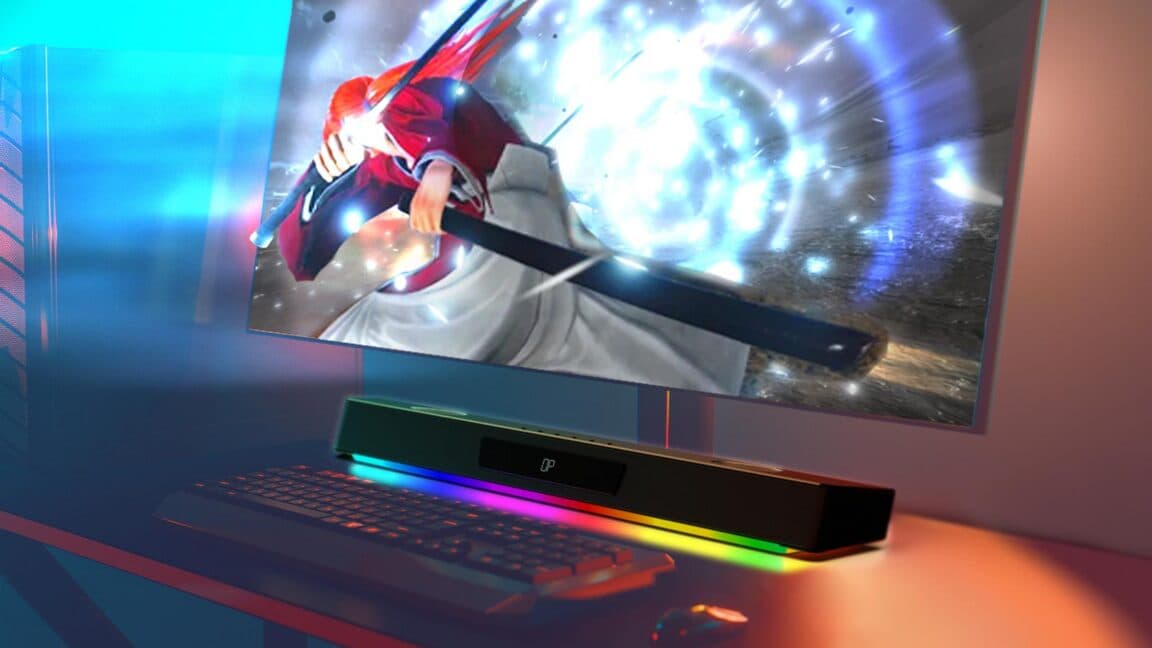
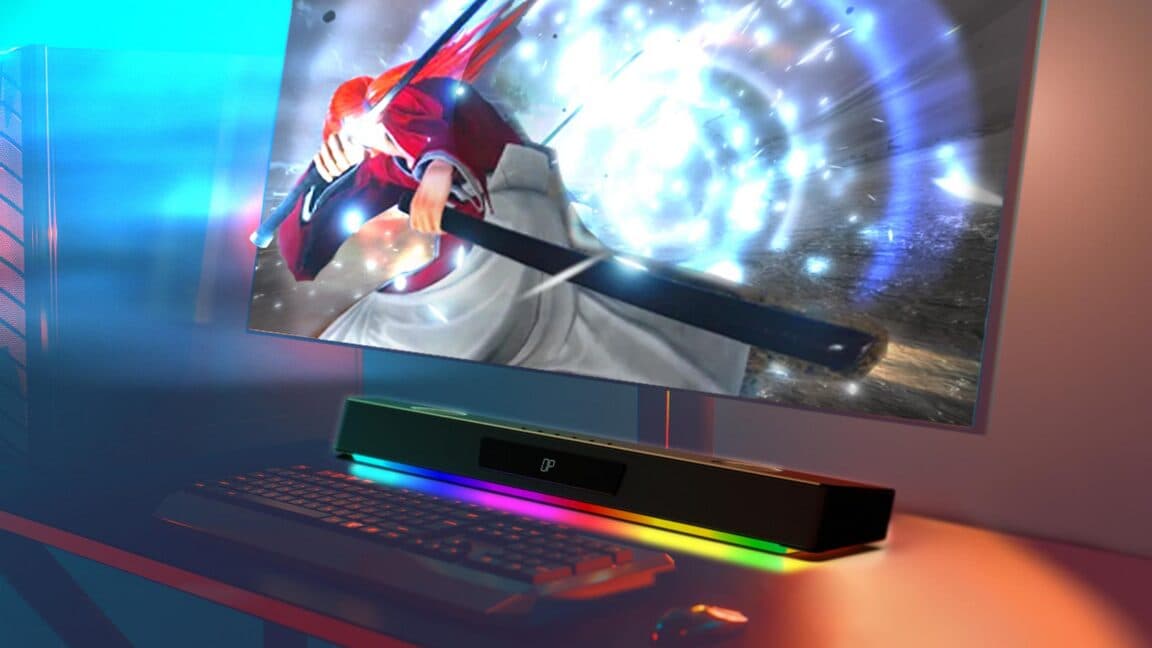
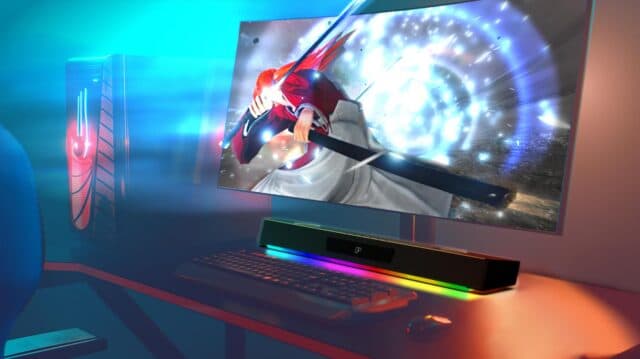
Security researcher Rasmus Moorats discovered that the Sound Blaster Katana V2X, a popular soundbar from Singapore-based Creative Technology, can be completely compromised over Bluetooth. The attack requires no user interaction, no pairing, and no authentication. An attacker within Bluetooth range can flash malicious firmware to the speaker, then use it to send keystrokes to the connected PC as if they were sitting at the keyboard.
How the Attack Works
Moorats stumbled on the vulnerability by accident. He purchased a Katana V2X and wanted to build a Linux tool to communicate with it. He discovered the speaker uses something called Creative Transport Protocol (CTP), a proprietary system for changing settings like LED colors and equalizer profiles.
CTP works over both USB and Bluetooth. The USB implementation appears properly secured. The Bluetooth implementation is not. Moorats found his Bluetooth device could connect to the speaker without any authentication. No pairing required. No user approval needed.
“The device essentially trusts any Bluetooth signal like it's a direct USB connection. It's a total breakdown of the security perimeter.”
— Rasmus Moorats, Security Researcher
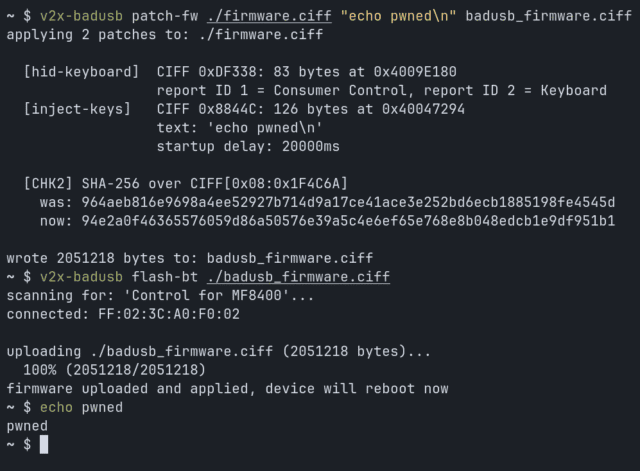
Among the CTP commands available over this unauthenticated connection: "upload new firmware to device." The firmware update process has no code signing or verification. Moorats successfully replaced the official firmware with a custom image that displayed the word "patched" on the speaker's LED display.
From Firmware Flash to Full PC Control
Replacing firmware on a speaker might seem harmless. The speaker still plays audio. But Moorats realized the Katana V2X runs FreeRTOS, an open source operating system with HID (human interface device) capabilities. HID is the classification that includes keyboards, mice, and webcams.
The speaker's legitimate HID implementation is limited to media controls. Changing volume, play, pause. But Moorats discovered he could modify the USB descriptor set, which tells connected devices what a peripheral can do. He augmented the existing descriptor with a second one that reported the speaker as a keyboard.
The attack chain looks like this:
- Attacker connects to the Katana V2X over Bluetooth without authentication
- Attacker uses CTP to flash malicious firmware
- Malicious firmware registers the speaker as a keyboard with the connected PC
- Attacker sends keystrokes through the speaker to the PC
- PC executes commands as if typed by the user
The exploit has a 100% success rate on unpatched units running default firmware. The effective range is about 15 meters, enough to attack from outside a home or office.
Creative's Response: This Is Not a Vulnerability
Creative Technology's response has alarmed the security community. The company told researchers and SingCERT (Singapore's Computer Emergency Response Team) that it does not consider this a vulnerability.
“We do not consider this to be a vulnerability, as it does not present a cybersecurity risk.”
— Creative Technology, Official Statement to Researchers and SingCERT
The company has not issued a patch. There is no timeline for a fix. Creative has not responded to questions about whether other products in the Sound Blaster line share the same Bluetooth implementation.
Community Reaction and Mitigation Options
The disclosure reached the top of Hacker News, where hundreds of comments focused on the precedent set by Creative's refusal to patch. Many users reported plans to return their units or physically disable the Bluetooth antenna.
On Reddit's r/netsec, discussions centered on the technical elegance of the firmware injection technique and the difficulty of fixing devices when the manufacturer won't provide updates.
For current owners, mitigation options are limited:
- Use the speaker only via USB, not Bluetooth (though this may not fully disable the Bluetooth radio)
- Physically disable or remove the Bluetooth antenna
- Return the product if within the return window
- Replace the speaker with an alternative that doesn't have unauthenticated Bluetooth firmware updates
The Broader Problem: Peripherals as Attack Surfaces
This exploit belongs to a class of attacks known as BadUSB. The concept has been known since 2014. A malicious USB device, or a legitimate device with compromised firmware, can impersonate a keyboard and type commands faster than any human could stop it.
What makes the Katana V2X case unusual is the remote attack vector. Traditional BadUSB requires physical access to plug in a malicious device. Here, an attacker needs only Bluetooth proximity. A person walking past your office could compromise your speaker. Someone in an adjacent apartment could do the same.
The attack also highlights the trust model for peripherals. Operating systems generally trust USB devices implicitly. A keyboard is a keyboard. If a speaker says it's also a keyboard, the OS believes it. There's no prompt asking "Did you expect this soundbar to type things?"
Another case study in corporate handling of security disclosures
What Should Have Happened
The vulnerability has multiple fixable components. Any one of these would have prevented exploitation:
- Require Bluetooth pairing before accepting CTP commands
- Implement code signing for firmware updates
- Disable firmware updates over Bluetooth entirely
- Limit HID capabilities to fixed functions that can't be expanded via firmware
These are standard security practices for Bluetooth peripherals. Their absence in a product that ships in 2024 suggests either a design oversight or a deliberate cost-cutting decision.

Logicity's Take
Creative's refusal to acknowledge this as a vulnerability is baffling. A device that can be remotely reflashed without authentication, then used to execute commands on a connected computer, meets any reasonable definition of a security flaw. The company's statement reads like legal positioning, not technical analysis. If you own a Katana V2X and use it with a PC that matters, disconnect it until Creative provides a real response.
Frequently Asked Questions
Can the Sound Blaster Katana V2X hack affect Macs and Linux computers?
Yes. The speaker connects to PCs, Macs, and Linux devices via USB. Once compromised, it can send keystrokes to any connected system that accepts HID input, which includes all major operating systems.
How close does an attacker need to be to exploit the Katana V2X?
The exploit works within approximately 15 meters, the effective range of Bluetooth Low Energy. This distance could extend through walls, meaning attackers could be in adjacent rooms or outside a building.
Is there a firmware update to fix the Sound Blaster Katana V2X vulnerability?
No. As of publication, Creative Technology has not released a patch and has stated it does not consider this a vulnerability. There is no announced timeline for a fix.
Does this vulnerability affect other Sound Blaster speakers?
Unknown. The researcher tested only the Katana V2X. Other products using the same Creative Transport Protocol over Bluetooth may share the vulnerability, but this has not been confirmed.
Can I protect myself by only using USB connection instead of Bluetooth?
Possibly, but not certainly. Using USB for audio doesn't necessarily disable the Bluetooth radio. The safest mitigation is physical removal or disabling of the Bluetooth antenna, or replacement of the speaker.
Need Help Implementing This?
If your organization uses Sound Blaster products or other Bluetooth peripherals and you're concerned about similar vulnerabilities, we'd like to hear from you. Reach out to our team for guidance on auditing peripheral security and implementing network-level mitigations.
Source: Ars Technica
Huma Shazia
Senior AI & Tech Writer
Produced with AI assistance and reviewed by the Logicity editorial team. Learn more in our Editorial Policy.




