Key Takeaways
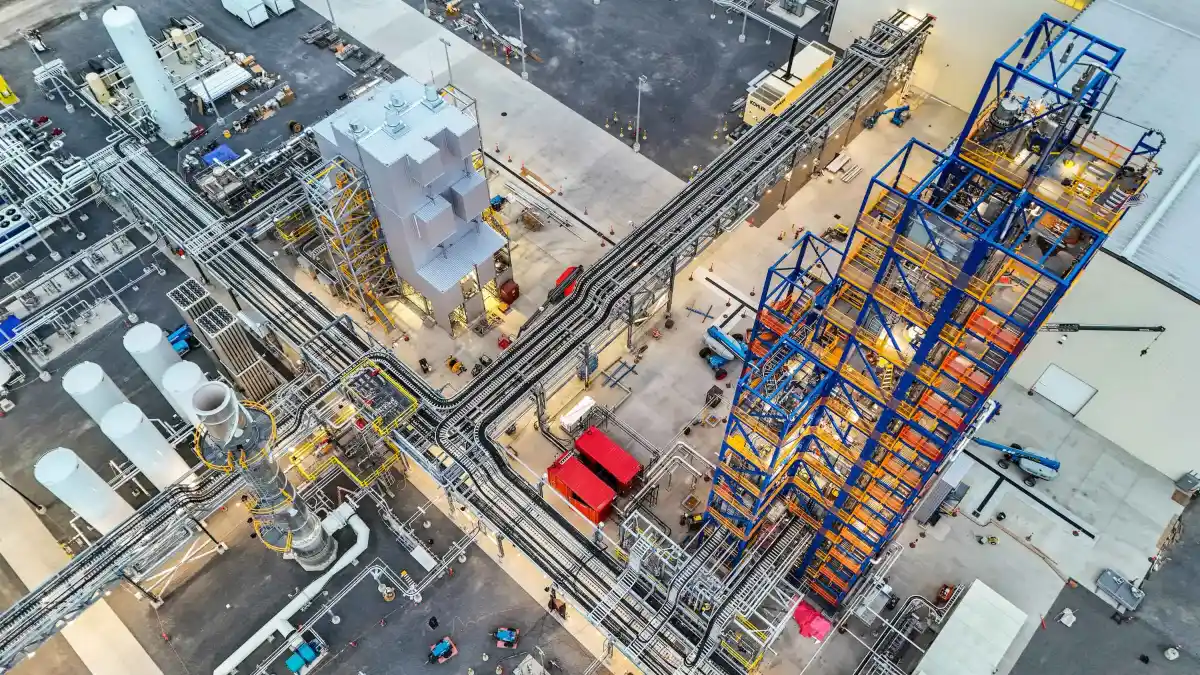
- Sila raised $300M to expand its Moses Lake factory to supply anode material for 100,000+ EVs annually
- Silicon-carbon anodes store 40% more energy than graphite and charge faster
- Global EV sales up 27% YoY despite U.S. slowdown, driving demand for non-Chinese battery materials
Sila Nanotechnologies just closed a $300 million round to expand its Washington State factory, betting that automakers will pay a premium for battery materials not controlled by China. The investment arrives at an odd moment: U.S. EV sales have softened under the Trump administration's hostility toward the technology, yet global demand keeps climbing.
The company plans to scale its Moses Lake plant from 2 gigawatt-hours of silicon-carbon anode capacity to tens of gigawatt-hours per year, enough to supply batteries for more than 100,000 electric vehicles annually.
Why automakers want alternatives to Chinese graphite
Most lithium-ion batteries use graphite anodes. Chinese companies control roughly 75% of that supply chain, according to Benchmark Minerals Intelligence. Tariffs have made that dependency expensive and politically risky for automakers outside China.
Sila's silicon-carbon anode material offers a way out. Beyond the supply chain advantage, the technology stores up to 40% more energy than traditional graphite anodes and charges faster. That translates to longer range and shorter charging stops, two of the biggest friction points for EV adoption.
The company has spent 15 years developing the material. CEO Gene Berdichevsky was the seventh employee at Tesla before founding Sila. The startup began production at Moses Lake in September and has already signed supply deals with Mercedes and Panasonic.
The U.S. market is weak, but the global picture looks different
American EV sales fell this year compared to 2025, when buyers rushed to purchase before federal tax credits expired. The Trump administration's broader efforts to undercut electric vehicle adoption have dampened demand further.
Sila is betting that matters less than it appears. Global EV sales rose 27% year over year, according to Benchmark Minerals Intelligence. Europe and China continue to drive adoption, and automakers building for those markets still need batteries.
There's another growth vector. Grid-scale battery storage is expanding rapidly as utilities and data center operators look for ways to manage electricity demand. AI data centers have become major buyers of battery packs for backup power, peak demand reduction, and around-the-clock use of renewable energy.
Beyond EVs: consumer electronics and defense
Sila doesn't rely solely on automakers. The company supplies anode material to consumer electronics companies including Whoop, the fitness wearable maker. Drone manufacturers and satellite companies are also customers, sectors where energy density matters even more than in passenger vehicles.
This diversification reduces Sila's exposure to EV market cycles. Fitness trackers don't care about federal tax credits, and defense applications follow their own procurement logic.
Who backed the round
Atreides Management and Sutter Hill Ventures led the $300 million round. 8VC, Bessemer Venture Partners, Matrix Partners, and funds advised by T. Rowe Price Associates also participated. Sila has now raised approximately $1.6 billion across all rounds, according to PitchBook.
The investor mix signals confidence in battery materials as a long-term play. T. Rowe Price's involvement brings institutional capital typically reserved for later-stage companies approaching public markets.
The capacity math
Sila's current 2 gigawatt-hour capacity is small relative to global battery demand. The expansion to tens of gigawatt-hours puts the company in a different category. For context, a single large EV factory might need 10 to 30 gigawatt-hours of battery capacity per year.
Whether Sila can execute on this scale remains the key question. Manufacturing advanced battery materials at volume is notoriously difficult. The company's track record since September production began will determine whether automakers commit to larger supply agreements.
Logicity's Take
Sila's $300M raise is a bet on supply chain diversification mattering more than near-term U.S. demand. That bet looks reasonable: automakers burned by chip shortages are now paranoid about battery material dependencies. The 40% energy density advantage over graphite also gives Sila pricing power that pure-play alternatives lack. Competitors like Group14 Technologies and Enevate are developing similar silicon anode materials, but Sila has the production head start. For tech leaders watching the EV space, the takeaway is that battery materials are becoming a choke point worth monitoring, much like semiconductors were five years ago.
Frequently Asked Questions
What does Sila Nanotechnologies make?
Sila produces silicon-carbon anode material for lithium-ion batteries. The material replaces traditional graphite anodes and stores up to 40% more energy while charging faster.
Why are automakers moving away from Chinese graphite?
Chinese companies control about 75% of the graphite anode supply chain. Tariffs and geopolitical tensions have made that dependency risky and expensive for automakers outside China.
How much has Sila raised in total?
Sila has raised approximately $1.6 billion across all funding rounds, including the latest $300 million investment.
Who are Sila's major customers?
Mercedes and Panasonic have signed supply deals for EV applications. Sila also supplies Whoop, drone manufacturers, and satellite companies.
Where is Sila's factory located?
Sila operates a production facility in Moses Lake, Washington, which began operations in September.
Another hardware startup raising significant capital in a challenging funding environment
Need Help Implementing This?
Tracking supply chain shifts in batteries and other critical components requires ongoing market intelligence. If your organization needs help monitoring emerging technology trends that could affect your sourcing or product strategy, reach out to Logicity's research team.
Source: TechCrunch / Tim De Chant
Huma Shazia
Senior AI & Tech Writer
Produced with AI assistance and reviewed by the Logicity editorial team. Learn more in our Editorial Policy.