Key Takeaways
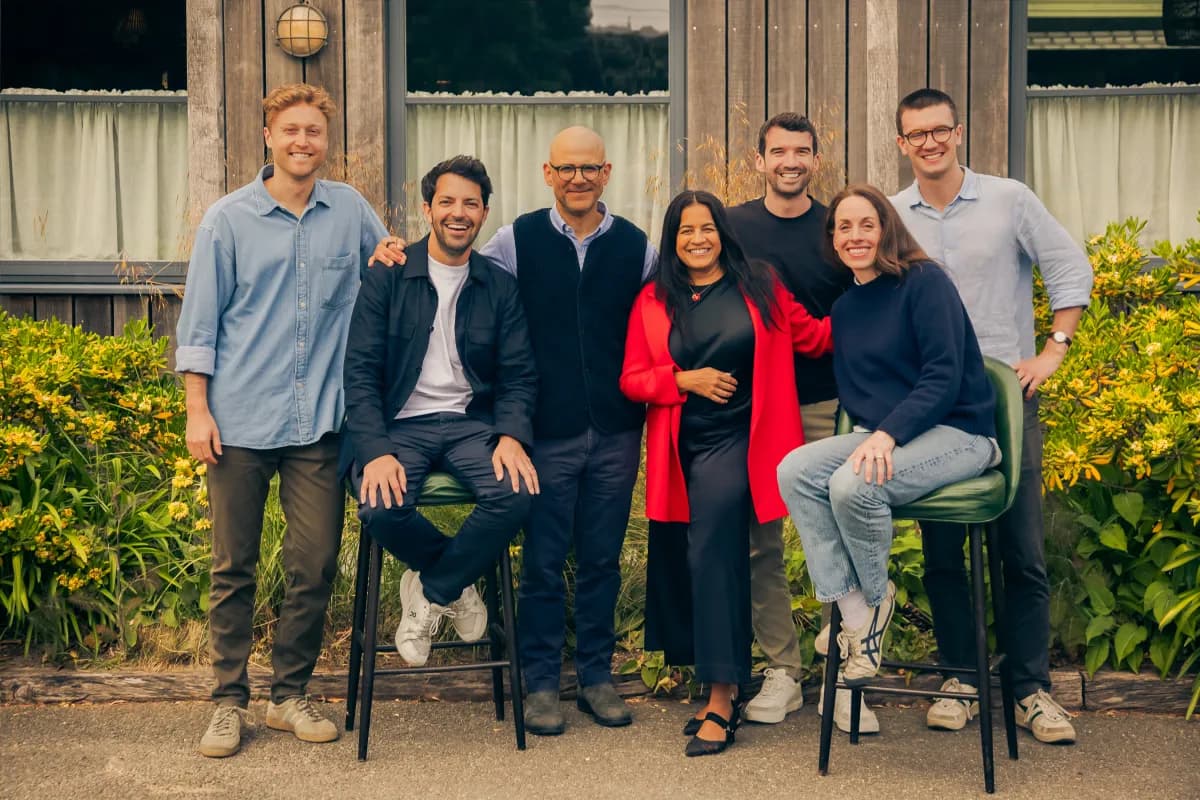
- Seedcamp raised $320M for Fund VII, nearly double its 2023 fund, split between early-stage ($220M) and growth investments ($100M)
- The firm is expanding its US presence beyond NYC and Miami to connect European portfolio companies with American customers and investors
- Seedcamp will write $1M first checks in 100-120 startups, avoiding capital-intensive businesses like mobility and marketplaces
Seedcamp, the London-based early-stage investor behind Wise, Revolut, and UiPath, has raised $320 million for its seventh fund. The raise nearly doubles its 2023 fund and marks the firm's biggest bet yet on bridging European startups to American markets.
After 18 years focused almost exclusively on Europe, Seedcamp is splitting Fund VII into two vehicles: $220 million for its traditional early-stage bets, and $100 million for a new growth fund called Select that will follow on in Series B rounds and beyond.
Why is Seedcamp expanding to the US now?
The firm already has offices in New York and Miami, but those were largely outposts. Now Seedcamp plans to grow its American team to serve as connective tissue between its European portfolio companies and US customers and investors.
“We need to plug founders to nodes that are connective.”
— Reshma Sohoni, Seedcamp Co-founder and Managing Partner
The timing reflects a broader shift. San Francisco and Silicon Valley have regained their pull as the center of gravity for tech, particularly in AI. European founders increasingly need US market access from day one, and their investors are following.
How the $320M breaks down
Seedcamp VII, the early-stage vehicle, will deploy roughly $1 million first checks across 100 to 120 startups. The thesis stays the same: backing companies pre-product, pre-revenue, even pre-traction. The firm relies heavily on its network of 550+ portfolio companies and LPs for deal flow.
The new Select fund takes a different approach. It will write $3 million to $5 million checks as follow-ons in Series B rounds and later. This lets Seedcamp maintain ownership in breakout companies without competing for allocation against larger growth funds.
Who backed Fund VII?
The LP base includes institutional names like British Business Bank, HarbourVest, Schroders, and Sofina. But 80 founders from Seedcamp's portfolio also invested as angels. That founder participation serves a dual purpose: it signals confidence and keeps the deal flow pipeline warm.
Seedcamp now manages over $1 billion in assets across its funds. For a firm that started in 2007 writing tiny checks into unknown European founders, the scale represents a quiet but significant evolution.
What Seedcamp won't fund
Sohoni was explicit about sectors the firm avoids. Capital-intensive businesses like mobility or marketplaces are off the table.
“We tend to avoid capital-intensive startups because funding working capital isn't a great model on day one. We're definitely a commercial-driven investor.”
— Reshma Sohoni, Seedcamp
The logic is straightforward: seed capital should buy product development and early customer traction, not subsidize unit economics. Marketplaces and logistics businesses often burn through seed rounds before proving demand.
The bigger trend: European VCs go west
Seedcamp's move fits a pattern. European venture firms have spent the past two years building US presence, driven by the realization that their best portfolio companies eventually need American customers, American talent, or American follow-on capital. Some firms are opening offices. Others are hiring US-based partners. A few are relocating entirely.
The reverse is also true. US firms like a]16z, Sequoia, and Lightspeed have deepened their European footprints. The result is a more integrated transatlantic venture market, with capital and startups flowing both directions more freely than a decade ago.
Logicity's Take
Seedcamp's split structure is the real story. The $100M Select fund lets them play defense on their winners without diluting the early-stage fund's returns. It's a model more European VCs will copy. The US expansion is necessary but not novel. The fund architecture is.
Frequently Asked Questions
How much did Seedcamp raise for Fund VII?
Seedcamp raised $320 million total, split between $220 million for early-stage investments and $100 million for growth-stage follow-ons through a new vehicle called Select.
What stage does Seedcamp invest in?
Seedcamp invests at the earliest stages, including pre-product, pre-revenue, and pre-traction companies. First checks are typically around $1 million.
Which unicorns has Seedcamp backed?
Seedcamp's portfolio includes 12 unicorns, among them Wise, Revolut, UiPath, Synthesia, Hopin, Pleo, and Fluidstack.
Where does Seedcamp have offices?
Seedcamp is headquartered in London with offices in New York City and Miami. The firm plans to expand its US team as part of this new fund.
What sectors does Seedcamp avoid?
Seedcamp avoids capital-intensive businesses like mobility and marketplaces, preferring companies where seed capital drives product development rather than subsidizing working capital.
Need Help Implementing This?
If you're a European founder looking to understand how US expansion changes your fundraising strategy, or a startup evaluating early-stage VC options, reach out to Logicity's advisory network for introductions and guidance.
Source: Venture Capital News | TechCrunch / Ram Iyer
Manaal Khan
Tech & Innovation Writer
Produced with AI assistance and reviewed by the Logicity editorial team. Learn more in our Editorial Policy.




