Key Takeaways
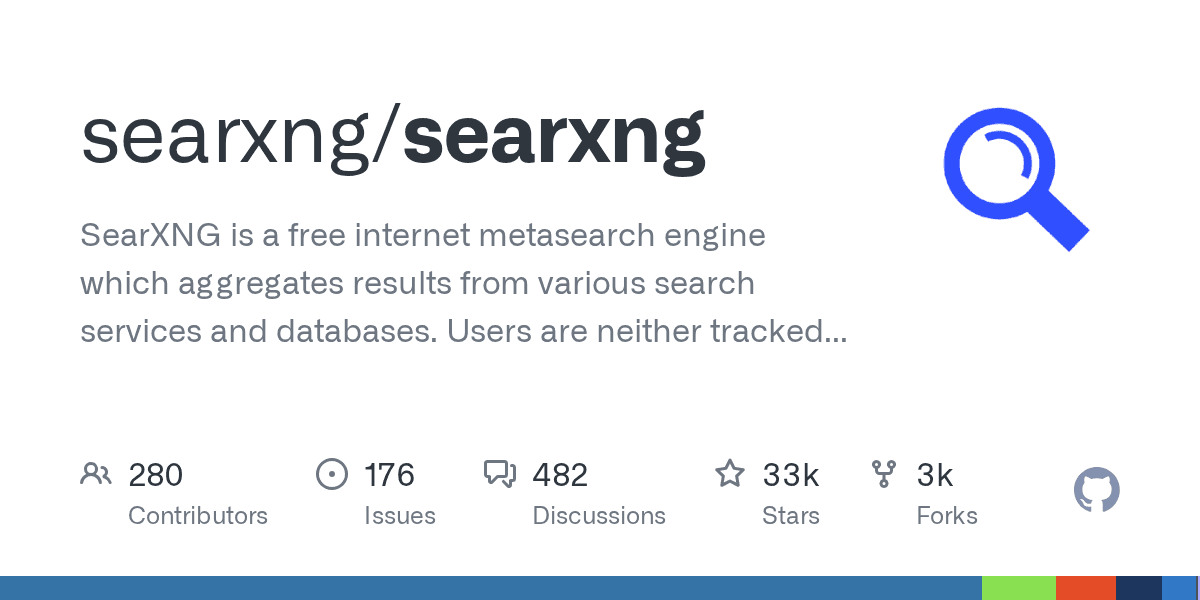
- SearXNG aggregates results from over 70 search engines including Google, Bing, and DuckDuckGo without tracking users
- The project has 13,000+ GitHub stars and 130+ community-run public instances available for immediate use
- Licensed under AGPL-3.0, SearXNG offers full self-hosting control for privacy-conscious organizations
SearXNG pulls results from over 70 search engines simultaneously, strips out tracking parameters, and presents unified results without profiling users. The open-source metasearch engine has climbed to 13,000+ GitHub stars, with more than 130 public instances now running worldwide. For CTOs and founders tired of feeding corporate surveillance machines, it represents a functional exit from the Google-Bing duopoly.
What makes SearXNG different from DuckDuckGo?
DuckDuckGo promises not to track you, but it still runs its own centralized infrastructure and makes money from ads. SearXNG takes a different approach: it's a metasearch aggregator you can self-host. When you search, it queries Google, Bing, Brave, Wikipedia, and dozens of specialized engines on your behalf, then merges the results. Your query never touches those services directly from your IP address.
The project emerged as a community-driven fork of SearX (started around 2014) after the original development slowed. The SearXNG team explicitly prioritizes maintainability and community governance, describing it as a "privacy-respecting, hackable metasearch engine." Unlike commercial alternatives, there's no business model that depends on your data.
How does self-hosting actually work?
You spin up a SearXNG instance on your own server. Docker makes this trivial. Once running, you access it through a web interface identical to any search engine. Configure which sources to query, set up result filtering, customize the UI. Every search stays on your infrastructure.
The AGPL-3.0 license means modifications must remain open source if you distribute the software. For internal enterprise use, this rarely matters. You can deploy it on DigitalOcean, Cloudways, or any VPS provider. The resource requirements are modest: a basic $5-10/month server handles personal or small team use comfortably.
Disclosure
Some links in this post are affiliate links — Logicity earns a commission if you sign up, at no extra cost to you. We only link products we have used or actively recommend.
Who's actually using this?
The self-hosted software community has adopted SearXNG enthusiastically. On Reddit's r/selfhosted and r/privacy, users share Docker configurations and optimization tips. The common sentiment: "I've run my own instance for 2 years and never looked back." But the use case extends beyond privacy enthusiasts.
Research teams use it to avoid filter bubbles. Google personalizes results based on your history, location, and inferred interests. For competitive analysis or academic research, this personalization corrupts the data. SearXNG delivers the same results regardless of who's searching.
Companies in regulated industries run internal instances to ensure search queries don't leak to third parties. A law firm researching opposing counsel, for example, might prefer those queries stay off Google's servers entirely.
The practical limitations
SearXNG isn't perfect. Aggressive scraping triggers CAPTCHAs from Google and other engines. Public instances get rate-limited or blocked. Running your own instance helps, but high-volume querying still risks IP blocks. The project maintains a list of working public instances, though quality varies.
Result quality depends on which engines you enable. Out of the box, it queries many sources simultaneously, which can produce noisy results. Tuning the configuration to prioritize certain engines for certain query types improves relevance but requires experimentation.
There's no AI-powered answer synthesis. If you want chatbot-style responses, tools like Perplexity offer that, though they reintroduce third-party dependencies. SearXNG sticks to traditional link-based results by design.
Setup in under 30 minutes
The official documentation walks through installation on bare metal, Docker, and various Linux distributions. For most users, Docker Compose is the fastest path. Pull the image, configure a few environment variables, expose port 8080, done. The project's Matrix channel (#searxng:matrix.org) provides community support for configuration questions.
Advanced configurations include Redis caching for faster repeated queries, integration with automation tools like n8n for programmatic search, and custom theming. The hackability is intentional: SearXNG assumes technically competent users who want control over every aspect of their search infrastructure.
Logicity's Take
SearXNG fills a real gap for organizations that can't afford to leak search behavior to third parties. Compared to Brave Search (free, centralized, ad-supported) or Kagi ($10/month, centralized, subscription), SearXNG's self-hosted model trades convenience for sovereignty. The 13,000+ GitHub stars suggest the privacy-conscious developer community has voted with their time. For enterprise deployment, expect 2-4 hours of initial setup plus occasional maintenance when upstream engines change their response formats.
Frequently Asked Questions
Is SearXNG legal to use?
Yes. SearXNG queries search engines the same way a browser would. However, operating a high-traffic public instance may violate some engines' terms of service, which could lead to IP blocks rather than legal action.
Can I use SearXNG without self-hosting?
Yes. Over 130 public instances are available at searx.space. Quality and uptime vary, and you're trusting the instance operator not to log queries.
Does SearXNG work with mobile devices?
The web interface is responsive and works on mobile browsers. You can set your instance as the default search engine in Firefox or other browsers that support custom search providers.
How does SearXNG compare to Whoogle?
Whoogle proxies only Google results with tracking removed. SearXNG aggregates 70+ engines, offering broader coverage but more complexity. Whoogle is simpler if you only want clean Google results.
Another example of the tech industry building alternatives to dominant infrastructure providers
Need Help Implementing This?
Logicity helps tech teams evaluate and deploy self-hosted tools like SearXNG. If you're considering privacy-first infrastructure for your organization, reach out for implementation guidance.
Source: Hacker News: Best
Manaal Khan
Tech & Innovation Writer
Produced with AI assistance and reviewed by the Logicity editorial team. Learn more in our Editorial Policy.