Key Takeaways
Ukrainian President Zelensky visits Saudi Arabia, meets Crown Prince Mohammed bin Salman
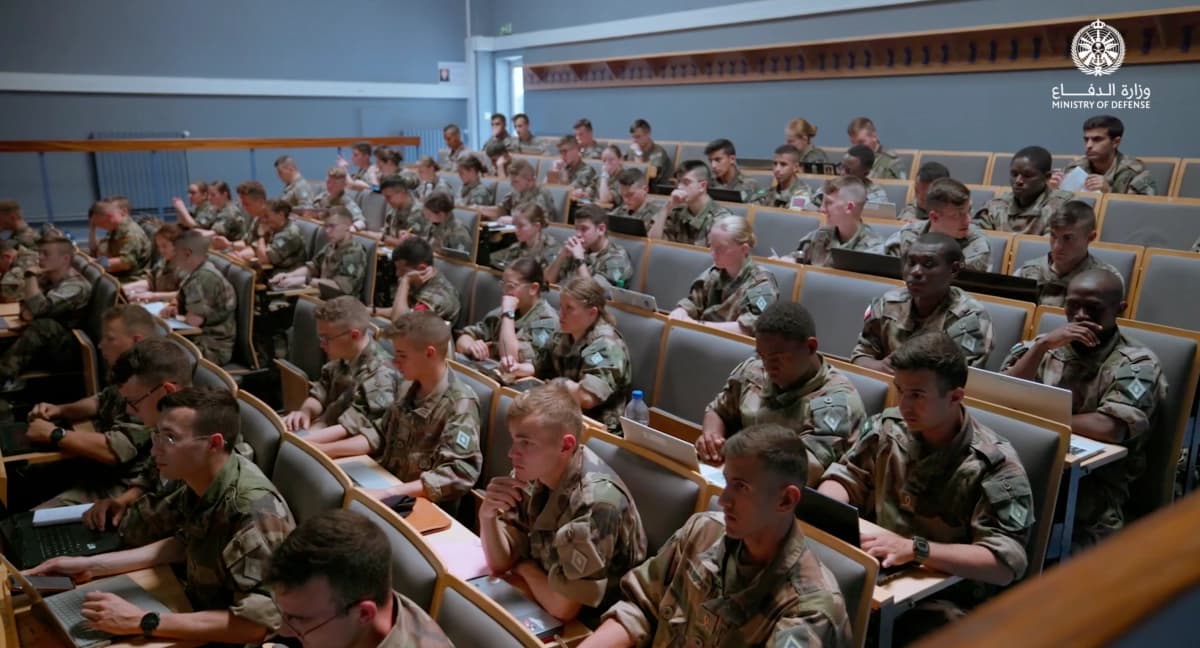
- 250 Saudi military students will receive scholarships annually for five-year programs at 21 international academies
- Partner countries include the US, UK, France, Spain, Italy, South Korea, Australia, Japan, and China
- The program focuses on leadership development and operating modern military systems alongside traditional training
Saudi Arabia's Ministry of Defense is restarting its overseas military scholarship program. The initiative will send 250 students each year to 21 military academies and defense colleges across nine countries, including the United States, United Kingdom, France, and China. Each scholarship covers a five-year program.
The program targets high school graduates already admitted to Saudi military colleges. The goal is explicit: produce officers who combine domestic training with international expertise. Maj. Gen. Adel bin Mohammed Al-Balawi, chairman of the Armed Forces Training and Development Authority, said the program prepares officers to operate modern military systems while meeting international standards.
Which countries are hosting Saudi military students?
The nine partner nations represent a mix of traditional Western allies and Asia-Pacific powers: the United States, United Kingdom, France, Spain, Italy, South Korea, Australia, Japan, and China. The inclusion of China alongside NATO members reflects Saudi Arabia's broader diplomatic balancing act. Riyadh has deepened ties with Beijing in recent years, particularly in energy and infrastructure, while maintaining its long-standing security relationship with Washington.
The 21 institutions span military academies, defense colleges, and universities. The ministry did not specify which institutions, but Saudi officers have historically trained at West Point, Sandhurst, and Saint-Cyr.
What is the program designed to achieve?
The ministry outlined three pillars. First, military and academic training aligned with international standards. Second, leadership and decision-making development. Third, building clear career paths that promote operational readiness.
Al-Balawi framed the program as part of a broader human capital strategy. The ministry wants to attract talented Saudi nationals, train them abroad, then bring that expertise home. The emphasis on operating modern military systems matters here. Saudi Arabia has spent heavily on advanced weapons, from F-15 fighters to Patriot missile batteries. Operating that equipment effectively requires officers trained to international standards.
“The program supports the ministry's strategic objectives by preparing officers to the highest international standards and equipping them with advanced military knowledge, leadership skills and the ability to operate modern military systems.”
— Maj. Gen. Adel bin Mohammed Al-Balawi, Armed Forces Training and Development Authority
How does this fit Vision 2030 defense goals?
Saudi Arabia's Vision 2030 plan includes localizing 50% of military equipment spending. That requires domestic expertise in defense manufacturing, maintenance, and operations. Sending hundreds of officers abroad each year builds the technical bench the Kingdom needs to reduce reliance on foreign contractors and advisors.
The original version of this program ran for several years and trained thousands of students, according to the ministry. The relaunch signals continued investment despite the program's earlier pause. Why restart now? The ministry says it has an updated vision aligned with future defense objectives, though specifics remain vague.
With approximately 227,000 active personnel in the Saudi Armed Forces, even 250 graduates per year represents a small percentage. But the program targets future leaders, not rank-and-file soldiers. The five-year timeline means the first cohort under the relaunched program will graduate around 2031.
What makes this program different from standard military exchanges?
Most military exchange programs are short-term. Officers attend courses lasting weeks or months, then return home. This program commits students to five full years at foreign institutions. That depth creates officers who understand partner militaries from the inside, not just from joint exercises.
The geographic spread also stands out. Training officers in both Western and Chinese institutions hedges Saudi Arabia's strategic bets. Officers who understand American doctrine and Chinese doctrine give Riyadh flexibility as great-power competition reshapes the Middle East.
Logicity's Take
The real signal here is China's inclusion alongside NATO allies. Saudi Arabia is building a military leadership class fluent in multiple strategic frameworks, not just the American one. For defense tech vendors and contractors, this means Saudi procurement decisions will increasingly reflect officers trained in Chinese systems alongside Western ones. That complicates the competitive landscape for firms like Lockheed Martin or BAE Systems, which have historically dominated Gulf contracts.
Frequently Asked Questions
How many students does Saudi Arabia's military scholarship program accept?
The program awards 250 scholarships annually for five-year programs at international military academies.
Which countries host Saudi military scholarship students?
Nine countries participate: the United States, United Kingdom, France, Spain, Italy, South Korea, Australia, Japan, and China.
What are the requirements for the Saudi overseas military scholarship?
Candidates must be high school graduates who have been admitted to Saudi Ministry of Defense military colleges.
When did Saudi Arabia's military scholarship program originally launch?
The program launched several years ago, trained thousands of students, and has now been relaunched with an updated vision.
What is the goal of Saudi Arabia's international military training program?
The program aims to produce officers who combine national training with international expertise, with emphasis on leadership development and operating modern military systems.
Another major Gulf initiative signaling the region's investment in institutional capacity building
Need Help Implementing This?
Logicity tracks defense sector developments and their implications for technology procurement across the Gulf. Subscribe for weekly analysis on how regional policy shifts affect tech markets.
Source: https://saudigazette.com.sa / Saudi Gazette
Huma Shazia
Senior AI & Tech Writer
Produced with AI assistance and reviewed by the Logicity editorial team. Learn more in our Editorial Policy.