Key Takeaways
- Indian startups raised $402.6 million across 20 deals in the week ending June 19, 2025
- Sarvam AI's $234 million round, led by HCLTech's $150 million investment, valued the company at $1.5 billion
- Early-stage deals captured 73.5% of the week's total capital, signaling continued investor appetite for younger ventures
Indian startups raised $402.6 million across 20 funding rounds in the week ending June 19, according to data from Tracxn. That figure is 36% higher than the same week last year and nearly 80% above the previous week's $225 million. The spike came almost entirely from one deal: Sarvam AI's $234 million financing round, which alone accounted for 58% of the week's total.
Sarvam, which builds large language models optimized for Indian languages, is now valued at $1.5 billion. HCLTech led the round with a $150 million strategic investment. Bessemer Venture Partners joined as a new backer, while existing investors Khosla Ventures and Peak XV Partners added to their positions. The round is expected to close at $300 million.
Why HCLTech is betting $150 million on Sarvam
HCLTech's investment is unusual. Large Indian IT services firms have historically been cautious about backing startups, preferring to build capabilities in-house or acquire companies outright. A $150 million minority stake signals that HCLTech sees Sarvam's Indic language AI as a strategic asset it cannot easily replicate.
The play makes sense when you consider HCLTech's enterprise customer base. Multinationals operating in India need AI tools that work in Hindi, Tamil, Telugu, and other regional languages. Sarvam is building exactly that. Rather than develop its own foundation models, HCLTech can integrate Sarvam's technology into client deployments.
Early-stage deals dominated the week
Strip away the Sarvam mega-round and the week still shows healthy activity. Early-stage deals captured 73.5% of total capital raised. Late-stage transactions accounted for 23.1%, while seed-stage startups picked up the remaining 3.4%.
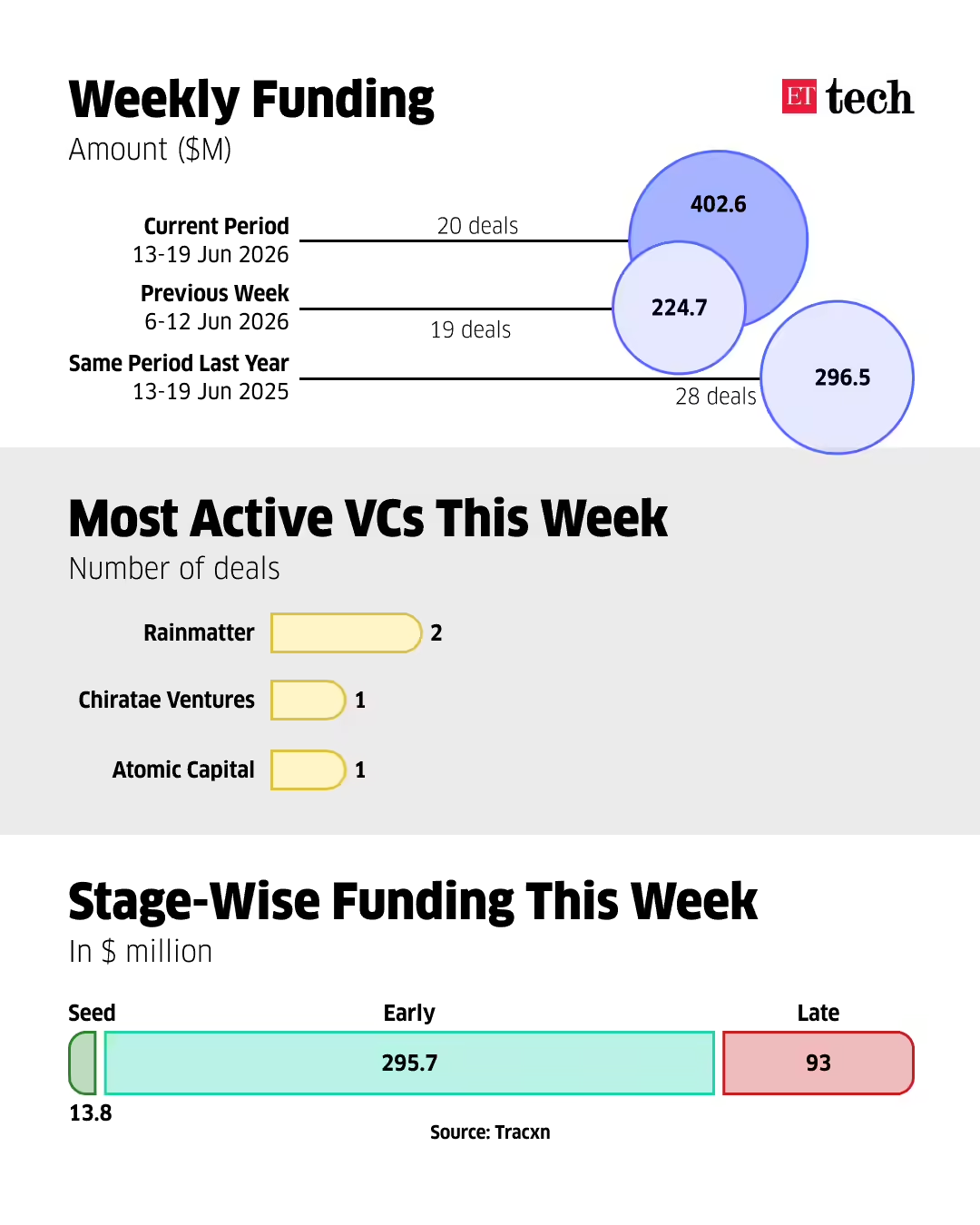
Rainmatter, Zerodha's investment arm focused on climate and health startups, was the most active investor. The fund backed Karo Sambhav, a circular economy startup working on e-waste mineral recovery, and Lissun, a mental health platform. Chiratae Ventures participated in ContraVault AI's round, while Atomic Capital invested in Speedioo.
Other major deals: solar, pets, and nutrition
SolarSquare Energy raised $53 million in a round led by B Capital. The rooftop solar startup has now raised over $100 million in total and plans to expand into new cities. Lightspeed Venture Partners, Elevation Capital, Lowercarbon Capital, and Rainmatter participated.
Pet care startup Vetic closed $40 million led by Bessemer Venture Partners. The Gurugram-based company, valued at $130-140 million post-money, will add 25 centers across major Indian cities over the next year. Greenoaks Capital, tech investor Lachy Groom, and JSW Ventures also joined.
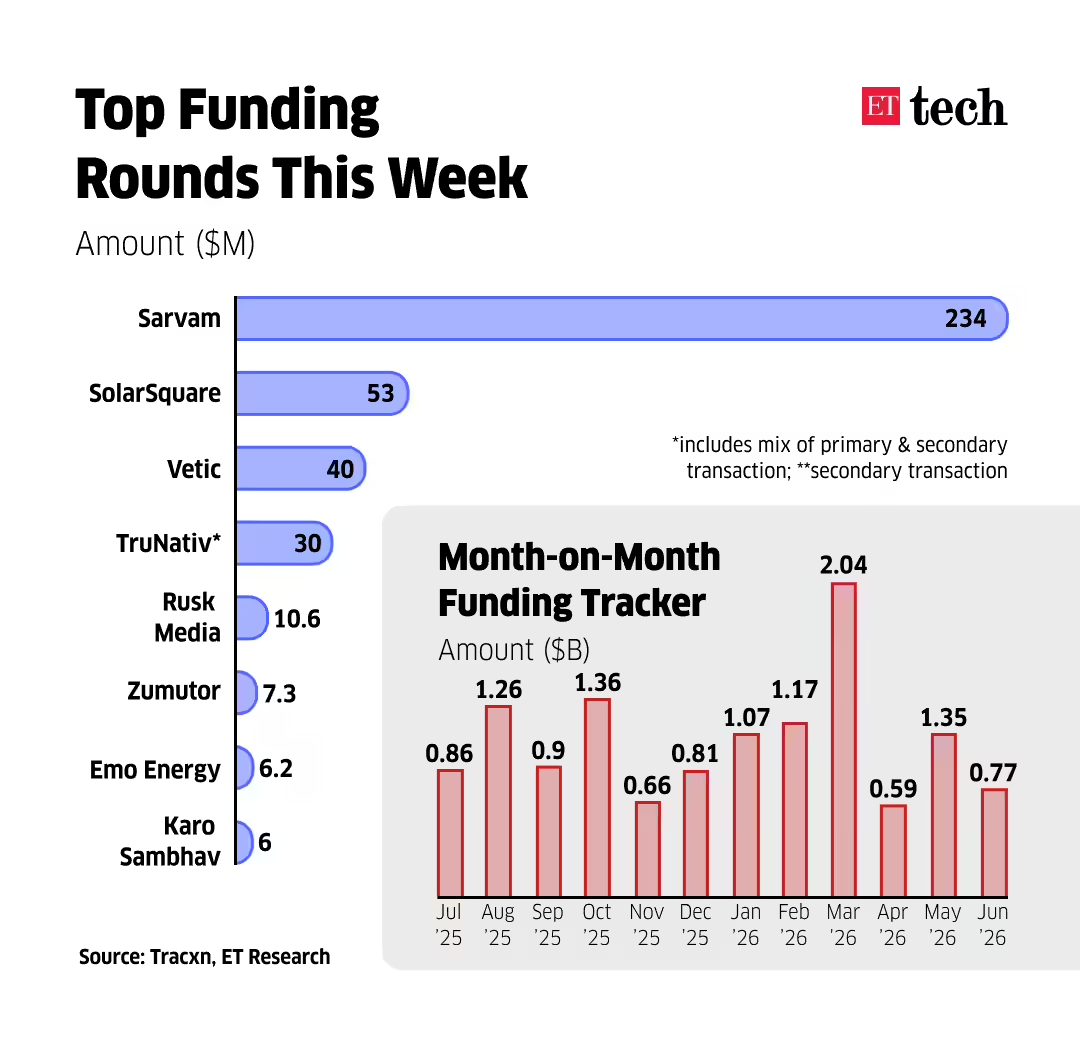
TruNativ, a clean-label nutrition brand, secured $30 million from healthcare investor OrbiMed Advisors. The round included both primary investment and secondary share sales by early investors. TruNativ will scale distribution, expand its product line, and launch a new R&D center.
Rusk Media raised Rs 100 crore in a round led by Nazara Technologies, the gaming and entertainment company. Karo Sambhav closed Rs 56 crore from Rainmatter to expand its e-waste mineral recovery operations.
What the numbers say about investor sentiment
One week of data is just one week of data. Still, the 36% year-over-year increase and the 80% week-over-week jump suggest investor confidence in Indian startups remains intact. The concentration in early-stage deals is particularly notable. VCs are not just chasing safe, proven companies. They are still willing to write checks for younger ventures with unproven business models.
The previous week saw green hydrogen startup Hygenco lead deal activity with a $105 million round. This week, it was AI. The diversity of sectors attracting capital, from clean energy to pet care to nutrition, suggests the funding environment is not narrowly focused on any single theme.
Logicity's Take
Sarvam's valuation jump to $1.5 billion makes it one of India's most valuable AI startups. But the real story is HCLTech's decision to invest. India's IT services giants have spent two decades watching Silicon Valley startups eat their lunch. This time, HCLTech is buying a seat at the table before the game is over. Expect more strategic investments from Infosys, TCS, and Wipro as generative AI reshapes enterprise software.
Frequently Asked Questions
How much did Indian startups raise in the week ending June 19, 2025?
Indian startups raised $402.6 million across 20 deals, according to Tracxn data. This was 36% higher than the same week in 2024.
What is Sarvam AI and why did it raise $234 million?
Sarvam AI builds large language models optimized for Indian languages like Hindi, Tamil, and Telugu. The company raised $234 million led by HCLTech to scale its AI development, reaching a $1.5 billion valuation.
Which investor was most active in Indian startup deals this week?
Rainmatter, Zerodha's climate and health-focused investment arm, was the most active investor, backing Karo Sambhav and Lissun.
What percentage of funding went to early-stage startups?
Early-stage deals captured 73.5% of total capital raised, while late-stage transactions accounted for 23.1% and seed-stage startups received 3.4%.
Which sectors attracted the most startup funding in India this week?
AI led with Sarvam's mega-round, followed by clean energy (SolarSquare), pet care (Vetic), and nutrition (TruNativ).
Need Help Implementing This?
If you're a startup founder looking to understand investor trends or an enterprise evaluating AI partnerships, Logicity can help you make sense of the market. Reach out through our contact page for analysis and advisory services.
Source: Tech-Economic Times / ET
Huma Shazia
Senior AI & Tech Writer
Produced with AI assistance and reviewed by the Logicity editorial team. Learn more in our Editorial Policy.




