Key Takeaways
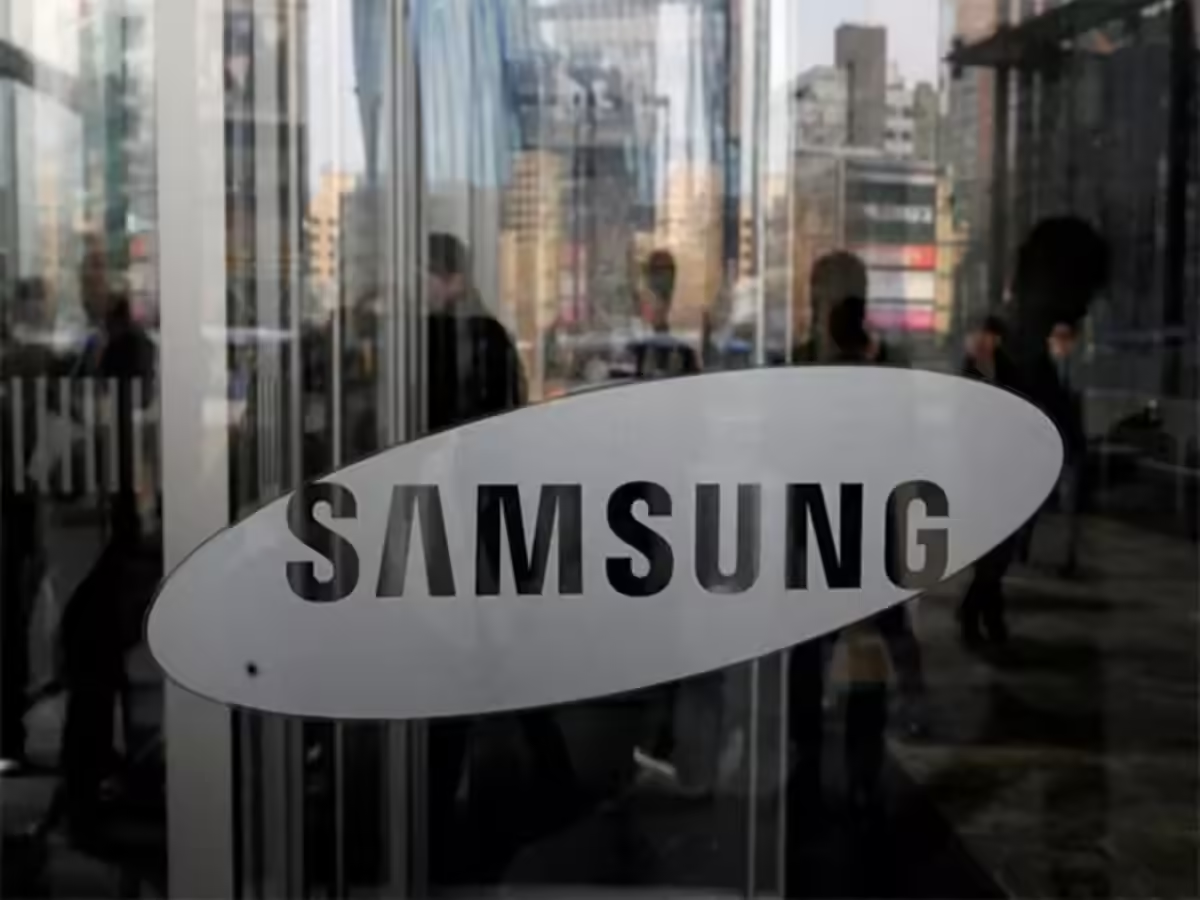
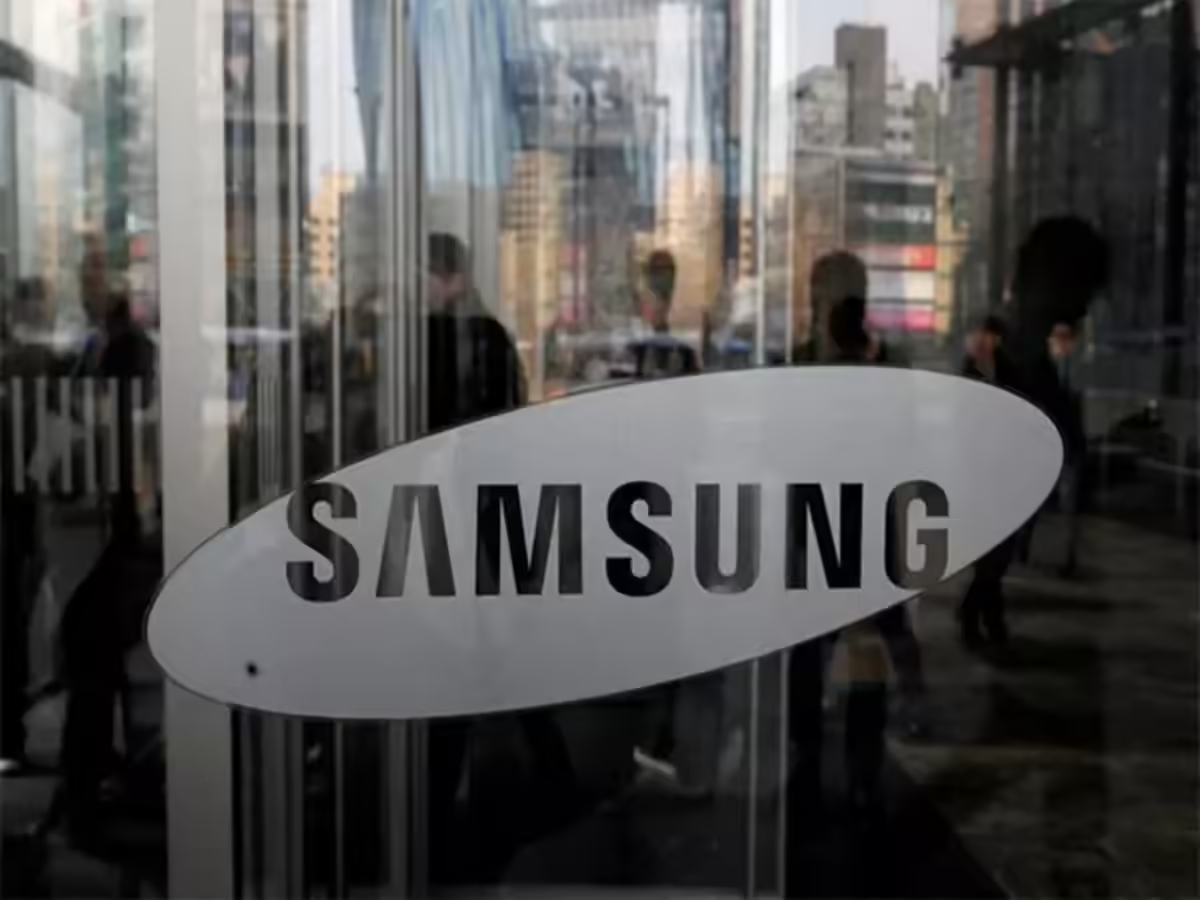
- Samsung now holds 40% of the global automotive memory market, up from 35% in 2024
- Micron fell from 40% to 36% market share, losing its longtime leadership position
- The automotive memory market is projected to reach $139 billion by 2031
A Market Leadership Change Years in the Making
Samsung Electronics has claimed the top position in the global automotive memory chip market. According to data from S&P Global Mobility reported by The Korea Herald, Samsung's market share rose to 40% in 2025, up from 35% the previous year. Micron Technology, which held the lead for decades, fell to 36% from 40% over the same period.
The shift marks a significant change in an industry where relationships and certifications take years to build. Automotive memory chips must meet strict reliability standards. Cars remain in production and require maintenance for years, sometimes decades. Suppliers need to guarantee parts availability across these long cycles.
Why Micron Held the Lead for So Long
Micron's dominance in automotive memory goes back to the early 1990s. The company built its position by focusing on the specific needs of carmakers: extreme reliability, long product lifecycles, and consistent supply. A separate report from the Korea Automotive Technology Institute showed just how dominant Micron was. In 2024, it held 51.7% of the automotive memory market compared to Samsung's 16.8% and SK hynix's 3.0%.
Korean memory makers took a different path. Samsung and SK hynix built their businesses around high-capacity chips for servers and mobile devices. These markets offered higher volumes and faster product cycles. Automotive was a niche. Lower volume. Longer qualification periods. Tighter margins.
What Changed: Software-Defined Vehicles
Modern cars need more memory and more sophisticated memory. In-vehicle infotainment systems run complex operating systems. Advanced driver assistance requires real-time data processing. Level 3 and above autonomous driving systems need even more. These applications demand high-capacity, high-speed memory chips like LPDDR5X and UFS 4.0. This is where Samsung's expertise in server and mobile memory becomes relevant.
The automotive memory market itself is growing rapidly. Projections put it at $139 billion by 2031, driven by autonomous driving features and increasingly complex infotainment systems. A small market is becoming a significant one.
“We are shifting our focus to high-margin, long-term automotive partnerships to capitalize on the intelligence revolution in modern vehicles.”
— Representative, Samsung Electronics
Samsung's Position Beyond Automotive
Samsung's automotive push comes at a strategic moment. The company remains the largest player in the wider DRAM market with a 38% share in Q1 2026, according to Counterpoint Research. Global DRAM revenue hit a record $97 billion during the quarter as AI data center demand pushed up memory prices.
Automotive memory diversifies Samsung's business. While investors focus on high-bandwidth memory for AI servers, automotive offers something different: lower volume but longer relationships and more predictable revenue streams. Automotive partnerships typically span multiple vehicle generations.
The China Factor
Industry observers point to Samsung's aggressive expansion in the Chinese EV market as a key driver of this shift. China produces more electric vehicles than any other country. Its automakers, from BYD to NIO to dozens of smaller players, need memory chips. Samsung's willingness to pursue these partnerships helped it gain share quickly.
Discussion on semiconductor forums reveals a split in opinion. Some analysts view Samsung's rise as a permanent change in market structure. Others see it as potentially temporary, arguing that Micron's deep relationships with traditional automakers and its reputation for reliability create a durable advantage that market share numbers alone do not capture.
What This Means Going Forward
Automotive memory is sticky. Once a supplier qualifies for a vehicle platform, they typically supply that platform for its entire production run. Switching costs are high. This works both ways. Micron's existing relationships will continue generating revenue for years. But Samsung's new wins will do the same.
The real question is which company wins the next generation of vehicle platforms. As cars become more software-defined, the line between mobile computing and automotive computing blurs. Samsung's experience in smartphones and servers may prove more valuable than Micron's automotive heritage. Or the opposite may hold. The industry is watching.
Logicity's Take
Frequently Asked Questions
Why did Samsung overtake Micron in automotive memory?
Samsung's expertise in high-capacity, high-speed memory (LPDDR5X, UFS 4.0) aligned with automaker needs for advanced infotainment and autonomous driving systems. The company also expanded aggressively in the Chinese EV market.
What is Samsung's current automotive memory market share?
Samsung holds 40% of the global automotive memory market as of 2025, according to S&P Global Mobility data.
How big is the automotive memory chip market?
The market is projected to reach $139 billion by 2031, driven by increasing memory requirements in autonomous driving and in-vehicle infotainment systems.
Is Micron still a major player in automotive memory?
Yes. Micron still holds 36% market share and maintains deep relationships with traditional automakers. Their long-term supply agreements will continue generating revenue for years.
Need Help Implementing This?
Source: Tech-Economic Times / ET
Huma Shazia
Senior AI & Tech Writer
Produced with AI assistance and reviewed by the Logicity editorial team. Learn more in our Editorial Policy.