Key Takeaways
Samsung Galaxy Bixby Call Screening: Bixby Answers Your Phone Calls
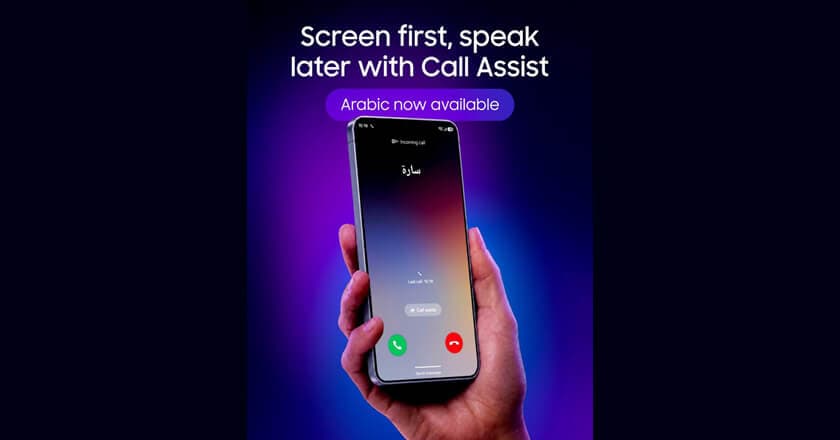
- Galaxy AI Call Screening now supports Arabic, letting users see live transcripts of why someone is calling before they answer
- The feature supports 16 languages with 23 dialect variations and is available on the Galaxy S26 series
- Call Screening records only the AI interaction portion; recording stops once the user picks up
Samsung Gulf Electronics has added Arabic language support to Galaxy AI's Call Screening feature, giving users across the GCC a way to see a live transcript of incoming calls before deciding whether to answer. The update targets a persistent annoyance in the region: unknown calls from delivery drivers, banks, telemarketers, and potential scammers that interrupt the day without warning.
Call Screening works as a gatekeeper. When a call comes in, Galaxy AI picks up on the user's behalf, asks the caller to state their purpose, and displays a real-time transcript on screen. The user can then answer, decline, or send a message. It's a practical application of on-device AI for a problem that most smartphone owners recognize immediately.
Why Arabic support matters for the region
Arabic is spoken by over 400 million people globally, and it's the primary language for most residents in the Gulf. Until now, Call Screening's language options didn't include Arabic, which limited its usefulness for a significant portion of Samsung's customer base in the region.
"With Call Screening now available in Arabic, we are giving more people the ability to take control of their calls in a language that feels natural and familiar," said Fadi Abu Shamat, Vice President and Head of the Mobile eXperience Division at Samsung Gulf Electronics. The company positions this as part of a broader localization strategy, not just translation.
Samsung claims around 50% smartphone market share in the UAE and Gulf region, so Arabic language support for Galaxy AI features affects a substantial user base. The Call Screening update brings the total supported languages to 16, with 23 options when accounting for dialect variations.
How Call Screening handles privacy
One detail worth noting: Call Screening only records the portion of the call where the AI interacts with the caller. Once the user picks up, recording stops. This addresses a reasonable concern about AI call management features storing conversation audio.
Users can activate Call Screening for all incoming calls or selectively on a per-call basis. The feature is available on the Galaxy S26 series through Settings, Call Screening, Language, where users download their preferred language pack.
What this signals for on-device AI localization
Samsung's Galaxy AI suite launched with the Galaxy S24 series in January 2024. The company has invested $14.8 billion in AI and semiconductor R&D for 2024, and reports over 400 million monthly uses of Galaxy AI features across its devices. Arabic support for Call Screening fits a pattern: rolling out AI capabilities globally, then filling in regional language gaps as the technology matures.
For product teams building AI features, the Call Screening approach offers a template. The feature solves a specific, annoying problem. It keeps the user in control. It handles privacy visibly. And localization extends reach without requiring a complete rebuild.
Logicity's Take
Call Screening is an underrated example of AI that actually reduces friction rather than adding it. Most "AI phone features" are either gimmicks or require behavior change. This one intercepts an existing annoyance and handles it. For AI Builders targeting multilingual markets, Samsung's approach is instructive: ship in major languages first, then expand support as you validate the feature. Google's Pixel Call Screen pioneered this category; Samsung's edge is device market share in specific regions like the GCC. Apple's equivalent, if it ships one, will likely follow a similar localization playbook.
Frequently Asked Questions
Which Samsung phones support Galaxy AI Call Screening in Arabic?
Call Screening with Arabic support is available on the Samsung Galaxy S26 series. Users can enable it through Settings, Call Screening, Language.
Does Call Screening record entire phone conversations?
No. Call Screening records only the initial AI interaction where the caller states their purpose. Recording stops the moment you answer the call.
How many languages does Galaxy AI Call Screening support?
Call Screening supports 16 languages with 23 options including dialect variations. Arabic is the latest addition.
Can I use Call Screening selectively instead of for all calls?
Yes. Users can choose to auto-screen all incoming calls or activate the feature on a per-call basis.
Samsung's next hardware announcements may bring additional Galaxy AI features
Need Help Implementing This?
Building AI features for multilingual audiences? Logicity covers the product decisions, localization strategies, and technical patterns that work. Subscribe for weekly analysis on AI product development.
Source: TahawulTech.com / Sandhya D'Mello
Huma Shazia
Senior AI & Tech Writer
Produced with AI assistance and reviewed by the Logicity editorial team. Learn more in our Editorial Policy.