Key Takeaways
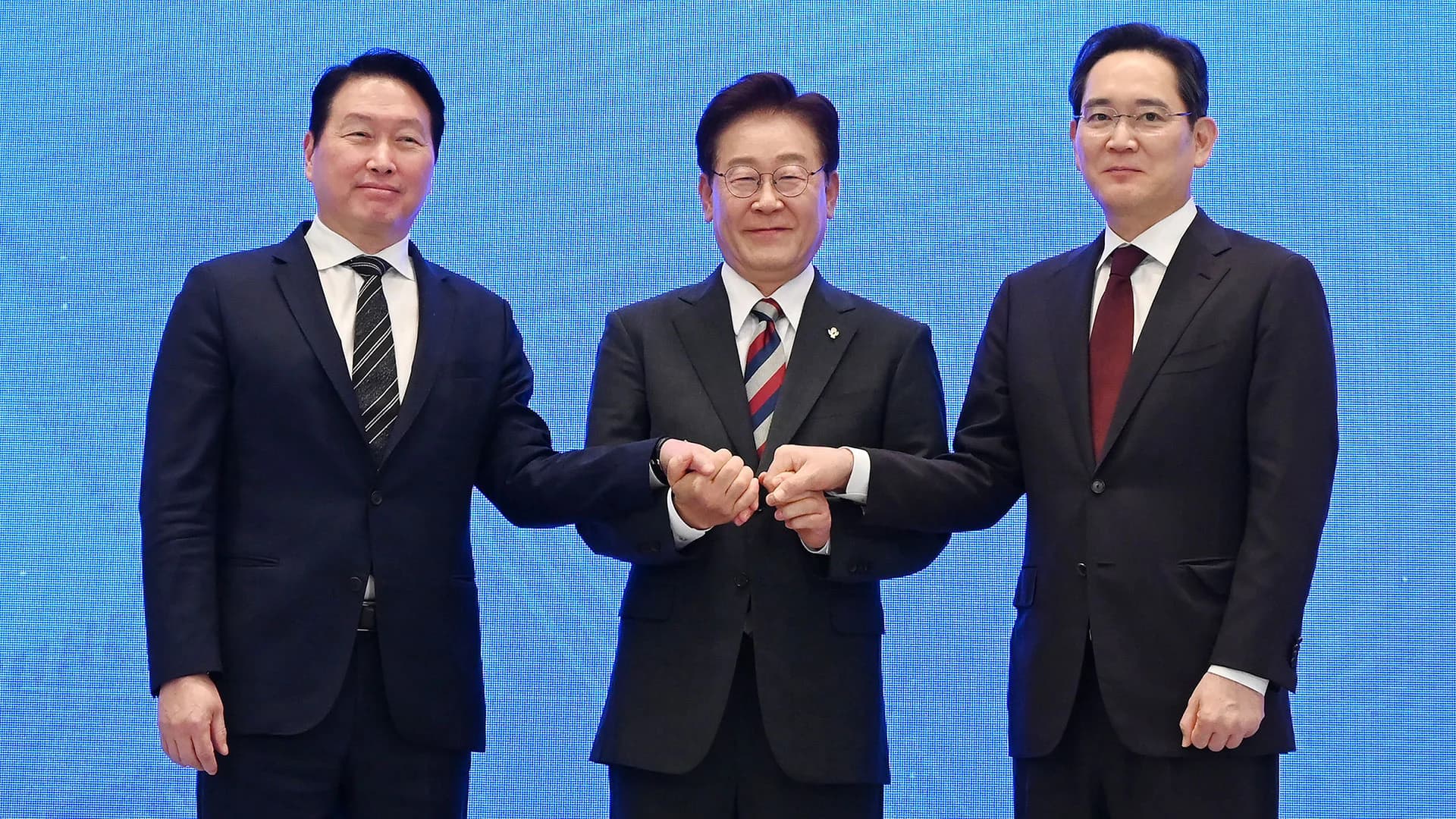
- Samsung and SK Hynix announced a combined $518 billion investment to build four new fabrication plants in South Korea's southwest region
- The two companies produce about two-thirds of the world's memory chips, making this expansion critical to global AI infrastructure supply
- SK Hynix's chairman warned the project is complex and could take nine years, based on prior fab development timelines
Samsung Electronics and SK Hynix announced Monday they will invest a combined 800 trillion won ($518 billion) to build a semiconductor manufacturing hub in South Korea's southwest region. The two companies, which together produce roughly two-thirds of the world's memory chips, will each construct two new fabrication plants as they race to meet surging demand from AI data centers and infrastructure.
South Korean President Lee Jae Myung joined both companies' chairmen for the announcement. The investment aligns with government efforts to shift economic development beyond the Seoul metropolitan area, where most of the country's semiconductor production is currently concentrated.
Why are Samsung and SK Hynix expanding now?
Both chipmakers have reported record profits in recent months. Global investment in AI data centers has driven unprecedented demand for memory chips, particularly the high-bandwidth memory (HBM) used in AI accelerators. SK Hynix supplies an estimated 90% of NVIDIA's HBM for AI GPUs, making it a critical link in the AI hardware supply chain.
Their existing manufacturing complexes in Gyeonggi Province, south of Seoul, may hit capacity sooner than expected. Government officials and industry analysts expect AI-driven demand to keep growing as the technology spreads into autonomous vehicles and industrial robots.
"We must establish the core building blocks of artificial intelligence faster than any other country," President Lee said. "Semiconductors, physical AI and AI data centers are the three pillars of our next great leap forward."
Where will the new fabs be built?
Samsung Chairman Lee Jae-yong said the company's new facilities will go up in Gwangju, a southwestern city where officials have proposed several potential sites. One option is the grounds of a military air base slated for relocation.
SK Hynix has not disclosed its exact location. Chairman Chey Tae-won described the project as "a complex, large-scale effort requiring vast sites, along with sufficient power, water and skilled workers." He noted it took nine years for SK Hynix to establish its current manufacturing cluster in Gyeonggi Province.
Neither company specified completion dates for the new fabs.
Can the region support semiconductor manufacturing?
Chip fabs are notoriously power and water intensive. Critics have questioned whether South Korea's southwest has the infrastructure to support major semiconductor production.
Government officials dismissed these concerns, pointing to the region's renewable energy capacity. Chipmakers face increasing global pressure to use cleaner electricity sources, and officials argue the southwest's renewables could give Samsung and SK Hynix an advantage in meeting sustainability commitments.
A nationwide chip strategy takes shape
The announcement fits into a broader government plan to distribute semiconductor production across the country. Officials outlined a vision where existing southeastern manufacturing hubs expand chip component and materials production, the central Chungcheong region specializes in chip packaging, and data centers spread nationwide.
The southwest region has historically lagged in economic development and lacks major industrial hubs. It also happens to be a political base for President Lee's Democratic Party, a point not lost on observers.
What does this mean for AI hardware supply chains?
The $518 billion figure makes this one of the largest semiconductor investments ever announced. For context, Samsung's 2021 commitment to U.S. chip facilities totaled around $400 billion over 20 years.
If the fabs come online as planned, they could significantly expand global memory chip capacity at a time when AI infrastructure buildout shows no signs of slowing. Companies across the AI stack, from cloud providers to model trainers, have struggled with GPU and memory availability over the past two years.
The nine-year timeline Chey referenced for SK Hynix's previous fab development, though, suggests these facilities won't ease near-term supply constraints. This is a long bet on sustained AI demand through the early 2030s.
Logicity's Take
For AI teams pricing out hardware costs, this investment is a signal that memory chip supply should loosen in the 2030s, but not before. The immediate bottleneck remains HBM availability, where SK Hynix already dominates. If you're building AI products today, this news won't change your procurement timeline. What it does suggest: the major chip producers believe the AI infrastructure boom has staying power beyond the current hype cycle. They're not hedging. Also worth watching is the renewable energy angle. As cloud providers face scrutiny over AI's energy footprint, chips manufactured with cleaner power may command premium positioning, especially in European markets with strict sustainability requirements.
Frequently Asked Questions
How much are Samsung and SK Hynix investing in AI chips?
The two companies announced a combined investment of 800 trillion won, or approximately $518 billion, to build new semiconductor fabrication plants in South Korea.
When will the new Samsung and SK Hynix fabs be completed?
Neither company specified completion dates. SK Hynix's chairman noted that their previous fab cluster took nine years to establish, suggesting a similar timeline.
Why are memory chips important for AI?
AI accelerators and GPUs require high-bandwidth memory (HBM) to process large datasets quickly. Samsung and SK Hynix produce about two-thirds of global memory chips, making them critical to AI infrastructure.
Where will Samsung's new chip fabs be located?
Samsung announced plans to build in Gwangju, a city in South Korea's southwest region. Potential sites include the grounds of a military air base that is being relocated.
Another example of major AI infrastructure commitments shaping procurement and policy
Need Help Implementing This?
Logicity helps AI product teams track infrastructure developments that affect hardware costs and availability. Get in touch for briefings on semiconductor supply trends and what they mean for your roadmap.
Source: Fast Company / Associated Press
Huma Shazia
Senior AI & Tech Writer
Produced with AI assistance and reviewed by the Logicity editorial team. Learn more in our Editorial Policy.