Key Takeaways
- Rocket AI is negotiating a $40-50 million round at a $500 million valuation, up from $60 million less than a year ago
- 360 ONE Asset is expected to lead with $20-25 million; Salesforce Ventures, Accel, and Together Fund backed the previous round
- The company pivoted from developer workflow tool DhiWise to an AI-native app builder and claims $4.5 million ARR
Rocket, a Surat-based AI startup that lets users build apps from plain-language prompts, is in talks to raise $40-50 million at a valuation of roughly $500 million. 360 ONE Asset is expected to lead the round with $20-25 million, according to sources familiar with the discussions.
If the deal closes on current terms, it would mark an eightfold valuation jump in less than a year. Rocket raised $15 million last year from Salesforce Ventures, Accel, and Together Fund at around $60 million.
From DhiWise to Rocket: the pivot that changed everything
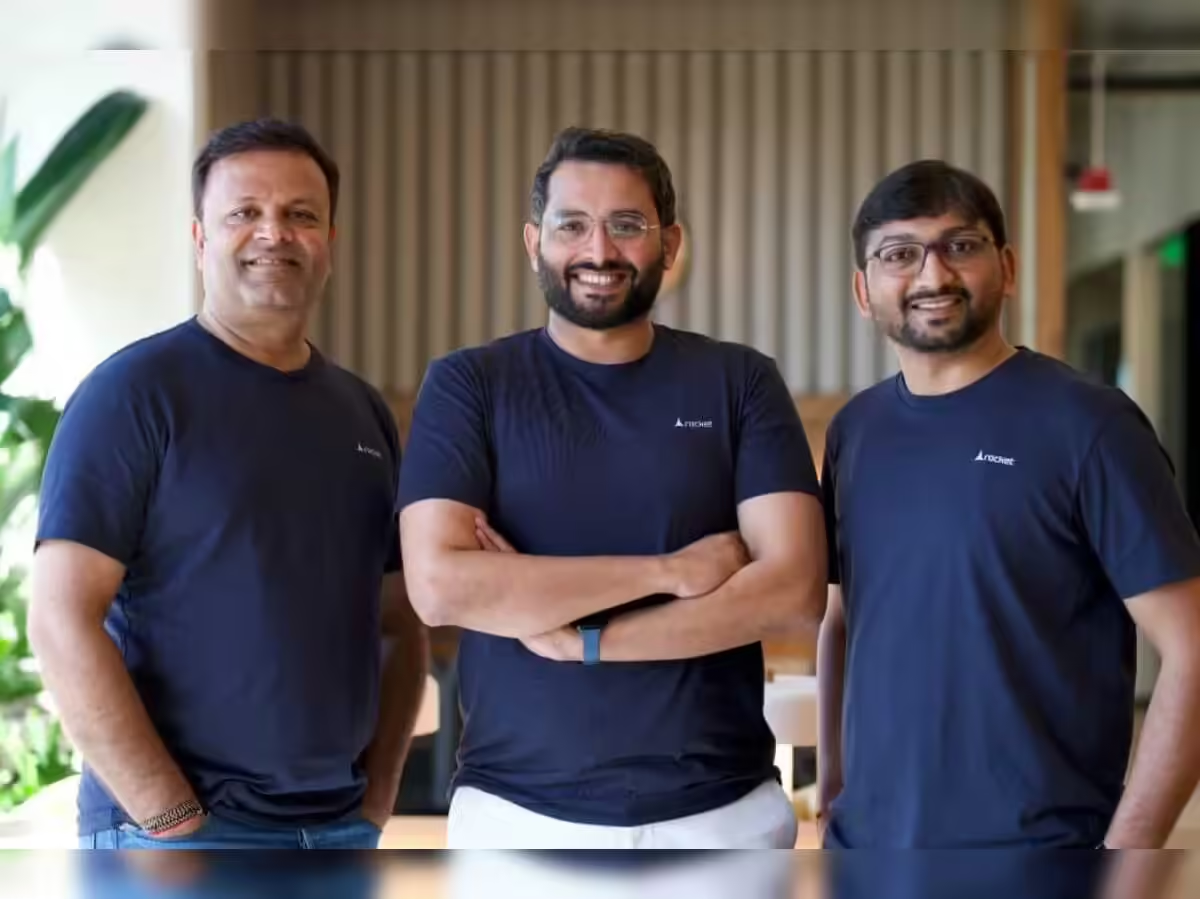
Founded in 2021 by Vishal Virani, Deepak Dhanak, and Rahul Shingala, the company started life as DhiWise, a developer workflow automation platform that converted designs into production-ready code. The pivot came later. Rocket is now an AI-native product targeting startups, product managers, agencies, and enterprise teams who want to build applications using text prompts rather than traditional coding.
The strategy appears to be working, at least by early traction metrics. When Rocket announced its $15 million round last year, it claimed 400,000 users, including over 10,000 paid subscribers across 180 countries. It also reported reaching $4.5 million in annual recurring revenue within months of launch.
What will Rocket do with the new capital?
Sources say the fresh funds will go toward three priorities: deepening AI capabilities, expanding product development, and scaling global go-to-market operations. Rocket declined to comment on the matter. 360 ONE also declined to respond.
The investment fits 360 ONE's broader push into new-age technology. The investment firm has been building out its venture and private equity platform with a focus on generative AI, frontier technology, fintech infrastructure, and consumer tech.
A crowded market with global heavyweights
AI coding and app-building tools have become one of the hottest segments in enterprise software. Rocket competes with global players like Cursor, Lovable, Bolt, and Replit, all of which have attracted large funding rounds at premium valuations.
One source captured the core challenge: "The key test will be whether it can convert early adoption into durable revenue. The AI app-building market is growing rapidly, but it is also crowded and fast-moving, with competition from specialist startups as well as large model companies."
Investors appear to be betting that Rocket's India-based engineering team and global user traction can carve out a position in the production-grade app-building segment. Whether that bet pays off depends on execution over the next 12-18 months.
What does this signal about Indian AI funding?
The Rocket deal comes as investors grow more selective but write larger checks for companies showing early global traction. Indian startups raised $3.34 billion across 608 early-stage and seed rounds in the first half of 2026. Compare that to $2.96 billion across 1,055 rounds in the same period last year. Fewer deals, but bigger ones.
Sarvam AI recently became a unicorn in a $234 million funding round led by HCLTech. Rocket's potential $500 million valuation, while not unicorn territory, would place it among the most valuable AI startups to emerge from a Tier-2 Indian city.
Logicity's Take
An 8x valuation jump in under a year is aggressive, but Rocket's numbers suggest it's not purely hype. $4.5 million ARR and 10,000 paid users across 180 countries is real traction, even if modest compared to Replit's reported $50M+ ARR or Cursor's explosive growth. The bigger question is differentiation. Cursor has nailed developer workflows, Bolt targets rapid prototyping, and Replit owns the browser-based IDE space. Rocket's edge seems to be price positioning and emerging-market distribution. For CTOs evaluating these tools, Rocket may be worth testing if you need production-grade outputs at lower price points than Western competitors.
Frequently Asked Questions
What is Rocket AI and what does it do?
Rocket is a Surat-based AI startup that allows users to build applications using plain-language text prompts. It pivoted from its earlier product, DhiWise, which was a developer workflow automation tool.
How much is Rocket AI raising and at what valuation?
Rocket is in talks to raise $40-50 million at a valuation of approximately $500 million, with 360 ONE Asset expected to lead the round with $20-25 million.
Who are Rocket AI's competitors?
Rocket competes with global AI coding and app-building tools including Cursor, Lovable, Bolt, and Replit, all of which have raised significant funding.
Who founded Rocket AI?
Rocket was founded in 2021 by Vishal Virani, Deepak Dhanak, and Rahul Shingala.
What is Rocket AI's current revenue?
The company reported $4.5 million in annual recurring revenue shortly after pivoting to the Rocket product, along with over 10,000 paid subscribers.
Need Help Implementing This?
Evaluating AI app-building tools for your team? Logicity can help you compare platforms and identify the right fit for your development workflow. Contact us for a personalized assessment.
Source: Tech-Economic Times / ET
Huma Shazia
Senior AI & Tech Writer
Produced with AI assistance and reviewed by the Logicity editorial team. Learn more in our Editorial Policy.