Key Takeaways

- Rippling cofounder Prasanna Sankar has launched Vorflux, an AI autopilot for software engineering, with $15 million in seed funding
- Vorflux aims to automate the entire software development cycle, not just code generation like existing copilot tools
- Y Combinator, Peak XV Partners, and angels including Parker Conrad and Balaji Srinivasan backed the round
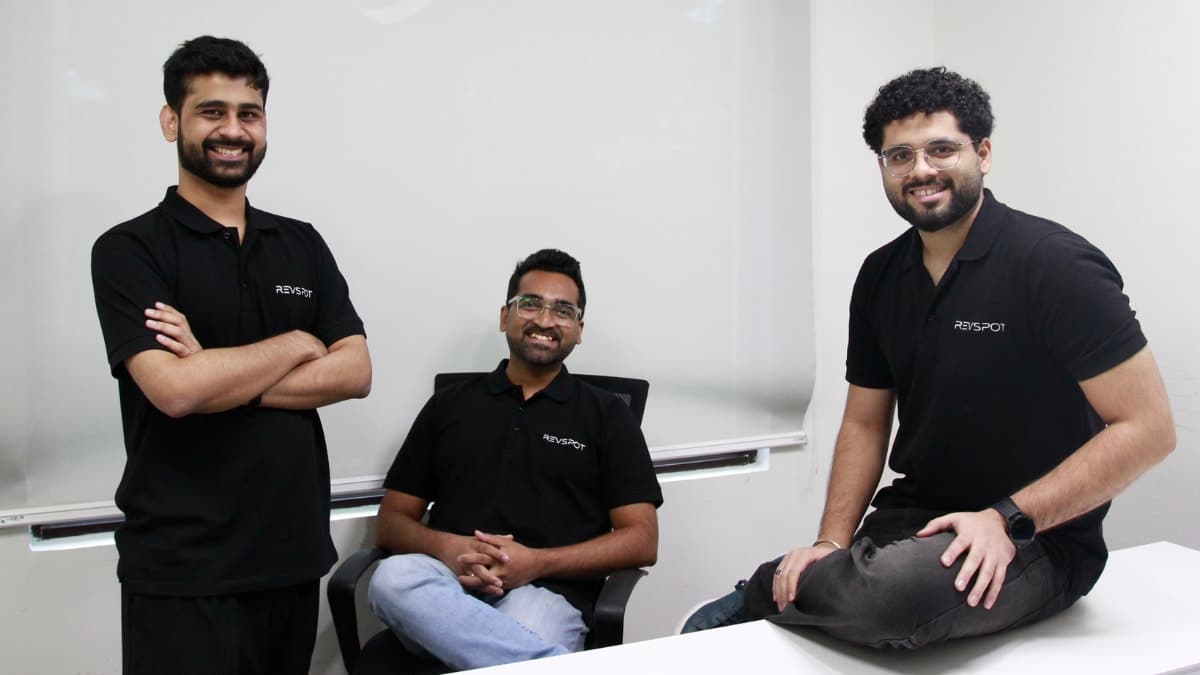
Prasanna Sankar, who cofounded $14 billion HR platform Rippling, has launched his second major startup. Vorflux, which Sankar calls his "high-octane Ferrari," raised $15 million in seed funding to build what he describes as an autopilot for software engineering. The company wants to automate the full development cycle, not just generate code snippets.
Y Combinator and Peak XV Partners (formerly Sequoia India) led the round. Notable angels joined: Parker Conrad, Sankar's cofounder at Rippling; Immad Akhund; and Balaji Srinivasan. For a seed round, the investor list reads like a who's who of the founder-investor network in Silicon Valley and India.
What separates Vorflux from existing AI coding tools?
Sankar's pitch is direct. Every AI coding tool on the market today, he argues, forces developers to stay in the pilot seat. GitHub Copilot, Cursor, Replit's Ghostwriter: they suggest code, autocomplete functions, even generate entire files. But the developer still approves every line. Still steers. Still decides when to commit.
“Every AI coding tool still makes you fly the plane. That's the copilot model: you stay in the seat, approving every turn. The models quietly got good enough to fly the whole route, but the tools never caught up. So we built the autopilot.”
— Prasanna Sankar, Vorflux Founder & CEO
Vorflux's bet: the underlying models (GPT-4, Claude, Gemini) have reached a capability threshold where they can handle end-to-end workflows. The bottleneck isn't the AI's code generation. It's the orchestration layer, the tooling that connects an AI to version control, CI/CD pipelines, testing frameworks, and deployment. Vorflux wants to own that orchestration.
The crowded AI coding market
Vorflux enters a space packed with well-funded competitors. GitHub Copilot, backed by Microsoft, has over a million paying users. Amazon's CodeWhisperer integrates tightly with AWS. Startups like Codeium and Tabnine serve millions of developers with free tiers. Replit has raised hundreds of millions to build a browser-based IDE with AI woven in.
Most of these tools focus on the same problem: making individual developers faster at writing code. Vorflux's differentiation hinges on scope. Rather than helping a developer write a function, Sankar wants to automate the entire workflow from ticket to deployment. If that sounds ambitious, it's worth noting Sankar already scaled one ambitious product to a $14 billion valuation.
Sankar's track record at Rippling
Sankar cofounded Rippling in 2016 with Parker Conrad. The company built a unified platform for HR, payroll, IT, and device management, competing with Workday, Gusto, and dozens of point solutions. Rippling raised over $1.2 billion in total funding and hit a $14 billion valuation. Conrad remains CEO; Sankar departed to start Vorflux.
The fact that Conrad personally invested in Vorflux suggests the split was amicable. It also suggests Conrad sees something in the idea. Angel investments from former cofounders aren't automatic; they're signals.
What Vorflux needs to prove
Full automation of software development is a bold claim. The skeptic's case: code generation is the easy part. The hard part is understanding requirements, navigating ambiguity, handling edge cases, debugging production issues, and coordinating with other humans. These are problems that require judgment, context, and often live conversation.
Vorflux will need to demonstrate that its autopilot can handle real-world complexity without creating more work for developers. If engineers spend as much time reviewing and fixing AI-generated code as they would writing it themselves, the value proposition collapses.
The company will also need to integrate with existing toolchains. Engineering teams use Asana, ClickUp, or Monday.com for project management. They run CI/CD on GitHub Actions, GitLab, or CircleCI. They deploy to AWS, GCP, or Vercel. Any autopilot that can't plug into these systems won't get far.
Disclosure
Some links in this post are affiliate links — Logicity earns a commission if you sign up, at no extra cost to you. We only link products we have used or actively recommend.
Logicity's Take
Vorflux's "autopilot vs. copilot" framing is clever marketing, but the real test is execution. The AI coding market splits into two tiers: tools that help developers write code faster (GitHub Copilot at $19/month, Codeium's free tier) and tools that aim to replace chunks of the development process entirely (Devin, Magic AI). Vorflux is betting on the second category, where no one has proven product-market fit at scale. Sankar's Rippling exit gives him runway and credibility, but $15 million is a small seed for infrastructure-level ambition. Watch whether they ship a public beta in the next six months or stay in stealth while burning cash on research.
Frequently asked questions
Frequently Asked Questions
What is Vorflux?
Vorflux is a startup building an AI autopilot for software engineering. Founded by Rippling cofounder Prasanna Sankar, it aims to automate the entire software development cycle rather than just generating code.
How much funding did Vorflux raise?
Vorflux raised $15 million in seed funding from Y Combinator, Peak XV Partners, and angel investors including Parker Conrad and Balaji Srinivasan.
How is Vorflux different from GitHub Copilot?
GitHub Copilot and similar tools assist developers by suggesting code while humans remain in control. Vorflux aims to automate entire workflows from task assignment to deployment, reducing the need for constant human approval.
Who is Prasanna Sankar?
Prasanna Sankar is a serial entrepreneur who cofounded Rippling in 2016 alongside Parker Conrad. Rippling reached a $14 billion valuation before Sankar departed to launch Vorflux.
When will Vorflux be available?
Vorflux has not announced a public release date. The company is in the early seed stage and will likely need time to develop its product before launching to users.
Related look at how enterprises are managing AI coding tools
Need Help Implementing This?
Building with AI coding tools or evaluating options for your engineering team? Reach out to Logicity's consulting partners for guidance on integrating AI into your development workflow.
Source: Tech-Economic Times / ET
Huma Shazia
Senior AI & Tech Writer
Produced with AI assistance and reviewed by the Logicity editorial team. Learn more in our Editorial Policy.