Key Takeaways
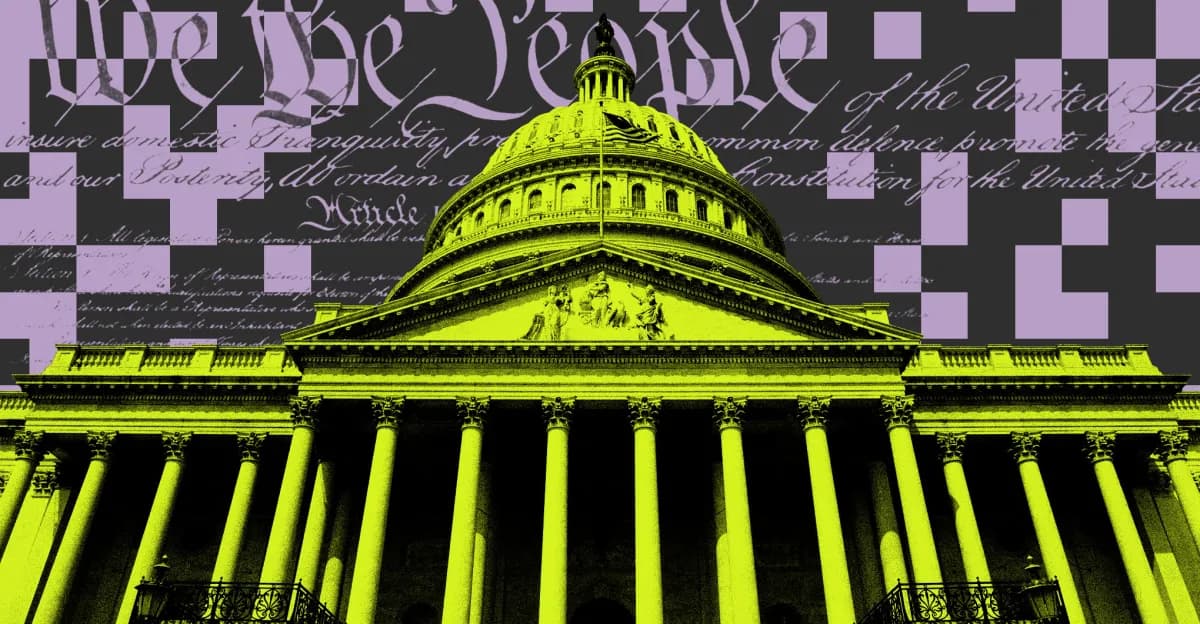
- Screenshots show Claude AI reference in Rep. Luna's NDAA amendment summary
- Luna initially said staff 'didn't edit' AI output, then clarified it was only for spellcheck
- House Legislative Council is prohibited from using AI to draft bill text
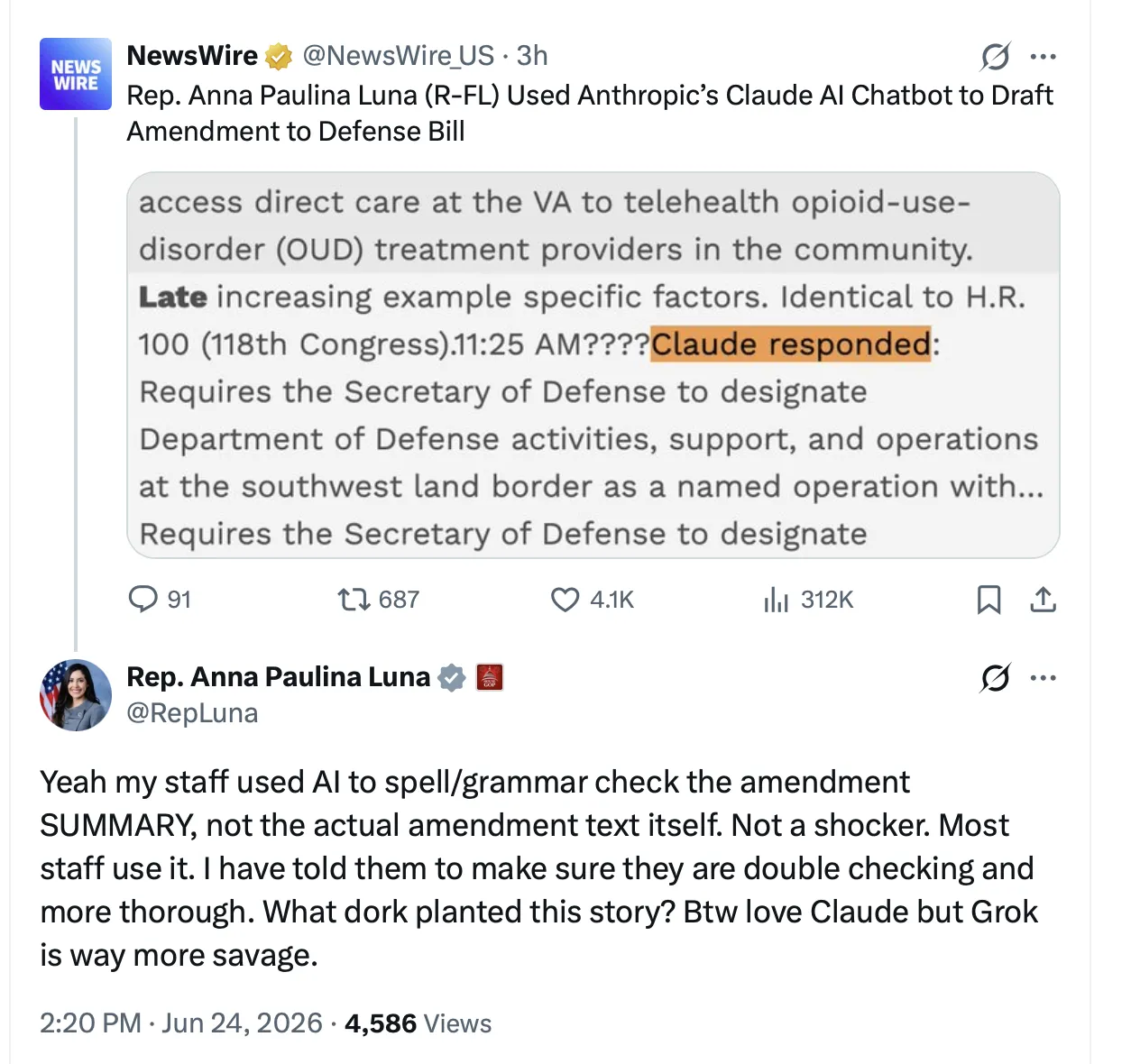
Rep. Anna Paulina Luna (R-FL) is walking back what appeared to be an admission that her staff used Claude AI to write a defense bill amendment. Screenshots circulating on X show what looks like AI metadata in a summary for a 2027 National Defense Authorization Act amendment, with text reading "Claude responded" before describing the bill's contents.
Luna's response evolved over several posts. Her initial statement seemed to confirm AI involvement in the amendment text itself: "staff used AI to correct a draft text and didn't edit." She added that most staff use the technology and she'd told them to be "more thorough."
What did Luna actually say about AI drafting?
After users on X began speculating that her office was using AI to write legislation, Luna edited her response. The new version draws a sharper line between bill text and summaries.
"Yeah my staff used AI to spell/grammar check the amendment SUMMARY, not the actual amendment text itself," her edited post now reads. She followed up with a more emphatic denial.
"FYI NO Legislation is ever drafted with AI," Luna wrote. "All bill text from the House comes from the House Legislative Council which is prohibited from using AI. The screenshot you're referencing is an AI summary of the bill that's also used for spellcheck, cmon man."
Why the distinction matters
The gap between "spellcheck on a summary" and "drafting bill text" is significant. The House Legislative Council, the nonpartisan office that writes actual legislative language, prohibits AI use. Amendment summaries, which explain a bill's purpose in plain language, sit outside that process.
But Luna's first response muddied the waters. Saying staff "didn't edit" AI output sounds like more than spellcheck. The walkback raises a question: was the original statement careless, or was the clarification damage control?
The incident arrives as AI tools become routine in professional settings. A 2024 Politico survey found one in four congressional staffers admitted to using AI tools for work tasks. Microsoft's Work Trend Index that year reported 91% of knowledge workers had used generative AI.
A pattern of AI artifacts slipping through
Luna's office isn't the first to leave AI fingerprints on official documents. Over the past few years, judges have caught lawyers submitting legal filings filled with fabricated citations generated by AI chatbots. The consequences ranged from sanctions to disbarment threats.
Legislators have been more forthcoming in some cases. Arizona state representative Alexander Kolodin told The Verge he's used ChatGPT to write state-level legislation. In Brazil, city officials unknowingly approved an ordinance written with ChatGPT, only learning of the AI involvement afterward.
The NDAA is not a minor piece of legislation. It's the annual must-pass bill that sets policy and spending priorities for the Department of Defense. For fiscal year 2024, that budget totaled $886 billion. Even if AI touched only a summary, the optics matter.
What rules govern AI in Congress?
Luna pointed to the House Legislative Council's AI prohibition as the guardrail. That office drafts the precise legal language of bills and amendments. Staff in individual offices handle summaries, talking points, and constituent communications, areas where AI use has no formal ban.
This leaves a gray zone. If staffers use Claude or ChatGPT to draft summaries, press releases, or even preliminary amendment concepts before sending them to Legislative Council, no rule stops them. The question is whether voters care about that distinction.
Logicity's Take
Luna's shifting explanations created the story more than the AI use itself. Staffers using Claude to polish summaries is unremarkable in 2026. The problem was the initial "didn't edit" comment, which sounded like rubber-stamping AI output. If offices want to use these tools without controversy, they need a clear policy and a consistent message. The technology isn't going away, but neither are screenshots.
Frequently Asked Questions
Is AI allowed in drafting U.S. legislation?
The House Legislative Council, which writes formal bill text, prohibits AI use. No such ban exists for staff tasks like summaries or communications.
What AI tool was referenced in Rep. Luna's amendment?
Screenshots show a reference to Claude, Anthropic's AI assistant, in the amendment summary metadata.
Did Rep. Luna admit to using AI for legislation?
Her initial response implied AI involvement in draft text, but she later clarified the tool was used only for spellcheck on a summary, not the bill itself.
Have other lawmakers used AI to write bills?
Yes. Arizona state representative Alexander Kolodin has publicly stated he used ChatGPT for state legislation. Brazilian officials approved an AI-written ordinance without knowing its origin.
How AI assistants are evolving to understand user goals
Need Help Implementing This?
Want guidance on AI policy for your organization or legislative office? Contact Logicity's consulting team to develop clear usage guidelines before the next screenshot surfaces.
Huma Shazia
Senior AI & Tech Writer
Produced with AI assistance and reviewed by the Logicity editorial team. Learn more in our Editorial Policy.