Key Takeaways
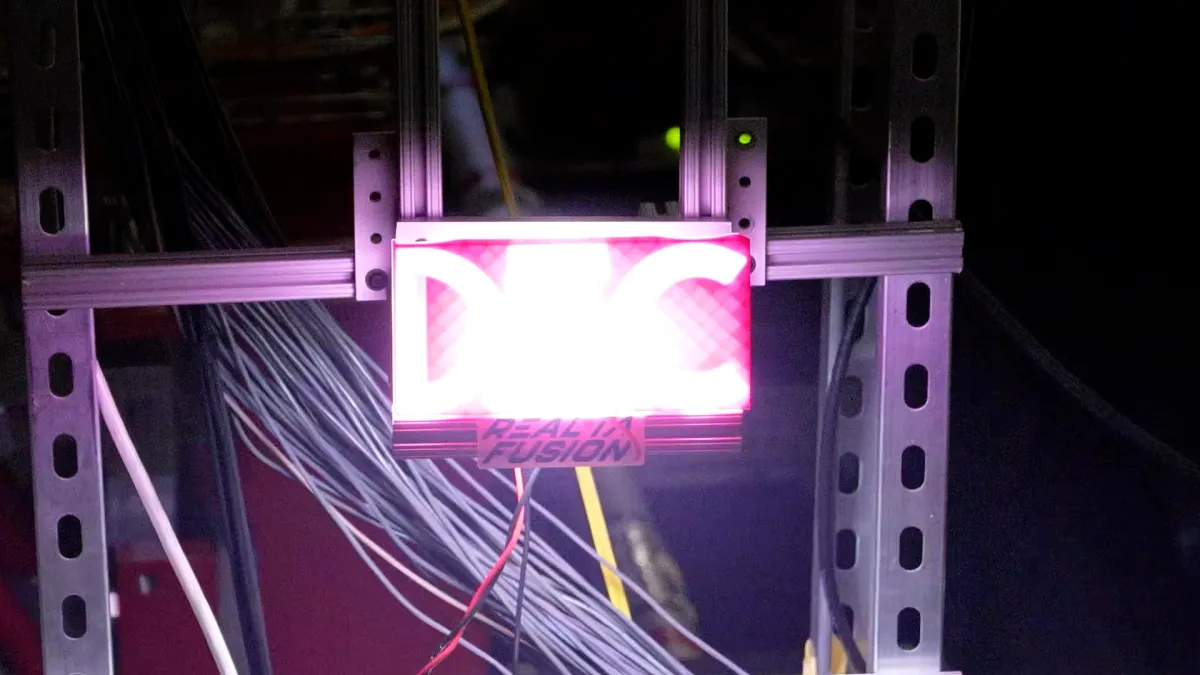
- Realta Fusion says it powered lightbulbs using electricity harvested directly from its WHAM fusion device on June 19
- Direct energy conversion could hit 90% efficiency versus 33% for traditional steam turbines
- The approach could boost commercial fusion plant output by 20-30% according to the company
Realta Fusion claims it has generated electricity directly from a fusion reaction, bypassing the steam turbines that every existing nuclear plant relies on. The Wisconsin startup says its June 19 experiment powered lightbulbs using electricity harvested straight from its WHAM demonstration reactor. If the claim holds, it marks a significant step toward making fusion power economically viable.
"We can take power from a plasma," CEO Kieran Furlong told TechCrunch. The company believes it is the first private fusion venture to publicly demonstrate the feat.
Why direct conversion changes fusion economics
Every fusion startup faces the same fundamental problem: their reactors must produce more energy than they consume. The 2022 breakthrough at Lawrence Livermore's National Ignition Facility proved this is physically possible. Now the race is on to prove it is profitable.
Traditional power plants, including fission reactors, convert heat to steam, then spin turbines to generate electricity. That process tops out around 33% efficiency. Furlong estimates direct energy conversion could hit 90%, meaning the reactor captures nearly all the potential energy from the reaction as usable electricity.
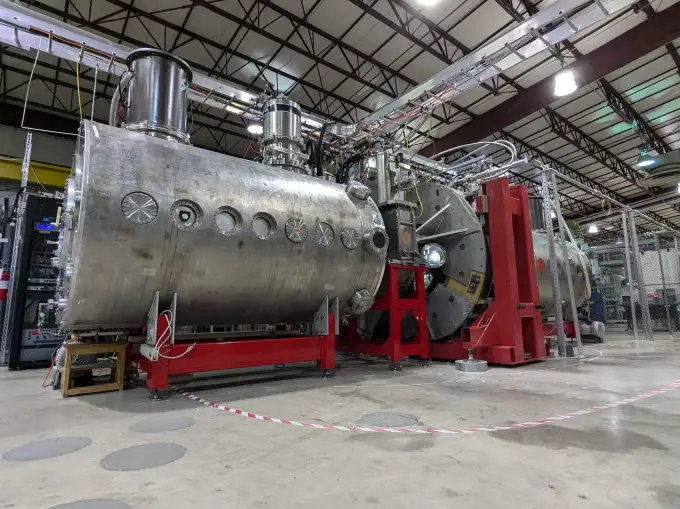
The math matters. About 20% of the energy from deuterium-tritium fusion reactions comes in the form of charged helium nuclei called alpha particles. Realta attached a prototype electricity converter to the end of its WHAM reactor and harvested enough input power to generate multiple amps at 100 volts. That lit a few lightbulbs. On a commercial scale, Furlong says, the same principle could boost total plant output by 20-30%.
How the technology works
Realta builds magnetic mirror reactors, a simpler and more compact design than the tokamak approach favored by most competitors. The mirror configuration allows charged particles to escape along predictable paths, where converters can harvest them directly.
The June 19 test used WHAM (Wisconsin HTS Axisymmetric Mirror), a demonstration device built to validate this approach. An important caveat: WHAM does not yet run on deuterium-tritium fuel. The test harvested input power, not alpha particles. That distinction matters because the commercial case depends on capturing alpha particles from D-T reactions.
"You're basically able to recirculate the electricity," Furlong said. The plan is to use the harvested power to heat the plasma itself, reducing the external energy the reactor needs. "Spinning a flywheel of electricity, if you like, is very beneficial."
Realta is not alone in this bet
Helion, the fusion startup backed by OpenAI's Sam Altman, has made direct energy conversion central to its strategy. The company has not demonstrated the approach publicly. Commonwealth Fusion Systems, TAE Technologies, and other well-funded competitors are pursuing different paths, mostly relying on conventional thermal conversion.
Realta raised $36 million in a Series A led by Future Ventures in 2025. Furlong said the company is currently raising a new round. The fusion sector pulled in over $7 billion in private investment through 2023, according to the Fusion Industry Association, and that figure continues to grow as startups race toward commercial viability.
What remains to be proven
Lighting a few bulbs is a far cry from powering a grid. The test demonstrated the principle works. Scaling it to commercial output, running on actual D-T fuel, and sustaining the process reliably are separate engineering challenges. Furlong frames the result as showing "what's possible," not what's ready.
The efficiency claims also need independent verification. Ninety percent conversion sounds remarkable. Whether that figure holds at scale, with real-world losses and equipment degradation, is an open question.
Logicity's Take
Direct energy conversion has always been fusion's shortcut to profitability, but until now it lived mostly in theory. Realta's test is a proof of concept, not a product. The real question is whether the mirror approach can scale while maintaining those efficiency gains. Helion and Realta are both betting on direct conversion but using different plasma configurations. For decision-makers tracking energy tech, this is worth monitoring but not worth budgeting for. Commercial fusion power remains 5-10 years out at minimum, and that estimate has been stable for decades.
Frequently Asked Questions
What is direct energy conversion in fusion reactors?
Direct energy conversion captures electricity from charged particles escaping a fusion reaction, bypassing the need for steam turbines. It promises higher efficiency than thermal conversion methods.
How efficient is direct energy conversion compared to steam turbines?
Realta Fusion estimates direct conversion at 90% efficiency. Traditional steam turbines in fission reactors achieve about 33% efficiency.
Has any fusion reactor achieved net energy gain?
The National Ignition Facility demonstrated net energy gain in December 2022, proving fusion reactions can produce more power than they consume. No commercial reactor has achieved this yet.
When will commercial fusion power be available?
Most estimates place commercial fusion power 5-10 years away, though this timeline has remained largely unchanged for decades. Private startups are working to accelerate that schedule.
Need Help Implementing This?
Logicity covers emerging technology and energy trends for decision-makers. Subscribe to our newsletter for weekly analysis on the technologies shaping infrastructure and enterprise strategy.
Source: TechCrunch / Tim De Chant
Huma Shazia
Senior AI & Tech Writer
Produced with AI assistance and reviewed by the Logicity editorial team. Learn more in our Editorial Policy.




