Key Takeaways
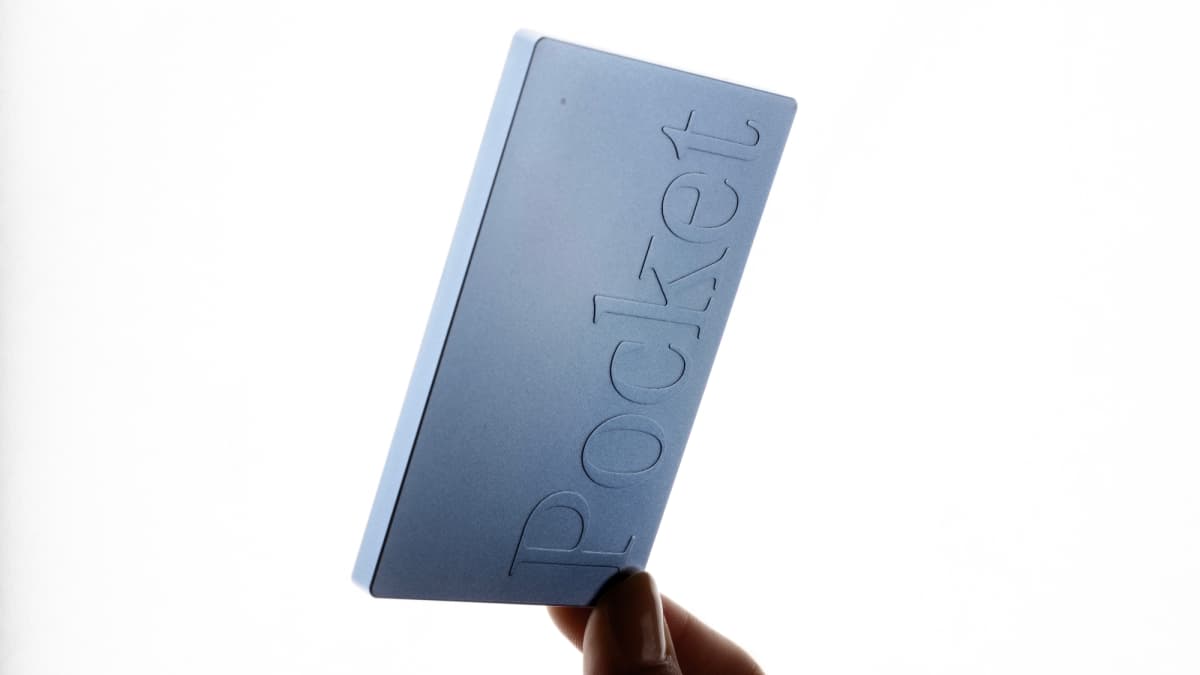
- Pocket raised $11M from Accel, Y Combinator, and ElevenLabs CEO Mati Staniszewski
- The $129 device has sold over 130,000 units since launch, with no subscription required for basic features
- Unlike failed AI gadgets from Rabbit or Humane, single-purpose meeting recorders are finding real traction
Pocket, a Y Combinator-backed startup selling a credit card-shaped AI meeting recorder, has raised $11 million from Accel, Y Combinator, and ElevenLabs CEO Mati Staniszewski. The company says it has shipped more than 130,000 units of its $129 device since launching last year, a pace that puts estimated hardware revenue north of $16 million.
The round is a vote of confidence in a narrow but growing category. While high-profile AI gadgets like Rabbit R1 and Humane's AI Pin stumbled trying to replace smartphones, companies building dedicated recording hardware have quietly found paying customers. Plaud, one of Pocket's competitors, is on track for $100 million in annual revenue. Mobvoi, Anker, and Vibe have also entered the space.

What does Pocket actually do?
The pitch is simple: stick the puck to the back of your phone, press record during a meeting, and the device captures and transcribes your conversation. Users can record offline and in the field, which is the main selling point over software-only tools that require an internet connection or calendar integration.
Basic transcription comes free with the hardware. Pocket charges $200 per year for AI-powered summaries, an assistant that can answer questions about past meetings, daily highlights, and file attachments. The companion app can also generate mind maps and reformat transcripts into different templates.
"You can record on the go, offline, and in the field, which is exactly how lawyers, salespeople, doctors, real estate agents, construction workers, and students use Pocket today," said Accel partner Cecilia Wang. "Not only are people present rather than shifting focus to take notes, but more information and insights also get captured than ever before."
Who built Pocket?
Pocket was founded by Akshay Narisetti and Gabriel Dymowski. Narisetti was a founding member of Omi, a rival note-taking startup. Dymowski previously built a blockchain-based document management company.

"We thought every meeting notetaker was built for online conversations, but nothing was geared towards real-life talk," Narisetti told TechCrunch. "AI really needs a lot of context to work better for us, and a lot of that context exists offline."
Enterprise features and integrations
For enterprise customers, Pocket offers custom workflow management, webhook support, and integrations with Google Calendar, OneDrive, Google Drive, Obsidian, Claude, and Cursor. The company also provides a model context protocol (MCP) server so its AI assistant can connect to external databases.
The goal is to automate post-meeting busywork: drafting emails, updating CRM systems like Salesforce, HubSpot, or Pipedrive, and creating action items. Pocket says it is shipping software quickly to enable these integrations.
Disclosure
Some links in this post are affiliate links — Logicity earns a commission if you sign up, at no extra cost to you. We only link products we have used or actively recommend.
How does Pocket stack up against software-only tools?
Pocket competes with a crowded field of software players. Granola, Zoom's native AI features, Fireflies, Otter, and Read AI all offer transcription and summaries for virtual meetings. The software tools are often cheaper or bundled with existing subscriptions.
Hardware makers argue their devices work where software cannot: in-person conversations, site visits, client meetings over lunch. Plaud has leaned into this positioning and is now building desktop apps to capture digital meetings too, closing the gap from the other direction.
The $129 price with no mandatory subscription is notable. Most software tools charge $10 to $20 per month, which means Pocket pays for itself in under a year for regular users. The optional $200 annual plan for AI features is competitive with Otter's Pro tier.
Logicity's Take
The 130,000 units sold is the real story here. Unlike Humane and Rabbit, which tried to reinvent the smartphone, Pocket picked a narrow job and did it well. The no-subscription model for basic transcription is smart positioning against SaaS fatigue. Still, the company will need strong enterprise adoption to justify this valuation. CRM integrations with Salesforce and HubSpot are table stakes; the question is whether Pocket can become sticky enough to justify $200/year renewals once the novelty wears off.
Frequently Asked Questions
Does Pocket require a subscription?
No. Basic recording and transcription are free with the $129 device. AI summaries, the assistant, and advanced features require a $200/year subscription.
Can Pocket record offline?
Yes. The device records locally and syncs when you reconnect to your phone. This makes it useful for field work, site visits, and areas with poor connectivity.
How does Pocket compare to Plaud?
Both are hardware-first AI recorders. Plaud is on track for $100M in annual revenue and is building desktop apps for virtual meetings. Pocket emphasizes its lower price point and no-subscription model for basic features.
What CRM integrations does Pocket support?
Pocket offers enterprise integrations via webhooks and an MCP server. It connects with Google Calendar, OneDrive, Google Drive, Obsidian, Claude, and Cursor. CRM updates can be automated as part of workflow management.
Another hardware startup raising $11M in the same funding environment
Need Help Implementing This?
Logicity offers consulting on AI productivity tools and CRM automation. Contact us at hello@logicity.in to discuss how meeting intelligence fits into your workflow.
Source: TechCrunch / Ivan Mehta
Huma Shazia
Senior AI & Tech Writer
Produced with AI assistance and reviewed by the Logicity editorial team. Learn more in our Editorial Policy.




