Key Takeaways
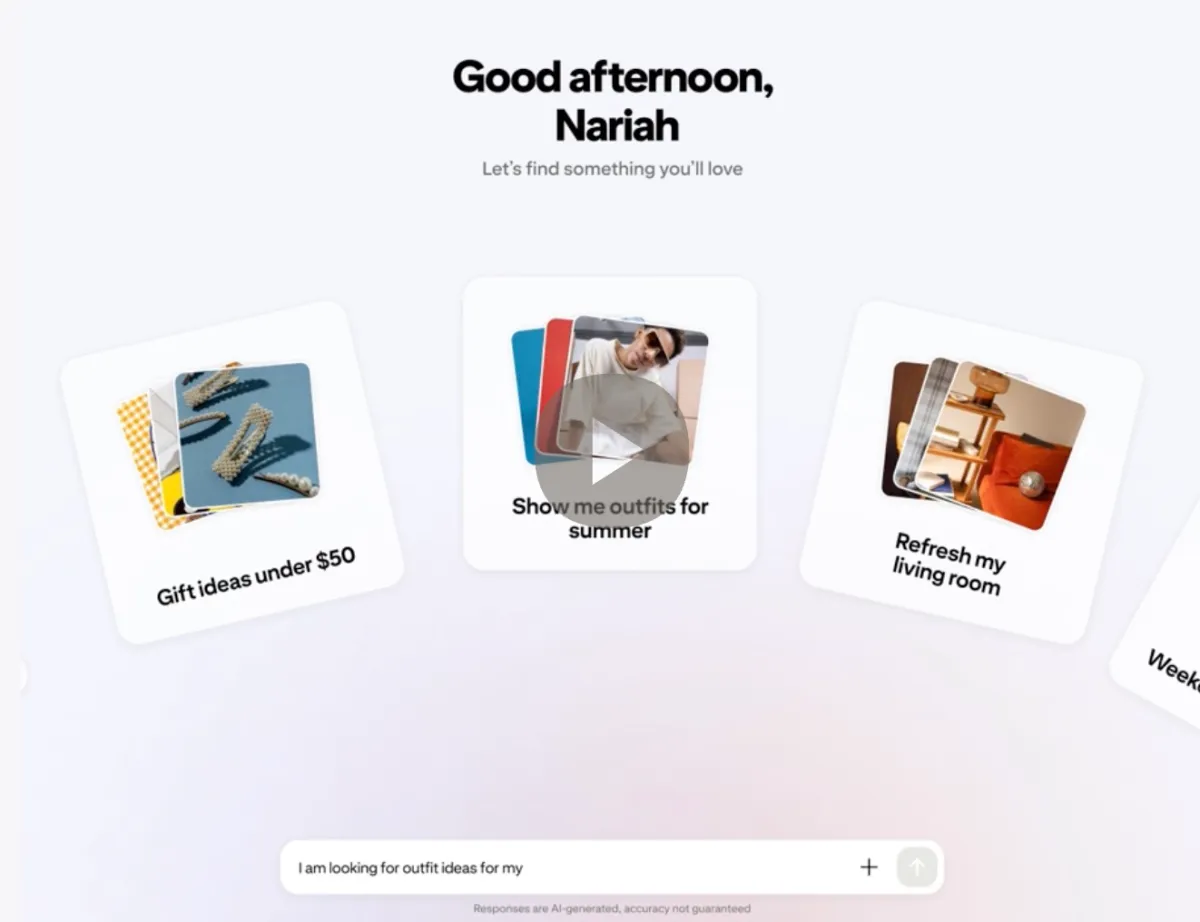
- Ask Pinterest is a standalone experimental app using conversational AI for shopping and product discovery
- The app leverages Pinterest's proprietary Taste Graph, built from 500 million monthly active users
- Pinterest also announced Model Context Protocol (MCP) to let advertisers manage campaigns via third-party AI agents
Pinterest launched Ask Pinterest on Wednesday, a standalone experimental app that brings conversational AI to product discovery and shopping. The app lets users ask natural language questions instead of typing keywords, and it pulls answers from Pinterest's Taste Graph, the company's internal dataset mapping over 500 million monthly users to their aesthetic preferences and interests.
The timing matters. Pinterest announced the app just before Cannes Lions, the advertising industry's annual conference, which this year centers on AI tools for marketers. Alongside Ask Pinterest, the company unveiled Performance+ creative, an AI model that selects which ad creative to show in real time, and Model Context Protocol (MCP), an infrastructure layer that lets advertisers manage Pinterest campaigns through third-party AI agents.
Why build a separate app instead of updating Pinterest?
Pinterest wants to experiment without breaking what already works. The main app serves a specific use case: visual browsing and pinning. Ask Pinterest tests something different, a chatbot-style interface for complex, multistep queries. Think planning a dinner party over several sessions or furnishing a room piece by piece. The app retains context across sessions, so a user can pick up where they left off.
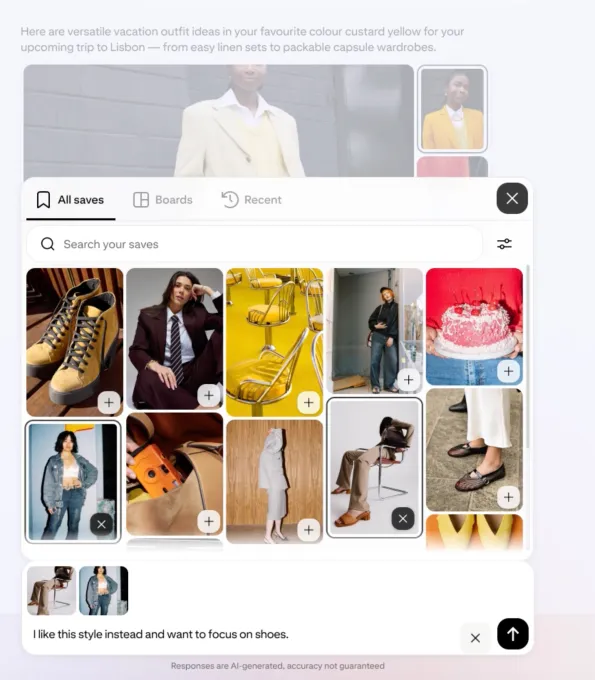
When users sign in, Ask Pinterest pulls from their saved Pins and Boards to personalize recommendations. Pinterest believes the data from this experiment will inform AI features in the flagship app later.
How Ask Pinterest competes with Google and ChatGPT
AI chatbots are eating into traditional search traffic. Google already uses AI to help shoppers find products, track prices, and check out. ChatGPT has tested agentic shopping. Meta and Shopify have their own efforts. Pinterest's edge is the Taste Graph. It's a proprietary dataset built over years, capturing not just what people buy but what they aspire to, what aesthetics they gravitate toward, what life events they're planning for.
Pinterest's chief business officer, Lee Brown, put it directly: "The future of discovery won't be driven by keywords alone. It will be shaped by context, taste, and trusted recommendations." The company sees this as its unique advantage, one that licensing deals to other AI services wouldn't preserve. Pinterest has largely trained its own AI models on its own data rather than opening up to external partners.
What the Model Context Protocol means for advertisers
The Model Context Protocol is Pinterest's answer to the fragmented tooling problem in ad tech. Advertisers increasingly use AI agents to manage campaigns across platforms. MCP creates a standardized way for those third-party tools to connect with Pinterest's ad system, monitor campaigns, and make adjustments.
Developer discussions on HackerNews are split on this. Some see MCP as a useful standard that could simplify multi-platform campaign management. Others view it as a walled-garden play, a way to lock advertisers deeper into Pinterest's ecosystem by making their AI agents dependent on Pinterest's infrastructure.
Alongside MCP, Pinterest rolled out an AI assistant in Ads Manager, currently in beta for U.S. advertisers. The Performance+ creative tool is live globally. It automatically selects which ad creative to show based on predicted performance, eliminating manual A/B testing for each impression.
Early reactions: hope and skepticism
Reddit's r/technology community sees potential. Pinterest has long struggled with SEO clutter and broken links leading to dead product pages. A conversational AI that understands context could solve that. But users worry about monetization. Will Ask Pinterest stay a clean shopping tool, or will it fill up with AI-sponsored product placements?
The app is currently available to a limited number of users via web, on both mobile and desktop. Pinterest hasn't announced a timeline for broader availability or when, if ever, these features will migrate to the main app.
Logicity's Take
Pinterest is betting that taste data beats transaction data. Google knows what you searched for. Amazon knows what you bought. Pinterest knows what you want your life to look like. If Ask Pinterest can convert that aspiration data into purchases, it becomes a high-intent advertising platform, not just a mood board. The standalone app strategy is smart: low-risk experimentation with a real exit path back to the flagship product. Whether MCP becomes an industry standard or a proprietary lock-in depends entirely on adoption.
Frequently Asked Questions
What is Ask Pinterest?
Ask Pinterest is an experimental standalone app from Pinterest that uses conversational AI for shopping and product discovery. Users ask natural language questions and receive personalized recommendations based on Pinterest's Taste Graph.
How is Ask Pinterest different from the main Pinterest app?
The main Pinterest app focuses on visual browsing and pinning. Ask Pinterest uses a chatbot-style interface for complex, multistep queries and retains context across sessions.
Is Ask Pinterest available to everyone?
No. Ask Pinterest is currently in limited access, available to a small number of users via web on mobile and desktop. Pinterest hasn't announced a broader rollout timeline.
What is Pinterest's Model Context Protocol?
MCP is an infrastructure layer that allows advertisers to manage and monitor their Pinterest campaigns using third-party AI agents in a standardized way.
How does Ask Pinterest personalize recommendations?
When users sign in, the app pulls data from their saved Pins and Boards. It also uses Pinterest's Taste Graph, which maps user interests and aesthetic preferences across 500 million monthly active users.
Need Help Implementing This?
If you're an advertiser exploring Pinterest's new AI tools or a developer interested in integrating with MCP, Logicity covers the latest in ad tech and AI infrastructure. Subscribe to our newsletter for updates on rollout timelines and implementation guides.
Source: TechCrunch / Sarah Perez
Manaal Khan
Tech & Innovation Writer
Produced with AI assistance and reviewed by the Logicity editorial team. Learn more in our Editorial Policy.




