Key Takeaways
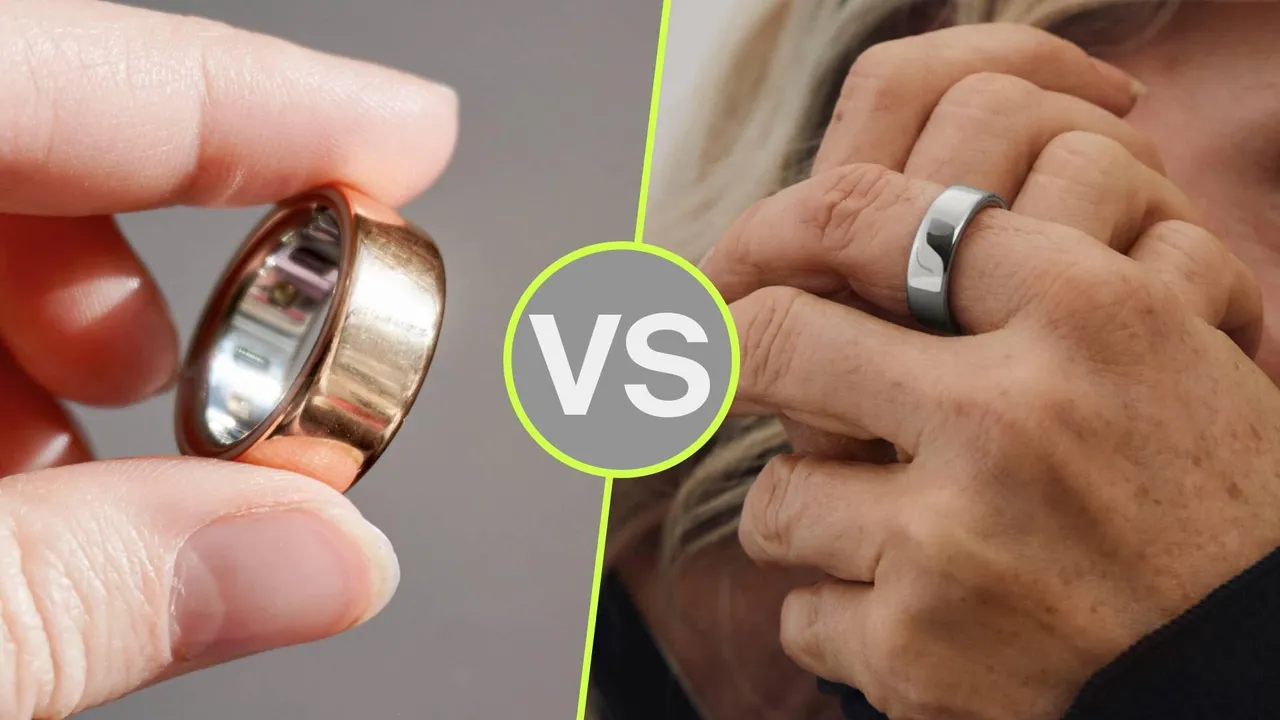
- Oura Ring 5 is 40% smaller and nearly 50% lighter than Ring 4, approaching wedding band dimensions
- Battery life extends to 6-9 days from Ring 4's 5-8 days, addressing user complaints
- Price jumps $50 to $399, with the $5.99/month membership still required for full features
Oura Ring 5 finally addresses the smart ring's biggest problem: it looked like tech, not jewelry. The fifth-generation ring is 40% smaller than its predecessor, thin enough to pass for a wedding band, and costs $399. That's $50 more than Ring 4, which Oura launched just two years ago.
The size reduction is the headline. Ring 5 measures 6.09mm wide and 2.28mm thick, down from Ring 4's 7.99mm width and 2.88mm thickness. Weight drops even more dramatically: the new ring weighs 2 to 2.69 grams depending on size, compared to Ring 4's 3.3 to 5.2 grams. For a device you wear 24/7, including sleep, that matters.
What's actually different in Oura Ring 5?
Beyond the smaller body, Oura squeezed an extra day of battery life from the redesign. Ring 5 runs six to nine days between charges; Ring 4 lasted five to eight days. Given that Ring 4 users reported battery issues, Oura VP of Product Maz Brumand says the company re-engineered the internals with more powerful LEDs for biometric measurements and a new battery architecture.
Both rings use titanium construction, but Ring 5 adds a vaporized coating for durability. The color options expand too: Ring 5 introduces a new gold shade and a deep rose finish alongside the returning silver, black, stealth, and brushed silver options.
One spec goes backward: Ring 5 sizes run from 6 to 13, while Ring 4 covered 4 to 15. People with very small or very large fingers lose options.
| Spec | Oura Ring 5 | Oura Ring 4 |
|---|---|---|
| Price | $399 | $349 |
| Width | 6.09mm | 7.99mm |
| Thickness | 2.28mm | 2.88mm |
| Weight | 2-2.69g | 3.3-5.2g |
| Battery | 6-9 days | 5-8 days |
| Sizes | 6-13 | 4-15 |
| Water resistance | IP68, 100m | IP68, 100m |
Who should upgrade from Ring 4?
Ring 4 owners who found their ring uncomfortable for sleep or exercise are the obvious candidates. The 40% size reduction changes how the ring feels during daily wear. If you've tolerated the chunky design because you valued the health data, Ring 5 removes that compromise.
Battery complaints were common among Ring 4 users. If you're charging more often than Oura's stated 5-8 day range, the extra day plus the re-engineered internals might solve your problem. That said, upgrading a $349 ring two years later for a $399 replacement is a $750 total investment in smart rings.
Who should stick with Ring 4 or skip both?
If Ring 4's size doesn't bother you and your battery holds up, the Ring 5 doesn't add new health tracking capabilities. The sensors measure the same metrics: sleep stages, heart rate variability, blood oxygen, and body temperature. You're paying $50 more for form factor and marginal battery gains.
New buyers choosing between the two face a cleaner decision. Ring 4 at $349 is now the budget option, but Ring 5's smaller profile makes it easier to wear as actual jewelry. Both require the $5.99/month Oura membership for full feature access, which adds $72 per year to the total cost of ownership.
The smart ring market is getting crowded
Oura pioneered this category in 2013, but Samsung's Galaxy Ring now competes directly. RingConn and Ultrahuman have entered with lower-priced alternatives. Oura's 2.5 million rings sold and $2.55 billion valuation reflect its first-mover advantage, but that lead shrinks as competitors improve.
The Ring 5 redesign is Oura's response. Smaller, lighter, and more jewelry-like appeals to customers who want health tracking without the tech aesthetic. Whether $399 plus a monthly subscription beats Samsung's integrated ecosystem or budget alternatives depends on how much you value Oura's software and sensor accuracy.
Logicity's Take
Oura's real competition isn't other smart rings. It's Apple Watch and Whoop for serious health trackers, and regular jewelry for everyone else. Ring 5's slimmer design finally lets Oura compete on aesthetics, not just data. For enterprise wellness programs or executive health tracking, the $5.99/month subscription model scales poorly compared to Whoop's team plans ($30/month individual, volume discounts for teams) or Apple's one-time hardware cost. If you're evaluating wearables for an organization, Oura remains a consumer-first product.
Frequently Asked Questions
Is Oura Ring 5 worth upgrading from Ring 4?
Only if size or battery life bothered you with Ring 4. The health tracking features are identical. You're paying $399 for a 40% smaller ring and one extra day of battery.
Does Oura Ring 5 require a subscription?
Yes. Both Ring 4 and Ring 5 require the $5.99/month Oura membership for full access to sleep scores, readiness metrics, and detailed health insights.
How does Oura Ring 5 compare to Samsung Galaxy Ring?
Samsung Galaxy Ring integrates with Samsung's health ecosystem and doesn't require a subscription. Oura offers more detailed sleep and HRV analysis but costs more over time due to the monthly fee.
What sizes does Oura Ring 5 come in?
Ring 5 runs sizes 6 through 13. This is narrower than Ring 4's range of 4 to 15, so people with very small or large fingers may not find a fit.
How long does Oura Ring 5 battery last?
Oura rates Ring 5 at six to nine days per charge, one day longer than Ring 4's five to eight day rating.
Need Help Implementing This?
Evaluating wearables for your team's health and productivity program? Logicity can help you compare enterprise options across Oura, Whoop, and other platforms. Contact our editorial team for vendor-neutral analysis.
Source: Latest news
Huma Shazia
Senior AI & Tech Writer
Produced with AI assistance and reviewed by the Logicity editorial team. Learn more in our Editorial Policy.




