Key Takeaways
OpenAI Offered Trump a 5% Stake — Strategy or Capture?
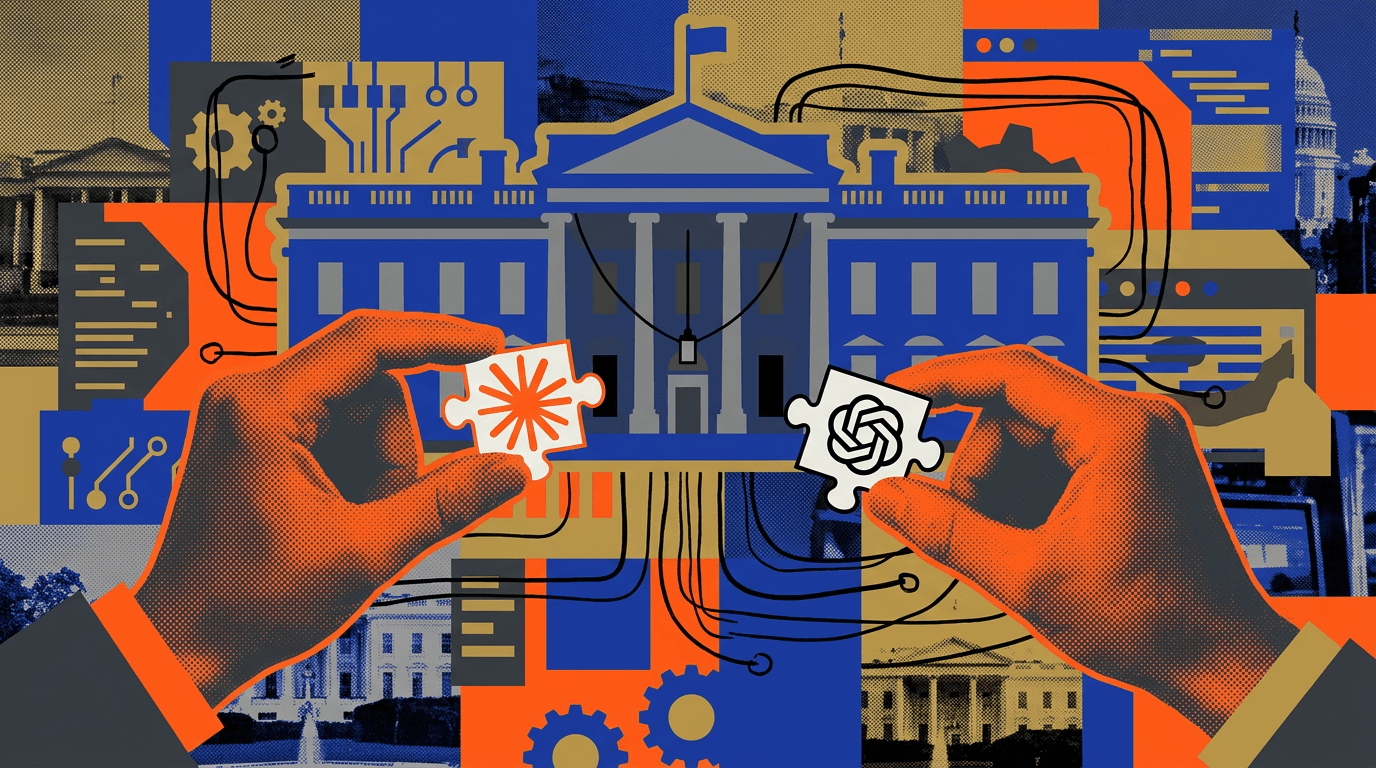
- OpenAI has proposed giving the Trump administration a 5% equity stake worth over $40 billion at current valuation
- The plan would require all leading US AI developers to contribute shares to a shared vehicle modeled on Alaska's Permanent Fund
- Senator Bernie Sanders wants nearly 50% public ownership, suggesting the final terms remain highly contested
OpenAI is negotiating to hand the US government a 5% stake in the company, the Financial Times reports. At OpenAI's current $852 billion valuation, that stake would be worth more than $40 billion. CEO Sam Altman has pitched the arrangement as a way to share AI profits with the public, though the talks remain in an early, conceptual stage.
What exactly is OpenAI proposing?
The proposal goes beyond OpenAI itself. According to the Financial Times, all leading US AI developers would contribute 5% of their shares to a shared investment vehicle. The model is the Alaska Permanent Fund, which invests the state's oil revenue and distributes dividends to residents and the government.
Altman has reportedly negotiated directly with President Trump, Commerce Secretary Howard Lutnick, and Treasury Secretary Scott Bessent. The talks have been ongoing for more than a year, suggesting this is not a reactive PR move but a deliberate strategic play. Implementing the plan could require an act of Congress.
Why would OpenAI give away equity?
The obvious question: why would the world's most valuable AI company voluntarily dilute itself? Several motives appear to be in play.
First, political cover. OpenAI has faced mounting criticism on cybersecurity, and the AI industry broadly is bracing for backlash if mass unemployment predictions prove accurate. Giving the government a direct financial interest in AI success could blunt regulatory hostility. Second, precedent-setting. By proposing that all AI companies participate, OpenAI spreads the dilution across competitors. If Google, Anthropic, and Meta must also contribute 5%, OpenAI does not suffer a competitive disadvantage.
Critics will note a third possibility: once the government owns a stake, a bailout becomes politically easier if OpenAI's finances deteriorate. The company has raised enormous sums and burns capital aggressively on compute. A government equity position creates implicit insurance.
Bernie Sanders wants much more
OpenAI's 5% offer is not the only proposal on the table. Senator Bernie Sanders, whom Altman recently met, is pushing for nearly 50% public ownership in every US AI company through a sovereign wealth fund. That gap is enormous. Five percent gives the government a seat at the table but no control. Fifty percent means effective nationalization.
The political negotiation here will determine whether AI companies face light-touch revenue sharing or fundamental restructuring of who owns the technology. For founders and investors, the difference is existential.
OpenAI floated this idea before
In April, OpenAI proposed a "public wealth fund" intended to give every citizen a share in AI-driven economic growth. The current talks put concrete numbers to that concept for the first time. A 5% stake at $852 billion is not a vague promise but a specific dollar figure: $42.6 billion.
OpenAI declined to comment to the Financial Times. The White House did not respond to requests for comment at the time of the report.
What this means for other AI companies
If the proposal moves forward, Anthropic, Google DeepMind, Meta AI, and other major players would face the same 5% contribution requirement. This creates a collective action problem. No company wants to be first to give up equity, but if legislation mandates participation, all must comply equally.
The Alaska Permanent Fund model is notable because it treats AI profits like natural resource extraction. Oil comes out of the ground; AI generates economic value. Both, under this framing, belong partly to the public. Whether Congress accepts this analogy will shape the outcome.
Logicity's Take
For AI builders, this proposal signals a new phase where government becomes a stakeholder, not just a regulator. If you are building on OpenAI's APIs or competing infrastructure from Anthropic or Google, factor in that pricing, access policies, and strategic direction may increasingly reflect political considerations. The gap between Altman's 5% and Sanders' 50% is where the real negotiation happens. Watch which number moves.
Frequently Asked Questions
How much would the government's OpenAI stake be worth?
At OpenAI's $852 billion valuation, a 5% stake would be worth approximately $42.6 billion.
Would this apply only to OpenAI?
No. The proposal reportedly calls for all leading US AI developers to contribute 5% of their shares to a shared investment vehicle.
Does this require Congressional approval?
According to the Financial Times report, implementing the plan could require an act of Congress.
What is the Alaska Permanent Fund model?
Alaska's fund invests state oil revenue in stocks and pays dividends to the government and residents. The AI proposal would similarly distribute AI company profits to the public.
What does Bernie Sanders want instead?
Sanders is pushing for nearly 50% public ownership in every US AI company through a sovereign wealth fund, far exceeding OpenAI's 5% proposal.
Context on how government AI policy differs across regions
Need Help Implementing This?
Logicity helps product teams and founders navigate the rapidly shifting AI landscape. If you need strategic guidance on building with AI infrastructure while managing regulatory and platform risk, reach out to our team.
Source: The Decoder / Matthias Bastian
Huma Shazia
Senior AI & Tech Writer
Produced with AI assistance and reviewed by the Logicity editorial team. Learn more in our Editorial Policy.