Key Takeaways
- Key engineering leader behind ChatGPT scaling exits during critical enterprise expansion phase
- Enterprise AI market reaches $200B, making leadership stability crucial for vendor selection
- Indian tech talent continues driving global AI innovation from Silicon Valley to Hyderabad
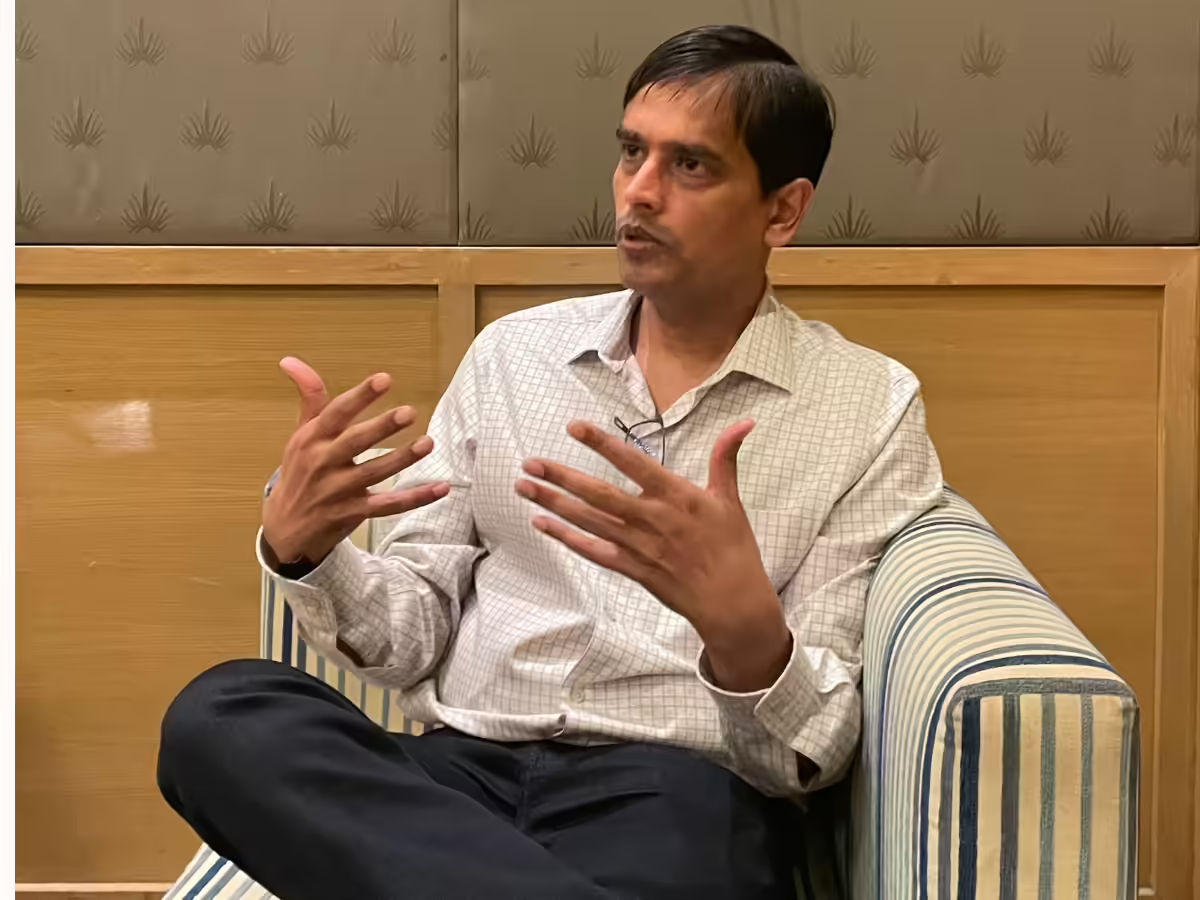
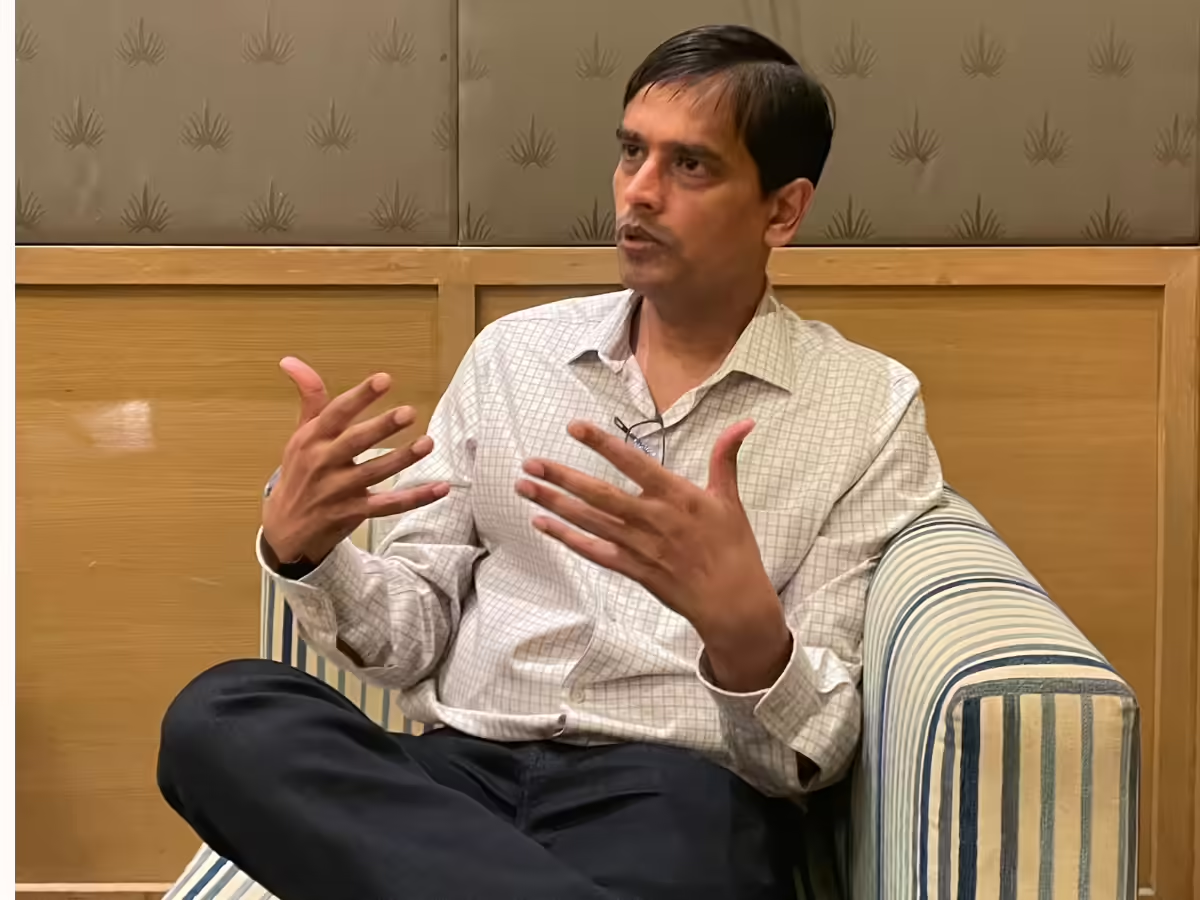
According to [Tech-Economic Times](https://economictimes.indiatimes.com/tech/technology/meet-srinivas-narayanan-iit-madras-alumnus-who-helped-scale-chatgpt/articleshow/130347154.cms), Srinivas Narayanan, a senior engineering leader at OpenAI who played a critical role in scaling ChatGPT, announced his departure after three years with the company.
If you're evaluating OpenAI for enterprise deployment or building competitive AI products, this exit matters. Narayanan wasn't a junior hire. He was part of the infrastructure team that made ChatGPT handle 100 million weekly users. When someone at that level leaves during a company's most aggressive enterprise expansion, business leaders need to pay attention.
Who Is Srinivas Narayanan and Why Does His Exit Matter?
Narayanan's background tells you everything about why this matters. IIT Madras (Batch of 1995), Master's in Computer Science from University of Wisconsin-Madison, and deep experience scaling systems at massive scale. This is exactly the profile that makes enterprise AI products reliable.
In his X post announcing the departure, Narayanan mentioned that recent and upcoming product launches made this "the right moment to step back." That's corporate speak, but the timing is significant. OpenAI is pushing hard into enterprise sales. They're competing directly with Microsoft's Copilot offerings, Google's Gemini for Workspace, and a growing ecosystem of specialized AI tools.
Executive Summary
For CTOs evaluating AI vendors: Leadership stability matters as much as technology capability. OpenAI's enterprise push continues, but key departures signal internal transitions worth monitoring before signing multi-year contracts.
What Does OpenAI Leadership Change Mean for Enterprise Buyers?
Here's the question every CTO should ask: Does this affect my existing OpenAI deployment or planned integration? The honest answer is probably not immediately. But it should influence how you structure contracts and evaluate alternatives.
OpenAI has seen several high-profile departures over the past 18 months. The Sam Altman board drama, departures of key safety researchers, and now senior engineering leadership changes create a pattern. For a company handling sensitive enterprise data and mission-critical workflows, stability matters.
- Contract structure: Consider shorter initial terms with renewal options rather than 3-year commitments
- Multi-vendor strategy: Build abstraction layers that let you switch between OpenAI, Anthropic, and Google models
- SLA monitoring: Track actual uptime and performance against promises during transition periods
- Relationship mapping: Know who your account contacts report to and watch for org changes
Another example of leadership decisions affecting enterprise tech partnerships
The Indian Tech Talent Pipeline Powering Global AI
Narayanan represents a broader story that matters for Indian business leaders. IIT alumni are increasingly at the center of global AI development. Sundar Pichai at Google, Satya Nadella at Microsoft, and now leaders throughout OpenAI, Anthropic, and other AI companies.
This creates both opportunity and brain drain dynamics. Indian startups and enterprises can tap into this diaspora network for advisory roles, investment connections, and talent pipelines. But it also means competing for talent against companies offering Silicon Valley compensation packages.
The smart play for Indian enterprises: Build relationships now. The executive who leaves OpenAI today might be advising your AI strategy or joining your board in two years. The Indian tech community is smaller and more connected than it appears.
How Should CTOs Evaluate AI Vendors in 2025?
Leadership changes at major vendors should trigger a broader conversation about AI vendor selection. Here's a framework that accounts for both technology and organizational stability.
| Evaluation Criteria | OpenAI | Anthropic | Google Cloud AI |
|---|---|---|---|
| Leadership Stability | Recent departures at multiple levels | Relatively stable founding team | Part of larger Google structure |
| Enterprise Features | ChatGPT Enterprise, API, custom GPTs | Claude for Enterprise, API | Vertex AI, Gemini for Workspace |
| Data Privacy Options | Enterprise tier with enhanced controls | Strong privacy positioning | On-prem options available |
| Contract Flexibility | Annual commitments typical | More flexible terms reported | Part of larger GCP negotiations |
| Indian Support Presence | Limited direct presence | Growing APAC team | Strong India operations |
None of these vendors are perfect. The key is matching your risk tolerance and use case requirements to vendor capabilities. A company deploying AI for customer service might prioritize different factors than one using AI for internal productivity.
Risk management lessons applicable to AI vendor selection
What Happens to OpenAI Enterprise Products Now?
OpenAI's enterprise business continues regardless of individual departures. The company has raised over $10 billion and employs hundreds of engineers. One departure, even a senior one, doesn't derail product roadmaps.
But it does affect execution speed and institutional knowledge. Narayanan was specifically involved in scaling infrastructure. That's the unglamorous work that determines whether ChatGPT handles your 10,000-employee deployment without latency spikes during peak hours.
Enterprise buyers should ask their OpenAI account teams directly: Who is replacing Narayanan's responsibilities? What's the transition timeline? How does this affect the features on our roadmap? Good vendors answer these questions transparently. Evasive answers are red flags.
The Bigger Picture: AI Market Consolidation Coming
Leadership changes at OpenAI fit a broader pattern. The AI market is transitioning from a land-grab phase to a consolidation phase. That means more departures as equity vests, more acquisitions, and more pressure on profitability.
For business leaders, this means the window for negotiating favorable AI contracts is closing. As the market consolidates, fewer vendors means less pricing pressure and less flexibility. If you're planning significant AI deployments, the time to lock in terms is now, not in 18 months.
Logicity's Take
As an AI development agency that works with Claude API, OpenAI's models, and enterprise clients deploying these tools, we watch these leadership changes closely. Here's our honest read: Individual departures rarely affect API reliability or feature availability in the short term. We've never had a client project derailed because someone left OpenAI or Anthropic. What does matter is the pattern. When scaling experts leave during an enterprise growth phase, it often signals internal debates about priorities—ship fast vs. build stable infrastructure. For our clients in Hyderabad and across India, we recommend building model-agnostic architectures whenever possible. We use abstraction layers that let us swap OpenAI for Claude or open-source alternatives without rewriting entire applications. The deeper opportunity here: Indian tech companies should be recruiting from this diaspora more aggressively. We've seen engineers return to India to join AI startups or lead enterprise AI divisions. The compensation gap is closing, and quality of life factors increasingly favor India's major tech hubs. Narayanan's next move, wherever it is, will be worth watching for anyone building AI products in India.
Frequently Asked Questions
Frequently Asked Questions
Will Srinivas Narayanan's departure affect my OpenAI API access?
No immediate impact expected. OpenAI's API infrastructure is maintained by large teams, and service continuity is protected by standard engineering practices. However, monitor performance metrics for any changes over the next 3-6 months.
Should enterprises reconsider OpenAI contracts after this departure?
Not necessarily renegotiate, but use this as a prompt to review your multi-vendor strategy. Ensure you have fallback options and abstraction layers that reduce vendor lock-in risk.
How does this affect ChatGPT Enterprise pricing?
Pricing is unlikely to change due to one departure. Enterprise pricing at OpenAI runs $20-60 per user per month depending on features. Watch for changes tied to broader market dynamics, not individual exits.
What should Indian companies learn from this leadership change?
Two things: First, build relationships with the Indian tech diaspora at major AI companies—they often transition to advisory or investment roles. Second, leadership instability at US AI companies creates opportunities for Indian enterprises to recruit returning talent.
Is OpenAI still a safe choice for enterprise AI deployment?
OpenAI remains a leading option with strong products. However, no AI vendor should be your only option. The safest enterprise strategy includes multiple provider relationships and architecture that supports model switching.
Practical automation strategies that reduce vendor dependency
Need Help Implementing This?
Logicity helps enterprises build AI solutions that aren't locked to a single vendor. Whether you're deploying Claude, OpenAI, or hybrid architectures, our team in Hyderabad can help you design systems that survive leadership changes and market shifts. Contact us to discuss your AI strategy.
Source: Tech-Economic Times / ET
Huma Shazia
Senior AI & Tech Writer
Produced with AI assistance and reviewed by the Logicity editorial team. Learn more in our Editorial Policy.