Key Takeaways
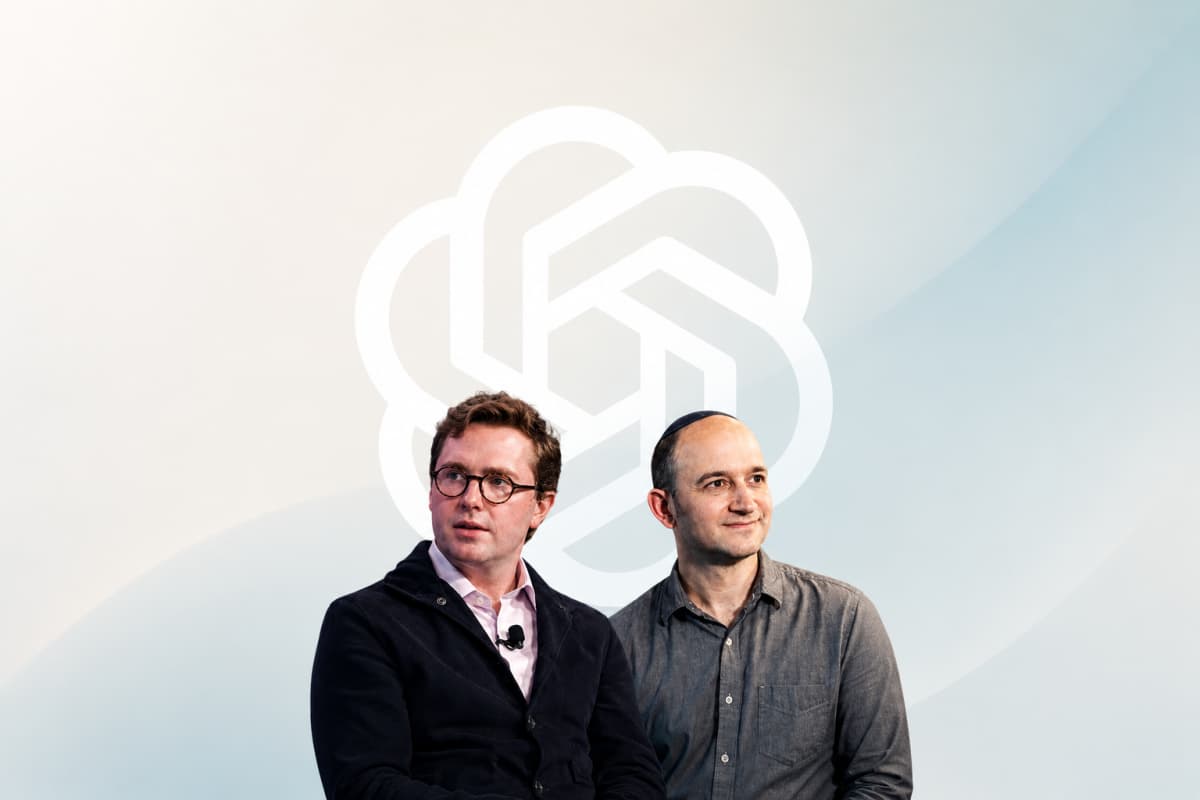
- Noam Shazeer, co-author of the foundational Transformer paper, leaves Google DeepMind for OpenAI after 24 years at the company
- Dean Ball will lead a new 'Strategic Futures' team focused on AI policy, catastrophic risk, and government relations
- The hires come as rival Anthropic faces a U.S. export ban on its latest models, highlighting OpenAI's growing regulatory advantage
OpenAI is stacking its roster with two high-profile additions before going public: Noam Shazeer, the Google researcher who co-authored the paper that launched modern generative AI, and Dean Ball, a former Trump administration AI policy official. The hires signal OpenAI's dual priorities heading into its IPO: technical talent that can push model capabilities forward, and political capital to keep regulators friendly.
Shazeer announced his departure from Google on Wednesday, ending a tenure that stretched back to 2000 with only a brief interruption. He co-founded Character AI in 2021, built it into a popular role-playing chatbot platform, then returned to Google in 2024 through a $2.7 billion deal that gave the search giant access to Character's technology. At Google, he served as co-lead on Gemini.
Why does Shazeer matter so much to AI?
Shazeer is credited as one of the foundational minds behind generative AI. He co-authored the 2017 paper "Attention Is All You Need," which introduced the Transformer architecture. That paper, with eight co-authors, has become perhaps the most influential AI research publication of the past decade. Every large language model today, from GPT-4 to Claude to Gemini, traces its architecture to that work.
His move continues a pattern of talent shuffling between the major AI labs. Google, OpenAI, Anthropic, and Meta have traded key researchers for years now. But landing the Transformer co-creator is a symbolic win for OpenAI, especially given that Shazeer just spent two years leading work on Google's flagship model.
The departure was not entirely smooth. According to The Information, Shazeer had voiced opinions on internal Google messaging boards about transgender identity and Israel's war in Gaza that led management to delete his posts. Whether those controversies follow him to OpenAI remains an open question.
Ball brings policy muscle at a critical moment
While Shazeer addresses the technical side, Dean Ball tackles the regulatory one. Ball spent a stint in the Trump White House last year, where he helped publish America's AI Action Plan before returning to the Foundation for American Innovation, a techno-libertarian think tank, as a senior fellow.
Starting July 6, Ball will lead a new team called Strategic Futures, reporting directly to Chief Strategy Officer Jason Kwon. The team's mandate covers catastrophic risk, recursive self-improvement, labor market impact, and the relationship between frontier labs, governments, and society.
“Almost by necessity, AI labs will have to lead on AI governance decisions. In other words, internal governance will be more central to the future of AI than most people realize.”
— Dean Ball, in a blog post announcing his role
That framing is notable. Ball is essentially arguing that AI companies, not governments, will drive the rules. For a company preparing to go public and facing inevitable scrutiny from regulators, investors, and lawmakers, having an insider who can shape that narrative is valuable.
Anthropic's troubles make the timing look strategic
The hires arrive during a rough week for OpenAI's main rival. Late last week, President Trump ordered an export control ban on Anthropic's latest models, Fable 5 and Mythos 5. The AI firm was forced to take the models down entirely to avoid noncompliance.
OpenAI, by contrast, appears to be in good standing with the administration. Bringing in a former White House official to run policy just as a competitor gets squeezed is not subtle. For anyone tracking S-1 risk factors, "government interference" just became a more concrete concern, and OpenAI is positioning itself as the company with insider status.
What this means for the IPO
OpenAI has not disclosed a timeline for its public offering, but the company's moves suggest the groundwork is being laid. Technical credibility matters to investors betting on whether OpenAI can maintain its lead in model capabilities. Policy credibility matters to investors worried about regulatory risk. These two hires address both concerns.
Shazeer brings a resume that's difficult to match in AI research. Ball brings direct experience navigating federal AI policy during a period of increasing government attention. Together, they represent OpenAI's bid to look like the most investable AI company on the market.
Logicity's Take
OpenAI is playing chess while Anthropic plays checkers. Hiring Shazeer from Google is a talent acquisition; hiring Ball from the administration is a political acquisition. The timing, with Anthropic facing export bans, suggests OpenAI understands that winning in AI is not just about building the best model. It's about being the company Washington trusts to build the best model. For potential IPO investors, that distinction could matter more than benchmark scores.
Frequently Asked Questions
Who is Noam Shazeer and why is his OpenAI hire significant?
Shazeer co-authored the 2017 paper that introduced the Transformer architecture, the foundation of all modern large language models. He spent 24 years at Google, co-founded Character AI, and led work on Google's Gemini model before joining OpenAI.
What will Dean Ball do at OpenAI?
Ball will lead a new team called Strategic Futures, focusing on catastrophic risk, recursive self-improvement, labor market impact, and government relations. He reports directly to Chief Strategy Officer Jason Kwon.
When is OpenAI's IPO expected?
OpenAI has not announced a specific timeline for its public offering. These hires suggest preparations are underway, but no date has been confirmed.
Why was Anthropic banned from exporting its models?
President Trump ordered an export control ban on Anthropic's Fable 5 and Mythos 5 models. The specific reasons have not been fully disclosed, but Anthropic was forced to take the models down to comply.
What is the Transformer architecture?
The Transformer is a neural network architecture introduced in the 2017 paper 'Attention Is All You Need.' It relies on attention mechanisms rather than sequential processing, enabling the large language models like GPT-4, Claude, and Gemini.
Need Help Implementing This?
If you're building on OpenAI's APIs or navigating AI governance for your organization, Logicity can connect you with implementation partners. Contact us for guidance on enterprise AI strategy and compliance.
Source: TechCrunch / Rebecca Bellan
Manaal Khan
Tech & Innovation Writer
Produced with AI assistance and reviewed by the Logicity editorial team. Learn more in our Editorial Policy.




