OpenAI is offering 100,000 academic researchers free access to its frontier models, including GPT-5.6 Sol Pro, through a new program called ChatGPT for Academic Researchers. The first 10,000 slots opened this summer, with institutions like the Institute for Advanced Study and École normale supérieure already onboard. OpenAI plans to expand to the full 100,000 by 2027.
The program targets scientists, mathematicians, and engineers. Each participant can invite up to four collaborators from their institution. Workspaces include business-grade privacy protections, and OpenAI says user data is not used for model training by default.
What researchers get
OpenAI Made GPT-5.6 FREE For Everyone
Participants receive access to ChatGPT, ChatGPT Work, and Codex. The GPT-5.6 family of models is available at launch. OpenAI is bundling training, hands-on support, and a community forum where researchers can share feedback and learn from peers.
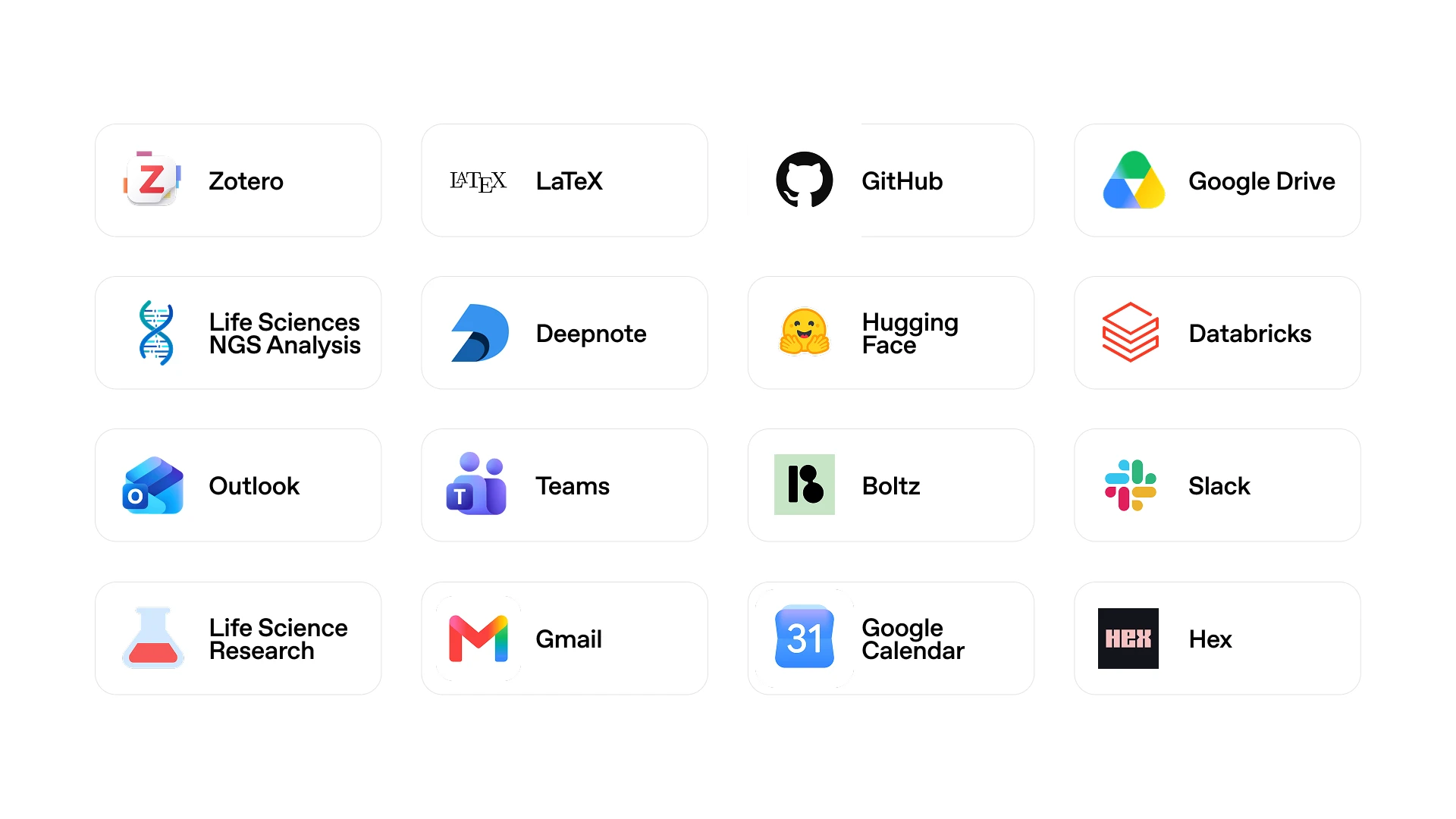
The tool integrations span the research workflow. Connectors include Zotero for citation management, GitHub for code, Google Drive and Outlook for file access, and specialized plugins for genomic analysis and protein modeling. LaTeX support is built in for manuscript preparation.
For institutions already running ChatGPT Edu, the free access will coordinate through the existing workspace rather than creating a parallel system.
How researchers are already using AI
OpenAI's usage data shows AI adoption in research has accelerated faster than expected. In mathematics specifically, the shift from occasional use on isolated problems to regular integration into research workflows happened over the past six months. A growing number of published papers now acknowledge ChatGPT's contribution.
The company breaks down research requests by workflow stage. ChatGPT handles idea interrogation, knowledge acquisition, hypothesis generation, and communication. Codex covers research execution, including code generation and formal analysis.
Physicist Rogerio Jorge's team is using AI to develop open-source fusion research software now deployed by industry and national laboratories. In theoretical computer science, researchers Barna Saha, Yinzhan Xu, and Christopher Ye used GPT-5.5 Pro to develop a proof establishing new limits on computational geometry problems. They validated and refined the results themselves.
Power users tackle harder problems
OpenAI released one telling metric: researchers in the top 20% of AI usage within their field are nearly twice as likely to request tasks estimated to require four or more hours of human work. About 7% of their requests fall into this category, compared with 3.5% among other researchers in the same field.
This suggests intensive AI users are not simply automating routine tasks. They are taking on work they might have skipped entirely without the tool.
Logicity's Take
The $250 million commitment signals OpenAI is treating academic research as a strategic bet, not philanthropy. Free access for 100,000 researchers creates a massive training ground for AI-assisted science workflows. Product teams building research tools should watch which integrations get the most traction here. The Zotero, LaTeX, and domain-specific connectors suggest OpenAI sees research infrastructure, not just the base model, as the moat.
Part of a larger commitment
ChatGPT for Academic Researchers sits within a broader $250 million commitment through 2027 to support external scientific research. That includes NextGenAI, a $50 million initiative for research institutions, and work with the Department of Energy's Genesis Mission to bring frontier AI to national laboratories and universities.
OpenAI's framing is explicit: the company is not picking which scientific problems deserve attention. It is distributing tools and letting researchers pursue the questions they know best. Whether that produces breakthrough results, or mostly speeds up grant writing, will become clearer as the program scales.
Another recent ChatGPT integration for developer-facing tools
Applications are open now. Eligibility is limited to researchers at selected academic institutions.
Need Help Implementing This?
If you're building AI-powered research tools or integrating LLMs into scientific workflows, Logicity can help you scope the architecture and vendor landscape. Reach out to our advisory team.
Source: OpenAI News
Manaal Khan
Tech & Innovation Writer
Produced with AI assistance and reviewed by the Logicity editorial team. Learn more in our Editorial Policy.