Key Takeaways

- DeepSeek now processes over a third of tokens through Vercel's AI gateway, but Anthropic still accounts for more than half of total spend
- Decagon CEO Jesse Zhang argues frontier and open source models aren't competitors — they're two phases of the same lifecycle
- Frontier labs may hold the premium pricing tier indefinitely by dominating early-stage AI deployments while open source handles production
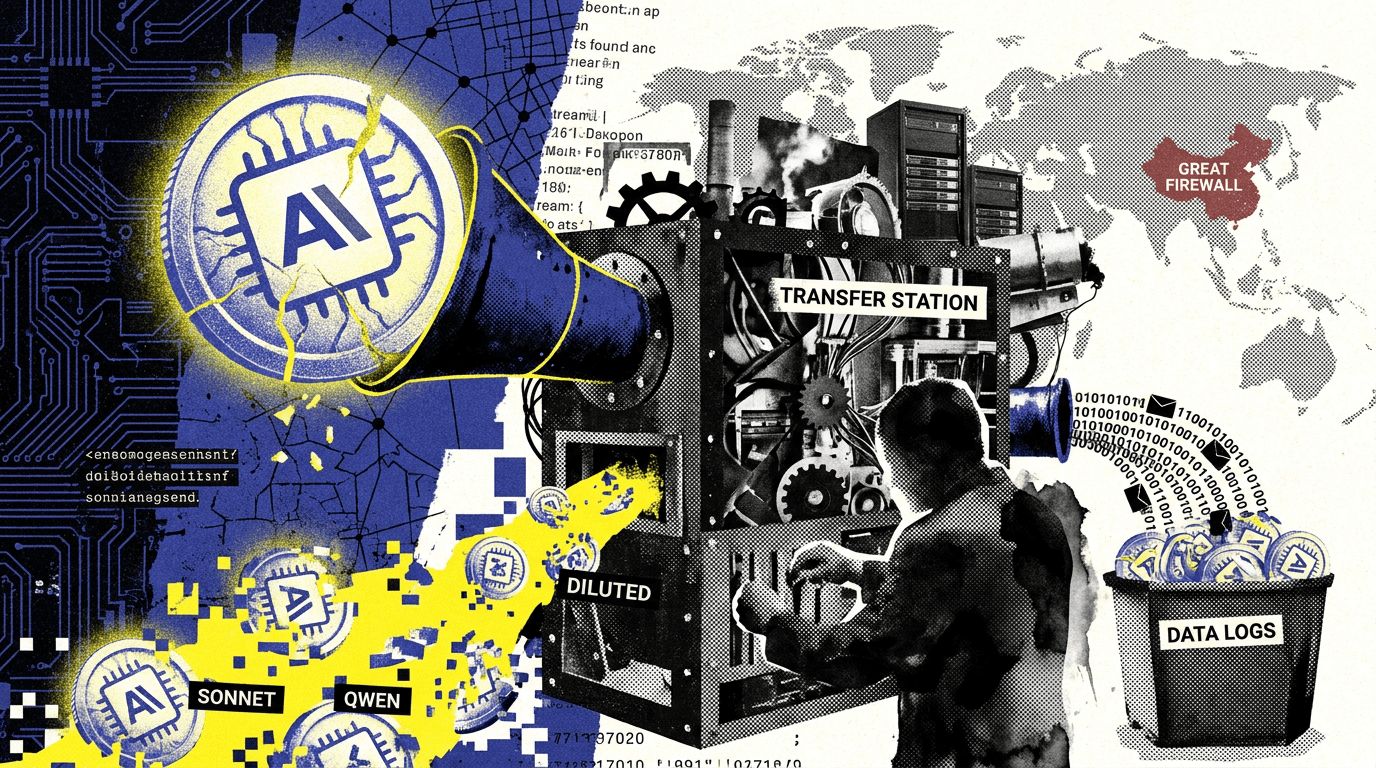
Open source AI models are eating the token market. DeepSeek now processes over a third of all tokens flowing through Vercel's AI gateway. Yet Anthropic still captures more than half of total enterprise AI spend on the same platform. This paradox, highlighted in a new post by Decagon CEO Jesse Zhang, suggests the competitive dynamics between frontier and open source AI are far stranger than a simple zero-sum fight.
Zhang's argument, titled "Everyone is wrong about open source AI in the enterprise," flips the conventional wisdom. Mature AI deployments are switching to lighter, cheaper models. Even his own company has done it. But aggregate spending on expensive frontier models hasn't dropped. The two aren't competing. They're serving different phases of the same adoption curve.
What does the data actually show?
Vercel's public dashboard tells a clear story. In the past week, DeepSeek surged into first place by token volume. Z.ai's GLM-5.2 model jumped to fourth. But scroll down to spending, and Anthropic still dominates, accounting for more than 50% of total AI spend on the platform. The company's recent price increases have trimmed that share slightly, but not meaningfully.
OpenRouter paints a similar picture across a larger, less enterprise-focused user base. DeepSeek V4 Flash processes 5.3 trillion tokens weekly. Anthropic's Opus 4.8 handles just over 2 trillion. But Opus costs roughly 23x more per token ($1.37 per million vs. 6 cents). The math is straightforward: Anthropic is likely still capturing the lion's share of revenue.
Why aren't frontier labs losing ground?
Zhang offers a lifecycle explanation. Enterprises use expensive frontier models to prove out new use cases. Once those use cases mature and become predictable, they migrate to cheaper open source alternatives. But new use cases keep emerging, and frontier models keep owning the discovery phase. "The frontier labs will keep owning discovery," Zhang writes. "Open source will increasingly own production."
There's a second possibility. Some enterprise AI tasks are simply too hard for cheaper models. Complex reasoning, nuanced analysis, tasks requiring the best available intelligence. These use cases can't be fully replaced, no matter how good DeepSeek V4 Flash becomes. The result is a stable two-tier economy: high-margin frontier models for hard problems, high-volume open source models for everything else.
What about Nvidia's Nemotron?
The newest wildcard is Nvidia's Nemotron, which isn't yet reflected in the dashboard data. Nvidia's distribution muscle and the model's adaptability could shake up the open source tier significantly. But even a dominant new open source entrant wouldn't necessarily threaten Anthropic's position. It would just capture volume from other open source alternatives while frontier labs continue to command premium pricing.
The coffee bean prediction that didn't pan out
Last September, some analysts predicted foundation labs would end up as commodity suppliers. Selling coffee beans to Starbucks, as TechCrunch's Russell Brandom put it. The application layer would capture all the value. Parts of that came true. Vertical AI plays did switch to lighter models. GPT wrapper economics stayed stable. But frontier providers have held onto the premium token price. They're not selling coffee beans. They're selling the premium roast.
Logicity's Take
For founders building AI products, this two-tier reality has strategic implications. If you're building a vertical AI application, the playbook is clear: prototype on Claude or GPT-4o, prove the use case works, then migrate production traffic to DeepSeek, Llama, or Mistral once the workload becomes predictable. Your unit economics improve without sacrificing capability during the critical discovery phase. The trap is over-optimizing for cost too early. Switching to open source before you've nailed the use case means debugging both your product and your model simultaneously. Let Anthropic's engineers solve the hard reasoning problems first. You can always downgrade later.
What this means for the next 12 months
The data suggests this two-tier structure isn't a temporary phase. Frontier labs have found their moat: they own the hardest problems and the earliest deployments. Open source owns scale. Both can thrive. The question is whether frontier labs can keep pushing the capability frontier fast enough to justify 20x+ price premiums. If open source catches up on reasoning quality, the economics change fast. But there's no evidence that's happening yet.
Frequently Asked Questions
Is open source AI replacing Anthropic in enterprise?
Not yet. Open source models like DeepSeek lead on token volume, but Anthropic still captures over half of total AI spend on platforms like Vercel. Enterprises use frontier models for complex tasks and new use cases, then migrate to cheaper open source for mature, predictable workloads.
Why do frontier AI models cost so much more than open source?
Anthropic's Opus 4.8 costs roughly 23x more per token than DeepSeek V4 Flash. The premium reflects superior reasoning on difficult tasks, better reliability for critical applications, and the R&D costs of pushing the capability frontier.
Should startups use open source or frontier AI models?
Most AI startups should prototype on frontier models to prove use cases, then migrate production traffic to open source alternatives once workloads become predictable. This balances capability during discovery with cost efficiency at scale.
What is the AI lifecycle theory from Decagon's CEO?
Jesse Zhang argues frontier and open source models serve different phases of the same lifecycle. Frontier models handle discovery and hard problems. Open source handles mature, high-volume production. Both can grow simultaneously as new use cases keep emerging.
How AI-native startups are choosing their model strategy in 2026
Need Help Implementing This?
Building an AI product and trying to navigate the frontier vs. open source decision? Logicity works with early-stage founders on AI architecture and go-to-market strategy. Reach out at hello@logicity.in.
Source: Enterprise News | TechCrunch / Russell Brandom
Huma Shazia
Senior AI & Tech Writer
Produced with AI assistance and reviewed by the Logicity editorial team. Learn more in our Editorial Policy.