Key Takeaways
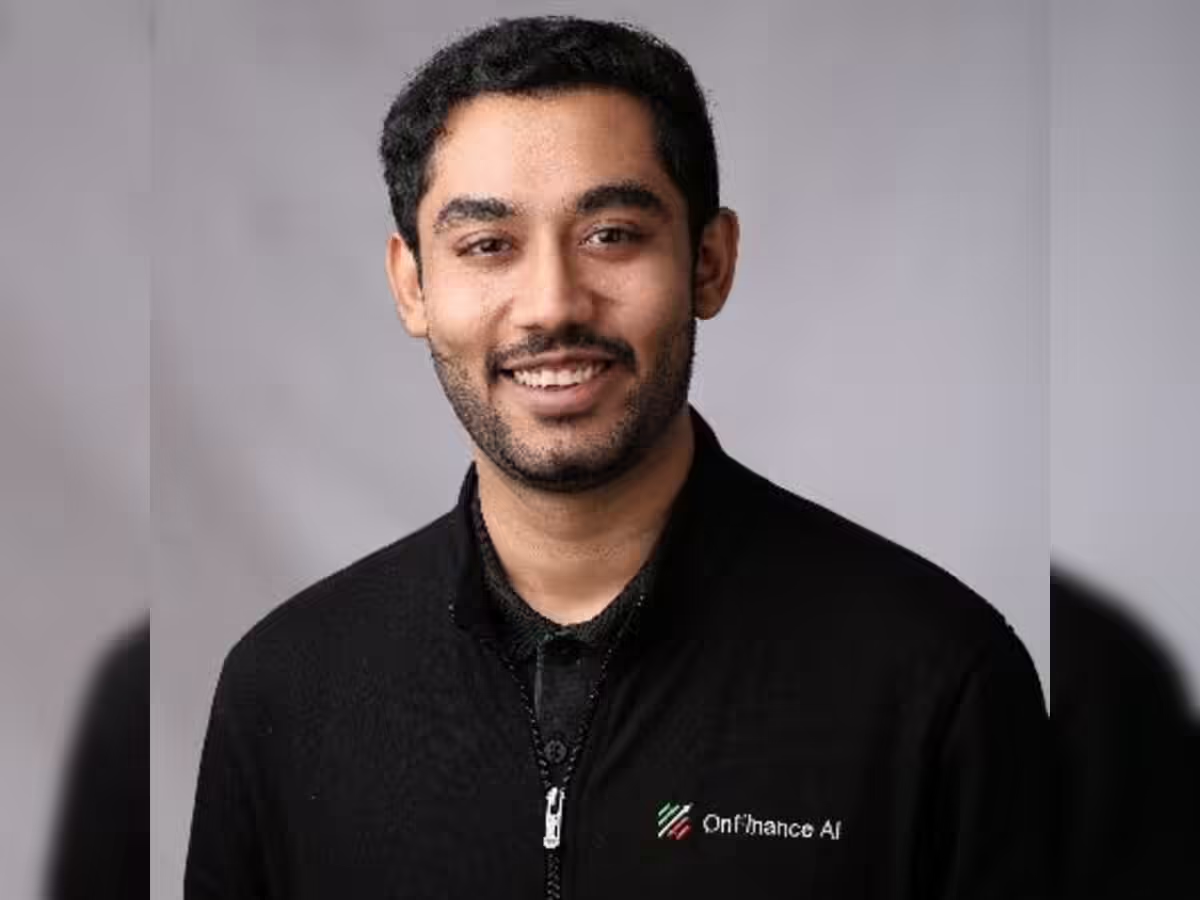
- Anuj Srivastava, CEO of OnFinance AI, publicly criticised All In Capital for not investing at pre-seed stage in 2022
- The founder later apologised after acknowledging he misunderstood the VC firm's continued guidance as rejection
- The incident highlights the delicate dynamics between founders and VCs in India's tight-knit startup ecosystem
Anuj Srivastava, CEO of Bengaluru-based fintech startup OnFinance AI, publicly criticised venture firm All In Capital for not investing in his company, then issued an apology hours later. The reversal came after Srivastava acknowledged he had misread the firm's decision to pass on the investment while continuing to offer guidance.
All In Capital, an early-stage venture firm led by founding partner Kushal Bhagia, declined to invest in OnFinance AI at the pre-seed stage in 2022. What Srivastava initially framed as a slight turned out to be standard VC practice: the firm reportedly maintained contact and offered mentorship despite passing on the deal.
What did Srivastava say in his criticism?
The original post, shared on social media, called out All In Capital for not backing OnFinance AI's vision. Srivastava's frustration appeared rooted in a common founder grievance: feeling dismissed by investors who ultimately benefit from portfolio diversification while individual startups bear the full weight of rejection.
But the criticism missed a key detail. All In Capital had not simply passed and moved on. The firm continued offering guidance to Srivastava, a practice some VCs maintain with promising founders they cannot fund due to timing, stage fit, or portfolio constraints.
Why the quick reversal?
Srivastava walked back his statements after what he described as misunderstanding the feedback. In his apology, he expressed respect for Bhagia and the firm. Bhagia accepted the apology, closing the public chapter of the dispute.
The speed of the reversal suggests Srivastava recognised a practical reality: India's startup ecosystem is small, and VCs talk. A founder who publicly torches one investor makes others cautious. Even if the criticism felt justified in the moment, the calculation changes when future fundraising depends on reputation.
The founder-VC relationship in India's competitive market
India's fintech sector saw $3.8 billion in funding in 2023, but that capital flows to a fraction of startups seeking it. Competition for early-stage checks is intense. Pre-seed rounds, where OnFinance AI was when All In Capital passed, are particularly crowded. Founders pitch dozens of firms before closing a round.
This dynamic creates pressure. Founders interpret rejection personally, especially when they believe in their product. VCs, meanwhile, reject far more companies than they fund. The mismatch breeds resentment that occasionally spills into public view.
What makes this case instructive is the nuance Srivastava initially missed. Not all rejections are equal. A VC who passes but stays in touch is signalling something different from one who ghosts. Srivastava conflated the two, then corrected himself.
Community reaction split between empathy and critique
Reactions across Indian startup circles on Twitter and LinkedIn fell into predictable camps. Some founders expressed empathy, noting that rejection stings regardless of how professionally it is delivered. Others questioned whether airing grievances publicly ever serves a founder's interests.
The professional conduct debate is not new. Founders occasionally name and shame VCs for ghosting, low-ball offers, or perceived bad faith. Sometimes the criticism sticks. More often, it raises questions about the founder's judgment. Investors control the capital; founders need it. The power imbalance shapes what criticism is strategic versus self-destructive.
Srivastava's apology short-circuited the debate before it escalated. By acknowledging his error quickly, he limited the reputational damage and kept the door open with All In Capital and the broader investor community.
What this means for OnFinance AI
OnFinance AI operates in the fintech space, building AI-driven financial tools. The company is beyond pre-seed now, though specific funding details were not disclosed in the reporting. Whether this incident affects future rounds depends on how investors weigh a founder's public misstep against his willingness to correct it.
Srivastava showed he can be impulsive but also accountable. Some investors will see the accountability; others will remember the impulsiveness. How that shakes out varies by firm and partner.
Frequently Asked Questions
Why did All In Capital reject OnFinance AI?
All In Capital passed on OnFinance AI at the pre-seed stage in 2022. Specific reasons were not disclosed, but pre-seed rejections commonly relate to timing, stage fit, or portfolio constraints rather than fundamental doubts about the company.
Did Kushal Bhagia accept Anuj Srivastava's apology?
Yes. Kushal Bhagia, founding partner of All In Capital, accepted Srivastava's public apology after the OnFinance AI founder acknowledged misunderstanding the firm's continued guidance.
What does OnFinance AI do?
OnFinance AI is a Bengaluru-based fintech startup building AI-powered financial tools. The company was at pre-seed stage in 2022 when All In Capital evaluated it.
Is publicly criticising VCs ever a good strategy for founders?
Rarely. India's startup ecosystem is tight-knit, and VCs share information. Public criticism can signal poor judgment to other investors, even if the underlying grievance is valid.
Logicity's Take
This incident is a case study in the gap between how founders and VCs perceive the same interaction. Srivastava saw rejection; All In Capital saw an open channel. The lesson is not that founders should never push back on VCs, but that understanding what a 'no' actually means matters before going public. Quick apologies repair some damage, but screenshots live forever.
Need Help Implementing This?
Building a fintech startup or navigating the Indian VC landscape? Logicity.in covers the strategies, tools, and news that matter for founders and tech leaders. Subscribe for weekly insights delivered to your inbox.
Source: Tech-Economic Times / ET
Huma Shazia
Senior AI & Tech Writer
Produced with AI assistance and reviewed by the Logicity editorial team. Learn more in our Editorial Policy.




